Thinking in Crisis Times: A Collective Exploration by the English Department 2020-21
The shift to online learning this year, however partial or temporary, presents a tremendous change in teaching and learning in our department. Because these changes are both profound and at the moment unavoidable, they have raised countless urgent and pragmatic questions for everyone involved. Staff have spent months in the lead up to September 2020 thinking about the best way to use the online systems provided by KCL, and students will have spent time grappling with their own questions about online learning, not least the way it will affect their university experience and long-term future.
By Clare Pettitt, Professor of Nineteenth-Century Literature and Culture at King’s College London
The 5th of June 1846 was a boiling hot day. It was so hot that Elizabeth Barrett, soon to become Elizabeth Barrett Browning, ‘could do nothing but lie on the sofa and drink lemonade and read Monte Cristo’. She wrote to Robert Browning that she had started ‘“Le Comte de Monte Cristo,” the new book by Dumas, (observe how I waste my time . . .) & really he amuses me . . . six volumes I am glad to see.’ She was not alone: Dumas’s newspaper novel, The Count of Monte Cristo, was everywhere that year. It was running in various languages in serial magazines and abridged in the cheap penny papers across Europe and America. Ralph Waldo Emerson remembered “falling back” on long serial novels by Dumas and Dickens on his voyage to Europe from America in 1847. Dickens’s new novel Dombey and Son was coming out between October 1846 and April 1848 and was eagerly consumed by the literate and semi-literate alike. In the 1840s, then, the print serial had begun to cross languages, countries, classes, and genders. The form was creating new international readerships and a new rhythm of reading.
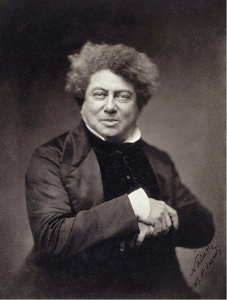
Alexandre Dumas photographed in 1855 by Nadar. His proto-revolutionary The Count of Monte Cristo showed how seriality could be put to revolutionary use and proved remarkably prophetic.
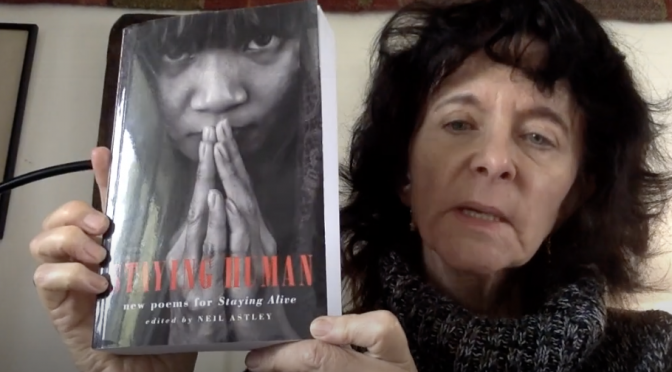
Ruth Padel, Professor of Poetry at King’s College London reads from her poem ‘Still Life with a Map of the World Outside the Window’ from the new anthology Staying Human: New poems for Staying Alive, edited by Neil Astley and published by Bloodaxe Books.
By Fran Allfrey, Strandlines assistant editor, English Dept alumna and Teaching Assistant
Strandlines is a life-writing and community history project, which takes the form of a website and linked Facebook, Twitter, and Instagram accounts. The project was set up by Professor Clare Brant, with a board of editors made up of colleagues inside and beyond King’s. I joined as Assistant Editor in spring 2019. With the new term just starting, Clare and I thought now was a good time to reflect on where Strandlines has been, and where it may go next!
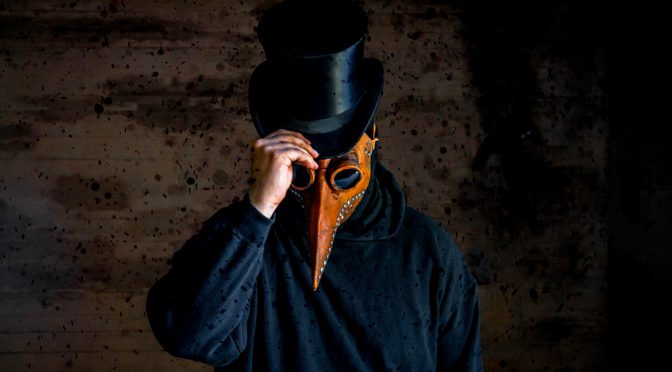
Mike Collins recently developed, recorded, edited, and hosted a three-part podcast series called the Plague Lit Pod, with contributions from Dr. Jon Day, Dr. Kelina Gotman, and Dr. Emrys Jones on the subject of the relationship between literature and pandemics. The podcast is available through Spotify. Here, he reflects on the history of podcasting, his personal experience of the form, and how he intends to use it in future in research and teaching. Dr. Collins has previously published online on fiction podcasting at Alluvium and in collaboration with Danielle Barrios-O’Neill (Falmouth) for the journal Revenant: Critical and Creative Studies of the Supernatural