KEATS is scheduled to be upgraded to Moodle version 3.11 on 12th July 2022. This upgrade will represent a minor incremental change to the usual major upgrade that takes place over the summer. Continue reading “King’s Summer KEATS Upgrade to Moodle 3.11 – what to expect”
Category: Technologies
KEATS 3.11 UI Refresh
Feedback from students from various channels across King’s have reported that there is a lack of consistency in the User Experience (UX) and User Interface (UI) across KCL’s digital platforms, particularly the website and across templates and module pages within KEATS. Continue reading “KEATS 3.11 UI Refresh”

Digital Education Accessibility Baseline: Raising our standards for digital accessibility
When the UK went into lockdown due to the Covid 19 pandemic, King’s College London was forced to close the university and move its courses online. As we were pivoting to learning and teaching online at an unprecedented scale the use of our Virtual Learning Environment, KEATS (Moodle), greatly increased. Continue reading “Digital Education Accessibility Baseline: Raising our standards for digital accessibility”
Introduction of Captioning and Transcription Service at King’s College London
In September 2020 King’s College decided to commit to further developing the Captioning and Transcription Service available via the King’s media platform (Kaltura). Academic staff were provided with access to request high quality human transcriptions for their lecture recordings. Continue reading “Introduction of Captioning and Transcription Service at King’s College London”

Improving KEATS Accessibility with Blackboard Ally
In September 2020, Blackboard Ally was successfully launched university-wide to support improvements in accessibility in KEATS (Moodle). Continue reading “Improving KEATS Accessibility with Blackboard Ally”
Credit Harmonisation at King’s College: Case Study at the Faculty of Social Science and Public Policy
The majority of modules in King’s College use the 30/60 credit split. This structure was introduced over 15 years ago for undergraduate modules to replace the “course unit” model. However not all postgraduate modules were also moved to this new structure, meaning there were different credit values assigned to different modules at PG level. Continue reading “Credit Harmonisation at King’s College: Case Study at the Faculty of Social Science and Public Policy”
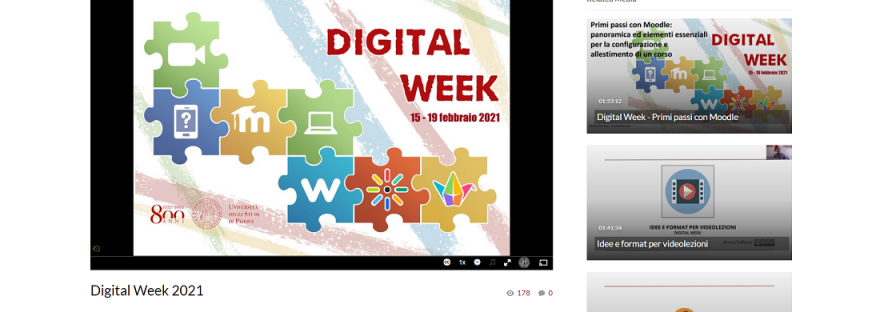
Part 2: Kaltura at the University of Padua
This article has been divided in two parts. Part 1 discusses the background and training required for implementing Kaltura, as well as the reasons and methods for using it. Part 2 discusses the benefits of having a university video platform and strategies for student engagement. Continue reading “Part 2: Kaltura at the University of Padua”

Part 1: Kaltura at the University of Padua
This article has been divided in two parts. Part 1 discusses the background and training required for implementing Kaltura, as well as the reasons and methods for using it. Part 2 discusses the benefits of having a university video platform and strategies for student engagement. Continue reading “Part 1: Kaltura at the University of Padua”
Using Automation to Facilitate Flipped Learning
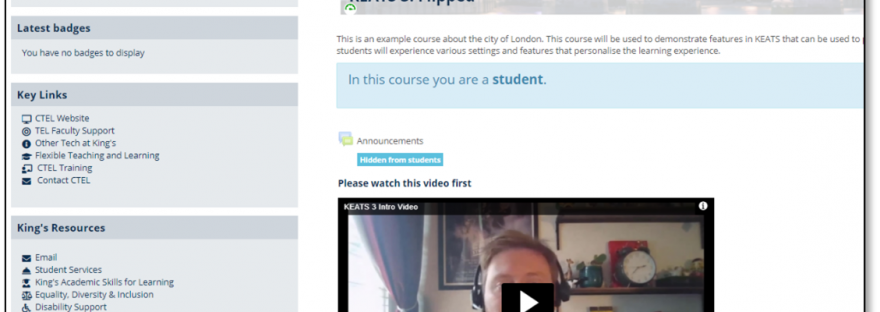
With the move to fully online teaching, it soon became apparent the most advanced KEATS (Moodle) training session, KEATS 3: Personalising the Learning Experience, was not appropriate for synchronous delivery. The session was re-designed as a completely flipped session, but attendees would often miss the pre-work instructions. The use of Microsoft Power Automate was explored to automate instructional emails, but the uses of the tool were further reaching than initially considered. Continue reading “Using Automation to Facilitate Flipped Learning”

Tech Test Thursdays for Digital Capabilities
When the Covid-19 pandemic put us fully online, colleagues in King’s Academy needed to expand our repertoire with a range of evolving technologies. Since we lead educational development programmes and sessions, we strive to demonstrate intrepid, successful designs which make best use of our learning environments. In the foreseeable future those environments would be digital. This post gives a rationale for carving out regular time to test things out together, followed by details about how we set this up to be low-maintenance. Continue reading “Tech Test Thursdays for Digital Capabilities”