Categories
19th Century Colonial, Postcolonial and Transnational Culture Long Read

Erasing History? Colston in Bristol

by Brian Murray, Senior Lecturer in Nineteenth-Century Literature, King’s College London

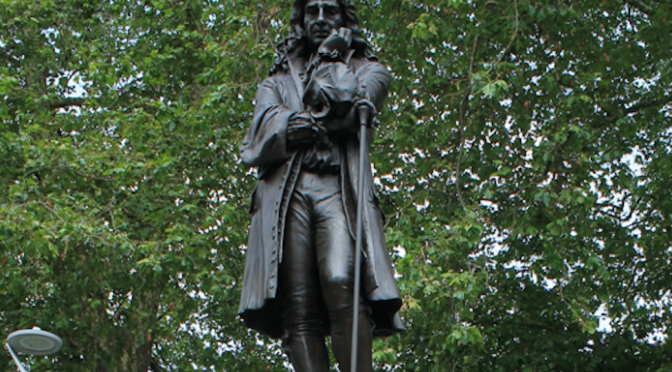
The toppling of the statue of slave trader and MP Edward Colston during a Black Lives Matter demonstration in Bristol on 7th June has led to a predictable wave of outrage at the ‘erasure of history’. But what kinds of history might a statue be said to embody or project? The Colston statue was 125 years old. But it is also an idealised late-Victorian representation of seventeenth-century subject (unveiled 174 years after Colston’s death). What did Colston mean to Bristolians in 1895? Contemporary reports of the statue’s erection in the Bristol Mercury – accessed via the British Library Newspapers database – offer a glimpse of the new monument at its first unveiling.

Categories
Contemporary

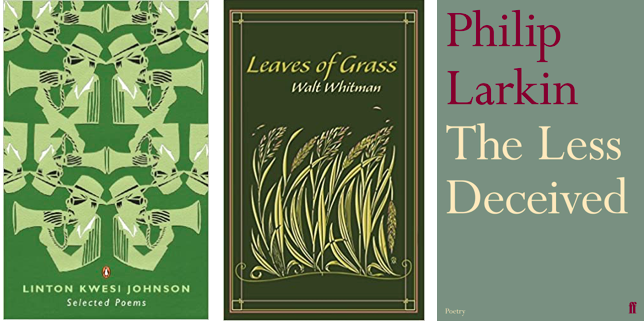
COVID-19: 3 Poems that Can be a Source of Inspiration During Uncertain Times

by Nura Haji

Nura Haji is an undergraduate student studying at King’s. Here Nura reflects on the power of poetry in times of uncertainty.

There is something exciting about the build up towards the beginning of summer. Year in, year out, we are teased by the burst shots of a fast approaching spring, with strokes of sunlight and the return of longer days formerly stolen by winter.

Categories
Life writing, Creative writing and Performance

Everyone Knows How to Fix a Bike Apart From Me

by Freya Thursfield

Freya is 19 and in their second year of undergraduate study in the English Department at King’s College London. They’re from London, but grew up between the UK, Lithuania and China. 

I don’t cry until the valve cap on my bike’s front inner tube snaps off in my hand, at which point I stand in a deserted street next to a public bike pump and sob for about five minutes. I had been coping with a global pandemic very well, but now being an adult has crept up on me and I am unprepared. This bike is also my only way of getting to work, which I need to do in less than 24 hours. The chain is so rusted I’m not sure it’ll turn even if I get the inner tube fixed. I don’t have a new inner tube, or the equipment to replace it at home, or the skills, or the energy, the way an adult would.

Categories
20th - 21st Centuries Long Read Visual and Material Culture

Alfred Cohen: An American Artist in Europe

by Max Saunders, Professor of English at King’s College London

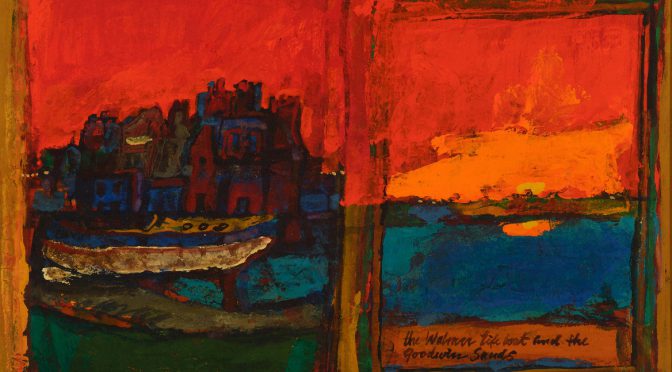
Max Saunders shares the story behind the exhibition Alfred Cohen: An American Artist in Europe which was due to open at The Arcade at Bush House in March 2020. The exhibition had to close to early due to COVID-19, but is now available to view online.

When my step-father, the painter Alfred Cohen died in 2001, my mother, Diana Cohen, and I decided that rather than having a funeral or memorial service, which he’d have hated, we’d celebrate his life with a memorial exhibition in his studio instead. As I started tracking down his earlier work for the show I became fascinated with how different it had been and how many different but equally engaging styles and techniques he had evolved. He was a much more versatile and mercurial artist than I’d realised.

Categories
20th - 21st Centuries Aesthetics, Philosophy, Theory Culture, Text and History Modernism

“Renovate, dod gast you, renovate!”: where next for modernist studies?

by Charlotte Jones, Teaching Fellow in Victorian and Modern Literature at King’s College London

“Going where it is possible to go would not be a displacement or a decision, it would be the irresponsible unfolding of a program. The sole decision possible passes through the madness of the undecidable and the impossible: to go where (wo, Ort, Wort) it is impossible to go.”

Derrida, On the Name (Stanford UP, 1995), 50.

In one of the most durably useful of all modernist expressions of the value of novelty, Ezra Pound called on art to “make it new”. Putting aside the fact that Pound’s slogan was itself the product of historical recycling ­– the source is probably an anecdote about Ch’eng T’ang (Tching-thang, Tching Tang), first king of the Shang dynasty (1766–1753 BC), who was said to have a washbasin inscribed with this inspirational motto – these three words are commonly recited as the epitome of what modernism stands for: rupture, revolution, innovation, defamiliarisation, the logic of creativity-in-destruction that fortifies the avant-garde.