Categories
Aesthetics, Philosophy, Theory Contemporary

What is to be done? The politics of reaction

by Carleigh Morgan, PhD Candidate in English Research, Christine Okoth, LAHP funded PhD candidate in Contemporary American Literature, and Bryony White, LAHP funded PhD candidate in Performance Studies

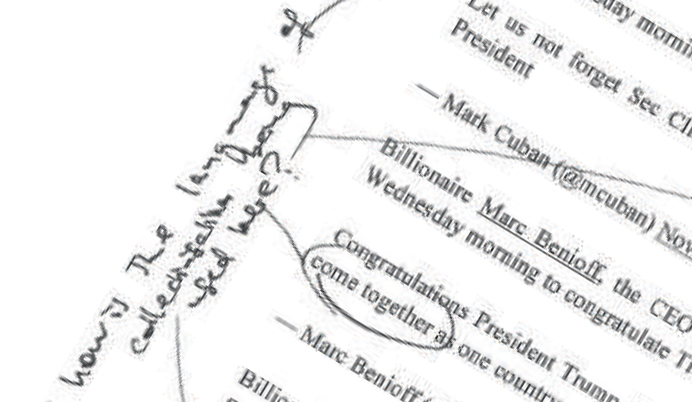
In response to the results of the US presidential election, staff and students of the King’s English Department hosted a Trump Teach-In on 23rd November 2016. The workshop consisted of brief talks and activities, many of which were student-led and all of which offered a multitude of different perspectives on an event that will have lasting global repercussions.

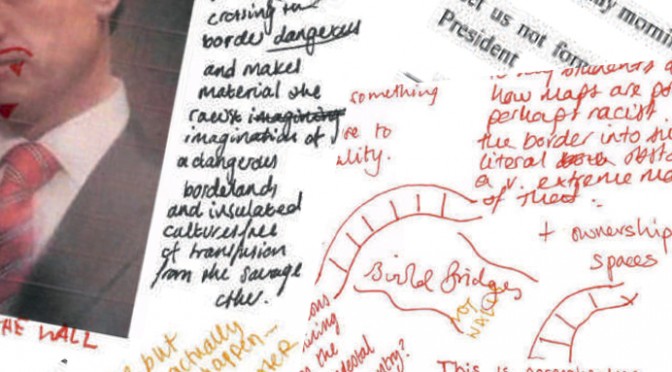
zine image collective

Categories
Aesthetics, Philosophy, Theory Performance Research Group

On the virtues of slow scholarship and small numbers

By Kélina Gotman, Lecturer in Theatre and Performance Studies

It is mid-July. The vote for Brexit has happened, leaving many stunned into silence or shocked into outrage, or a combination of both. We haven’t managed to advertise extensively for the smooth & striated: form event and consider cancelling. Then reconsider. It will be strong – perhaps strongest – in small numbers, with a focused few. To do it now means to allow ourselves the luxury (is it a luxury?) of … for lack of a better term … going with the flow, thinking on our feet. Improvising. And that’s also what it is about: ways to think together in a space, on our feet, drawing; to read, transversally, to cut across a couple of texts and discover resonances and recombinations, to think laterally, perhaps.

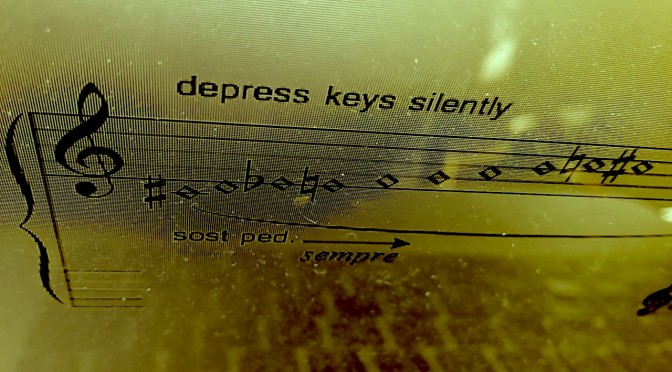
We have decided for this event to focus on two key texts in twentieth-century art and philosophy, and to rethink not only their critical genealogies (the way Pierre Boulez’s work on pulsed and non-pulsed time, in “Time, Notation, Coding” in particular informs Gilles Deleuze and Félix Guattari’s arguably far wider-reaching and still inestimably influential chapter, “1440: The Smooth and the Striated,” from Capitalisme et schizophrénie 2: Mille Plateaux), but also the way both these complex works trouble ways of thinking linearity, teleology and what seems to be an overwhelming preference for the rhizomatic in contemporary art, including particularly in music and dance.

Categories
Culture, Text and History Early Modern and Shakespeare

Shakespeare 2.0: Pray tell, what is a ‘MOOC’?

By Rachael Nicholas,  PhD candidate (University of Roehampton), MOOC mentor, and alumna of the King’s MA in Shakespeare Studies

In case you’d missed it, 2016 marks the 400th anniversary of William Shakespeare’s death. Whilst some of the celebrations have commemorated the man himself, the catalogue of performances and special events comprised a celebration of afterlives, focusing on the 400 year history of encountering Shakespeare and his works. Their sheer range is a testament to the part that adaptation across different media has played in the construction of what we understand as ‘Shakespeare’ today.

The proliferation of media technologies has not only given rise to new modes of adaptation, but also to new ways of distributing and accessing Shakespeare’s work. It is now possible to open out live performances to audiences around the world through live broadcasts to cinemas, and increasingly, for free online. The question of what it means to encounter performances of Shakespeare through the digital – for both production and reception – is central to my own research project on live relay audiences. But to encounter Shakespeare through ‘performance’ is of course not the only way to encounter Shakespeare.

Categories
20th - 21st Centuries Aesthetics, Philosophy, Theory

Prize-winning responses to modernism

By Helen Saunders, PhD student

In 2013, the King’s Centre for Modern Literature and Culture  (CMLC) was founded and launched its annual prize for Creative Responses to Modernism. Since then, postgraduate students working in modernist studies have been invited to submit their responses to modernism and its artistic explosions in whatever art form seems most appropriate. For some entrants, these have been homages, pastiches or parodies; submissions have both continued and challenged the modernist project. The centre and prize are run by Dr Lara Feigel and Professor Erica Carter.

Categories
Colonial, Postcolonial and Transnational Culture Gender and Sexuality

Loving, Living and Resisting: a Postcolonial Conversation

By Diya Gupta, PhD researcher, Department of English – find her here.

Choti yeh hai teri saanp ki hi lehar Dogana

Khati hun tere vaste main zahar Dogana

(This plait of yours is the wave of a serpent, Dogana

I take poison because of you, Dogana)”

– Lines from nineteenth-century Urdu Rekhti poet Insha Allah Khan


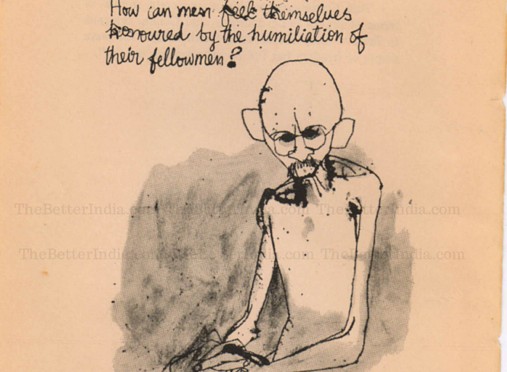
What do we know about the representation of same-sex romantic and sexual relations in early nineteenth-century north India? And how does this relate to the transnational realm of early twentieth-century democratic thought? A postcolonial conversation on recent publications by two outstanding postcolonial scholars revealed how love and desire, revolutionary ethics and aesthetics, connect these two worlds in the final King’s in Conversation with series for 2015/16.