Categories
19th Century Colonial, Postcolonial and Transnational Culture Culture, Text and History Literature, Medicine and Science

On the Anthropocene, and debts of gratitude and solidarity: reflections on a lecture

by Dr Adelene Buckland, Senior Lecturer in English Literature

On 21 March 2018, I gave a talk for the London Arts and Humanities Partnership (LAHP) ‘Arts and Society’ series at Senate House. As I spoke, students in the building performed a banner drop in support of the lecturers’ strike over pensions, and had the fire exits drilled shut on them by those who did not support their protest. It was an odd moment in my career, to be speaking on Darwin while unaware of political events unfolding elsewhere in the building, and it caused me some reflections on my paper.

The work was drawn from an essay forthcoming in Philological Quarterly in a special issue on ‘earth writing’, the outcome of a symposium I attended in Düsseldorf in April 2016, when I was five weeks pregnant with my third daughter and unable to drink much of the wine (and unable to tell anybody why). The essay is also poignant for me because it marks (I hope) the culmination of what I guess might be called the ‘early career’ phase of my research, on Victorian literature and geology.
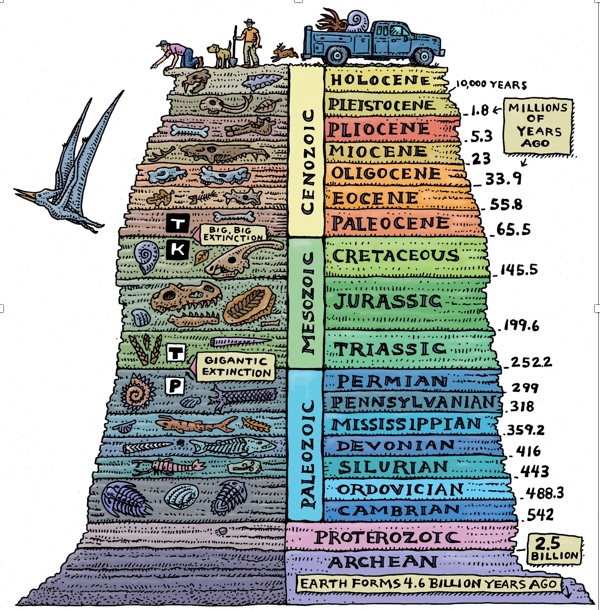
‘The Holocene Extinction’, Image © http://bytesdaily.blogspot.co.uk/2015/12/the-holocene-extinction.html.

Reviews and citations of my book, Novel Science, have sometimes surprised me in coming from an ecological perspective: in all the years I worked on the book, I hadn’t really thought about it in these terms at all. Since then, I have often been asked questions about the new geological Epoch in which we are now said to be living, the Anthropocene, and its relationship to my historical research. I wasn’t happy with any of my answers.
Categories
Anglo-Saxon and Medieval Studies Culture, Text and History Gender and Sexuality

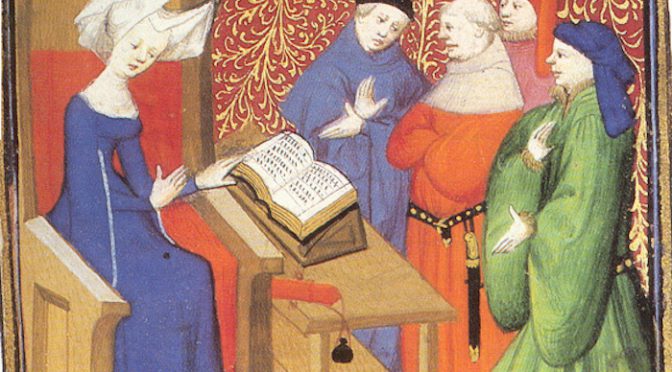
The long read: Medieval Women, Modern Readers

by Fran Allfrey, LAHP-AHRC PhD candidate, and Beth Whalley, Rick Trainor Scholarship and Canal & River Trust PhD candidate.

This year’s theme for International Women’s Day was ‘Press for Progress’. The campaign focused on the reality that gender parity – which the World Economic Forum’s 2017 Global Gender Gap Report projects as being over 200 years away – cannot happen without organised and inclusive collective action. The theme got us thinking about the ways that our own discipline, medieval studies, intersects with feminist activism, and the ways that medievalists might be able to participate meaningfully in these conversations. And so, on the 28th March, supported by LAHP and King’s Centre for Late Antique and Medieval Studies, we held a two-part event to celebrate medieval women and women in medieval studies.

Part 1: The Wikithon

The first part of our event was a ‘Medieval Women, Modern Readers’ Wikithon, which aimed to improve references to scholarly work by women and non-binary people in articles related to medieval studies, and to create and improve pages for women and non-binary medieval scholars and artists who study or remake medieval texts, objects, or themes.

Categories
Aesthetics, Philosophy, Theory Contemporary Cross-temporal Visual and Material Culture

close: letter #1

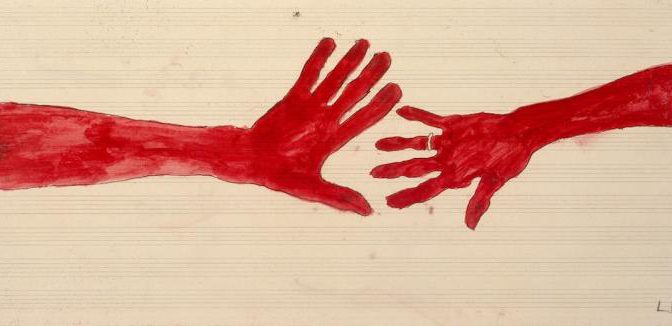
By Ellie Jones (AHRC PhD researcher, Tate and English Department) and Bryony White (AHRC/ LAHP PhD researcher, English Department), co-editors of close. close is a monthly tinyletter (article sent to your inbox) exploring intimacy, intimate lives, and objects, supported by the London Arts and Humanities Partnership.

For some time, we have wanted to try and find a way to talk across our research in bodies, queer lives and intimacy. Both situated in the English Department at King’s and with desks next to one another in a small communal postgraduate research room, we have been speaking about how intimacy, its pleasures and its discontents, has long preoccupied the work of writers and artists.

In Virginia Woolf’s Mrs Dalloway, for example, intimacy is a locus of change, growth and transformation: ‘there had risen up a lovely tree in the brisk sea-salted air of their intimacy (for in some ways no one understood him, felt with him, as Clarissa did)—their exquisite intimacy’. Through intimacy, Woolf radically connects feeling to knowledge and self-understanding. However, intimacy here is also elusive. For the two former lovers, it is part of the air, atmospheric and ineffable.

Categories
Colonial, Postcolonial and Transnational Culture Culture, Text and History Early Modern and Shakespeare

Lessons in global commerce (from an early East India Company employee)

Emily Soon is a PhD candidate researching how early modern writers across a range of literary genres perceived the East Indies (principally, China, India and Southeast Asia) in early modern England. This blog was originally posted on Currently @ King’s.

International trade hurts local communities. It causes economic hardship at home and destroys the environment, while the culture of consumerism it fuels is destroying our values and way of life.

Similar sentiments to these recur across the media today: this so-called backlash against globalisation is said to have contributed to Brexit and the rise of Trump, and to have transformed the shape of political movements across the world. This pent-up frustration seems to be quintessentially twenty-first century, the disillusioned rant of a world no longer charmed by the siren song of free trade and borderless commerce.

And yet, the sentiments I began with are taken not from a present-day party political tract, but from a play written almost 400 years ago. While William Mountford’s amateur dramatic effort, The Launching of the Mary: Or the Seaman’s Honest Wife (ca. 1632-3), may not be able to rival the plays of William Shakespeare or Ben Jonson – for a start, we do not know if the single handwritten text held in the British Library archives was ever performed – it does encapsulate, poignantly, the profound anxieties that have long attended the idea of international trade.

Categories
20th - 21st Centuries American Studies Contemporary Culture, Text and History Life writing, Creative writing and Performance

Trumping Transparency: The Need for Government Data to be more Empowering

by Clare Birchall, Department of English

The words “Trump” and “transparency” don’t often appear together. Administrative transparency isn’t something Trump promised during his campaign, and it hasn’t been on the agenda in the last year. Yet the term has begun to turn up recently in communications from the Trump camp.

In July, referring to the Commission on Election Integrity, Trump claimed that the “voter fraud panel”, as he called it, would be a “very transparent process . . . very open for everybody to see.” The American Civil Liberties Union begs to differ. It has lodged a legal complaint stating that the commission has violated “the non-discretionary transparency and public access requirements” of the Federal Advisory Committee Act by holding “its first meeting without public notice; without making that meeting open to the public; and without timely notice in the Federal Register.” Trump also used the word “transparent” to describe his eldest son’s response to accusations that he had failed to disclose meetings with Russians during the presidential campaign.

On July 12, 2017, @RealDonaldTrump tweeted: “My son Donald did a good job last night. He was open, transparent and innocent. This is the greatest Witch Hunt in political history. Sad!”

These examples suggest that Trump hasn’t fully understood – or has wilfully misunderstood – the meaning of transparency and what it would take, in practice, to achieve it.