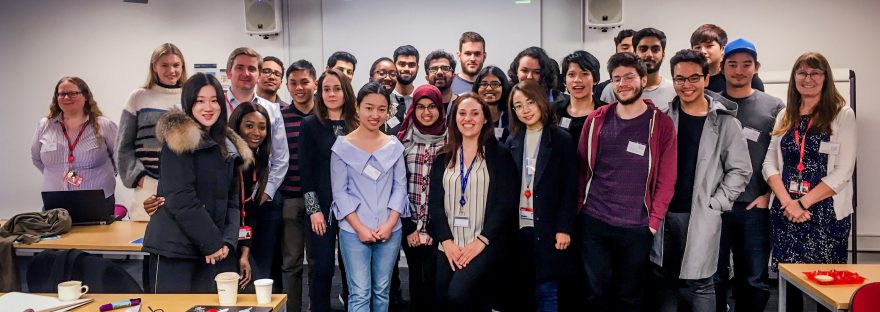
In mid-November 2019 nearly 60 people attended the Autumn meeting of the M25 Learning Technology Group (#M25LTG) at King’s College London. This event was themed around Education 4.0 and brought together sessions on education surviving industrial revolutions; what Education 4.0 could look like, holographic lecturers and the ‘cold indifference’ of technology. Continue reading “M25 Autumn Meeting: Education 4.0”
From Conception to Completion: The Digital Education Student Committee
I recall leaving University in 2010 and being faced with nearly one year of unemployment. The fact I had a good 2:1 in BSc Applied Psychology and Sociology and experience on a placement year was clearly not enough, particularly as I graduated soon after the global financial crash. After meeting numerous recruitment agencies, sending my CV’s to what felt like hundreds of companies and applying to various jobs, I finally realised that I did not know how to properly complete application forms, and I did not have enough recent work experience for my CV to make an impact. I was one of many recent graduates that just could not get to the interview stage of a job, yet alone a job. What made my experience slightly more frustrating was that many of my friends who chose to go straight to work, rather than to Universities, were in greater demand than I was. What set us apart, was that they had gained a few more years working experience, and they knew how to sell themselves to potential employers. Continue reading “From Conception to Completion: The Digital Education Student Committee”
King’s Business School Education Hub
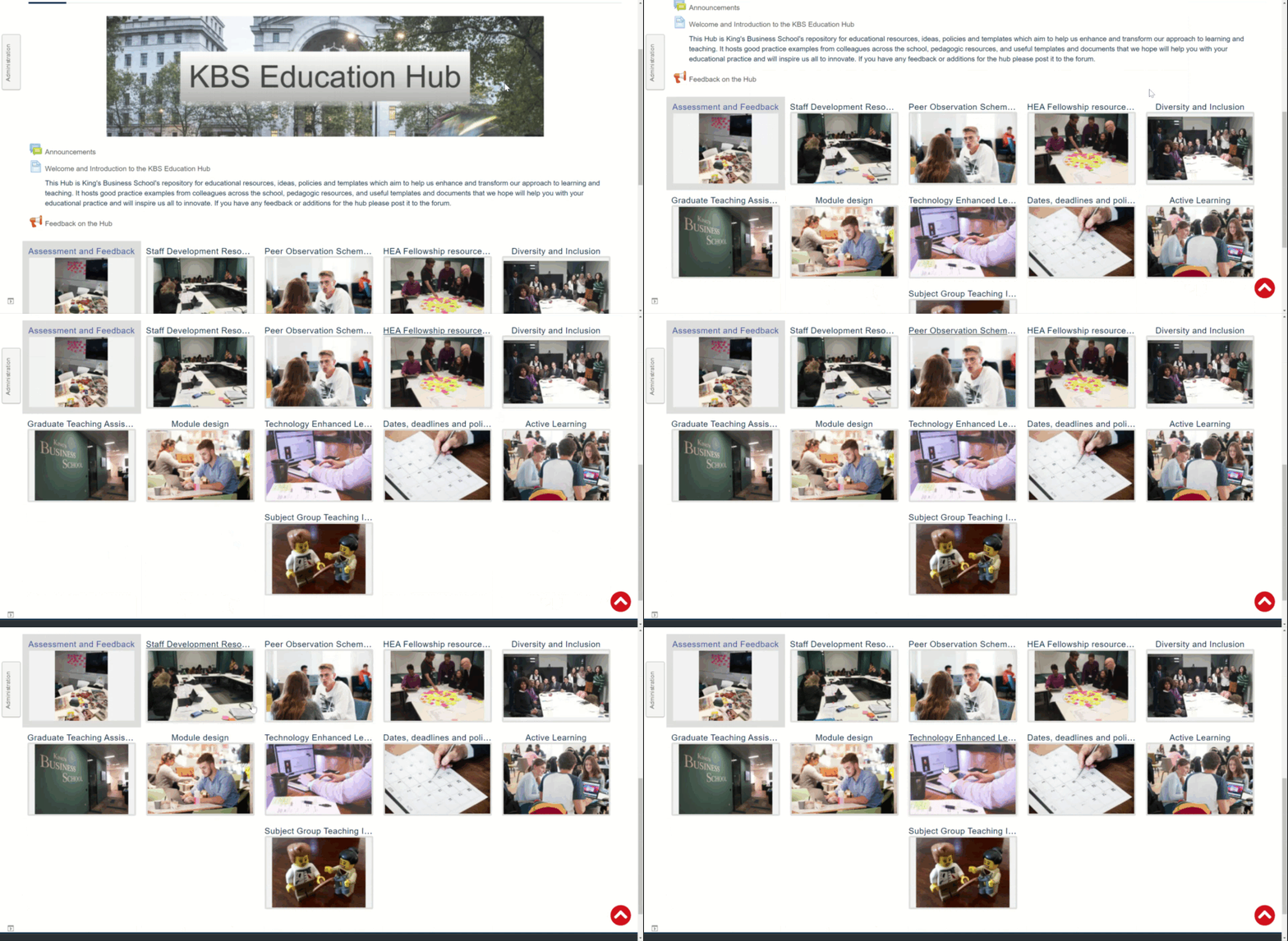
In May 2019 the King’s Business School launched a KEATS-based bespoke education hub to act as a one-stop central space to support teaching and learning, list key dates and build a vibrant learning community. It responds to concerns that good practice was not being shared effectively, version control of documents was problematic, and there was no repository to support initiatives such as peer review, GTA induction and education strategy projects. The aim is for it to become a powerful vehicle to enhance pedagogic practice, facilitate communication between staff, increase productivity by offering highly efficient and effective tools for educational delivery and share best practice around digital education.

Moodle Learning Analytics with Power BI
Understanding learner behaviors online is important in addressing challenges they may be facing, offering appropriate support and ensuring the instructional design meets their needs. This is the object of Learning Analytics (LA), which aims to analyse and optimize learning and the environments in which it occurs. Continue reading “Moodle Learning Analytics with Power BI”
Hacking the Future at the CAN Conference: Hackathon 2019
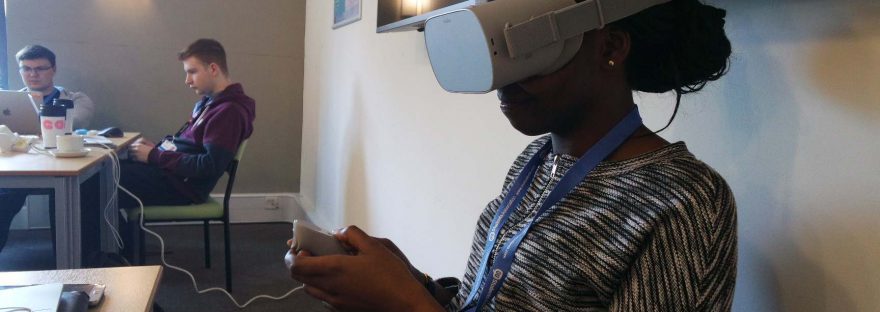
The 2019 ‘Change Agents and Network’ (CAN) Conference hosted by JISC brought academics from the UK (and worldwide) together. The conference was held at the Open University Walton Hall in Milton Keynes, England. The aim of the CAN conference was to understand the ‘evolving landscape of staff-student partnership’. How can technology be used to support the learning experience for students? Part of the Conference was a Student Hackathon.
Continue reading “Hacking the Future at the CAN Conference: Hackathon 2019”

A Graduate’s Journey in King’s

The moment I walked through the doors signposted ‘King’s College’ with the hallmark red labels, I realised this job was unlike many first graduate jobs. My first three thoughts were research, specialist and “I’m just a grad”. Continue reading “A Graduate’s Journey in King’s”

Part 2: Video Lectures for a Partially Flipped Classroom
This article has been divided into two parts. Part 1 is about the Production process and Part 2 discusses Student engagement, feedback, and reflections.
In the summer of 2018, I challenged myself to produce video “preludes” to create a partially flipped classroom for an Organic Chemistry module. This second blog entry covers how the videos were used in the course, student viewing figures and feedback, and where the project might lead in the future. Continue reading “Part 2: Video Lectures for a Partially Flipped Classroom”
Part 1: Video Lectures for a Partially Flipped Classroom
This article has been divided into two parts. Part 1 is about the Production process and Part 2 discusses Student engagement, feedback, and reflections.
In the summer of 2018, I challenged myself to produce video “prelude” lectures to create a partially flipped classroom for an Organic Chemistry module. This first blog entry describes the creation process. Continue reading “Part 1: Video Lectures for a Partially Flipped Classroom”
The Inbetweeners
Or are we more than that? The Learning Technologist – Faculty Liaison (FL) role was introduced by CTEL (Centre for Technology Enhanced Learning) in August 2017 to act as a direct liaison with academic faculties and departments. The main aim of the role is to support the management and delivery of multiple projects aimed at both the development of academics’ pedagogic understanding and the practice of technology-enhanced learning. In short, acting as the conduit (inbetweeners) between faculties/departments and CTEL whilst also improving engagement with key staff members on new initiatives from initiation right through to completion. Continue reading “The Inbetweeners”
Welcome to the Digital Education Blog
The purpose of this blog is to provide a centrally supported space to capture and share digital education practice from across King’s College London. It’s a community contribution blog for individual and teams working in this area and provides an opportunity to promote initiatives to a broader audience, both internally at King’s and externally across the sector. Continue reading “Welcome to the Digital Education Blog”