
This week in our A-Z post for ‘K’, Tom McAdams [EDIT Lab Associate Director] outlines Kinship, a core concept in the field of behavioural genetics.

This week in our A-Z post for ‘K’, Tom McAdams [EDIT Lab Associate Director] outlines Kinship, a core concept in the field of behavioural genetics.

Depression is a leading cause of disability worldwide, contributing considerably to early mortality. Despite significant efforts, the genetics underlying depression has been difficult to identify and there has been limited progress in developing new treatments. Last month the largest genome-wide association study of depression was published in Nature Genetics (1)….

This week we continue our alphabetical A-Z series with a post on J for Jobs in Academia. Shivani and Michela [EDIT lab placement students] talk to academics from a range of different career levels based at the Social, Genetic and Developmental Psychiatry Centre, King’s College London. Representing the PhD/MSc Level (Meg Skelton), Post-Doctoral Research…

This week on the blog Kara writes about conduct problems and the importance of identifying and understanding differing aetiologies and trajectories across through the lifespan.

If we start this blog post with the statement that “people differ from each other”, you will probably snort with derision thinking of snowflakes and popular cheesy quotes about being unique like everyone else, but it is true. People do differ and in so many ways. This week Elena and…

Heritability is the proportion of variation in a given population that is due to genetic differences. If a trait is highly heritable, it is more likely to be shared between individuals of close genetic relatedness, regardless of whether they share the same environment. This concept can be difficult to wrap…
Today we have some reflections from Dr Holan Liang, part-time Consultant at Great Ormond Street Hospital and Honorary Senior Clinical Lecturer at UCL, on her journey through academia, motherhood, writing and part-time clinical work in medicine. You can follow her on Twitter on @shrinkgrowskids.

For the letter G, Thalia [Eley, EDIT Lab director] walks us through gene-environment correlation, a topic we think will become increasingly widely explored as methods for understanding genetic influence improve.

Fear is an emotional response vital for our survival. However, overwhelming fear can lead to excessive avoidance of situations that are not actually dangerous, causing distress and impairing daily functioning. Here, we give an overview of fear, explaining when it becomes pathological and how it can be studied experimentally.
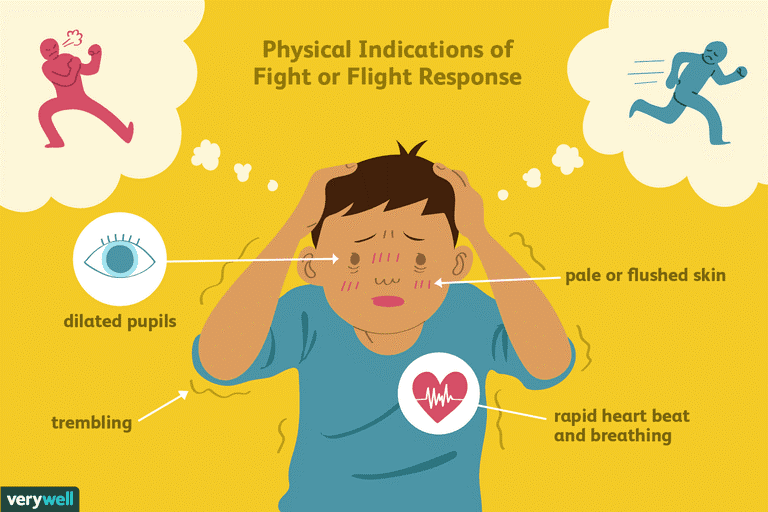
When we perceive threat, our bodies initiate a fight-or-flight response (Cannon, 1932). This physiological reaction – involving symptoms such as quickened heart rate – prepares us for action. Although unpleasant, it is likely that this adaptive response enabled our ancestors to run from or fight predators, and therefore to survive…
Recent Comments