Page 17 of 27

Following on from April’s stress awareness month, Megan discusses stress in the context of gender dysphoria, and provides information on how to help those that may be suffering.

This week on the blog, Daniel [EDIT Lab PhD student] summarises the findings of a recently published study by Taraban et al. investigating the influence of parental depression on the development of behaviour problems in children through its effect on parenting.

Parenting can be stressful, so it comes as no surprise that around 20-40% of mothers and slightly fewer fathers experience depression during the first year of their child’s life1. Some will already have had depression before their child’s birth, and unfortunately, many go on suffering symptoms for years after. It is well-established that children of depressed parents are at higher risk of developing various mental health problems, but we still don’t know exactly why this is2. There is a substantial body of evidence showing that depressed parents have an impaired ability to be attentive and responsive to their children, and tend to be more irritable and hostile during parent-child interactions3.

We aren’t yet sure why children of depressed parents are at higher risk for developing mental health problems.
However, we can’t be sure that these factors themselves drive later changes in children’s mental health. An alternative explanation could be that genetic factors that increase parents’ risk of depression are passed on to their child, affecting their later risk of developing depression and other mental health problems. This is called a passive gene-environment correlation, because in biological families, the child’s rearing environment and their genes are provided by the same individuals, their parents. To really understand how parenting and parent mental health affect child development, we have to find ways to measure the complex interplay of genes and environments within families. A great way of doing this is to study children who were adopted at or shortly after birth. This gives us a lot more confidence about what drives children’s development, because birth parents only provide genes and prenatal environments (conditions in the womb), while adoptive parents only provide postnatal environments (parenting and other family factors).
“To really understand how parenting and parent mental health affect child development, we have to find ways to measure the complex interplay of genes and environments within families.”
A recent study used the adoption design to explore the relationship between parental depression, overreactive parenting and child externalising problems in 519 adoptive families4. Overreactive parenting included self-reported irritable, mean or angry responses to child challenges or misbehaviour, while child externalising problems included combined parent reports of children’s behavioural problems, such as destroying others’ things, attacking people and getting into fights.

Taraban et al. found that parental depression may lead to overreactive parenting, which itself leads to childhood behavioural problems.
The study found that for mothers and fathers, parental symptoms of depression when children were aged 9 months predicted overreactive parenting at 18 months. In mothers but not fathers, this went on to predict child externalising problems at 27 months. Depression itself had no influence on child externalising when accounting for the effects of overreactive parenting. Furthermore, birth mother mental health problems didn’t explain these relationships, suggesting that children weren’t just developing externalising problems due to inherited genetic risk.
“Depression itself had no influence on child externalising when accounting for the effects of overreactive parenting”
The study also looked at social support, an important protective factor for mental health5. Both parents’ satisfaction with their social support was associated with lower levels of depression, overreactive parenting, and later child externalising problems. However, it didn’t affect the relationship between mothers’ depression, overreactive parenting and child externalising. This doesn’t mean social support made no difference – it just means that mothers’ overreactive parenting predicted later child externalising problems regardless of how satisfied they were with their social support.
Implications for parenting
How do we make sense of these results? The most resounding finding was that mothers’ overreactive parenting, rather than depression itself, consistently predicted later child externalising problems. Importantly, while fathers’ overreactive parenting didn’t predict child externalising, it could still have influenced other child outcomes that weren’t measured in this study. Though results on social support were mixed, the emerging picture was that social support is important in predicting parents’ mental health and its longer-term consequences for parenting.
“The most resounding finding was that mothers’ overreactive parenting, rather than depression itself, consistently predicted later child externalising problems.”
The study had several limitations. For example, the authors noted that findings may have been explained by depressed parents over-reporting their overreactive parenting as well as their children’s externalising problems. They suggested that observational measures of parenting and child externalising could be used to address this in future studies. Another issue is that findings from adoptive families can’t necessarily be generalised to regular families. Adoptive parents tend to be older and have higher incomes, as was the case in this study, so we can’t be sure that the same relationships would be seen in higher-risk or lower-income families. Another limitation was that birth father mental health problems weren’t measured, so children’s outcomes may have been explained by unmeasured genetic factors inherited from fathers.
Despite its limitations, the study does provide insight into how parent mental health can influence child outcomes through its impact on specific parenting behaviours. The findings could have important implications for screening and targeted interventions for parents whose mental health problems may impact on their parenting and the long-term health of their child.
For more information on Depression see our previous post on the blog: D for Depression
References
- Field T. Postpartum Depression Effects on Early Interactions, Parenting, and Safety Practices: A Review. Infant Behav Dev 2010;33(1):1. doi: 10.1016/j.infbeh.2009.10.005
- Goodman SH, Rouse MH, Connell AM, et al. Maternal depression and child psychopathology: A meta-analytic review. Clinical child and family psychology review 2011;14(1):1-27.
- Lovejoy MC, Graczyk PA, O’Hare E, et al. Maternal depression and parenting behavior: a meta-analytic review. Clin Psychol Rev 2000;20(5):561-92. [published Online First: 2000/06/22]
- Taraban L, Shaw DS, Leve LD, et al. Parental Depression, Overreactive Parenting, and Early Childhood Externalizing Problems: Moderation by Social Support. Child Dev;0(0) doi: doi:10.1111/cdev.13027
- Ozbay F, Johnson DC, Dimoulas E, et al. Social support and resilience to stress: from neurobiology to clinical practice. Psychiatry (Edgmont) 2007;4(5):35.

D for Depression
Depression is the fifth leading cause of the global burden of disease and first leading mental health cause (Vos et al., 2017). Whilst everyone experiences sadness and perhaps even depression at times in their lives, perhaps following loss of a loved one, those with clinical depression experience symptoms that go on for longer, are more severe, and/or interfere with the activities that make up normal daily life.
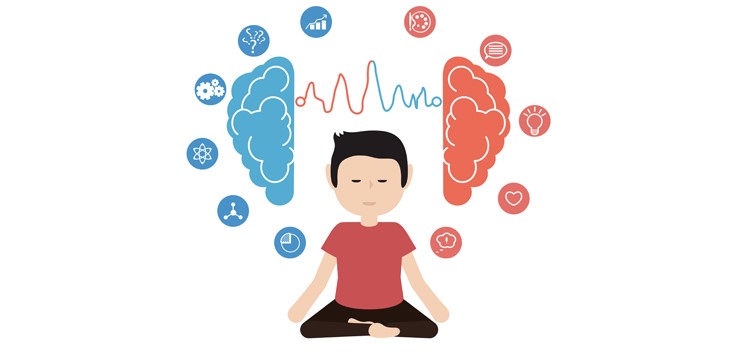
In recent years, mindfulness has become increasingly popular and is being recommended as a preventative tool and a useful technique to deal with stress and anxiety. What exactly is mindfulness, how does it work and are there any associated risks?
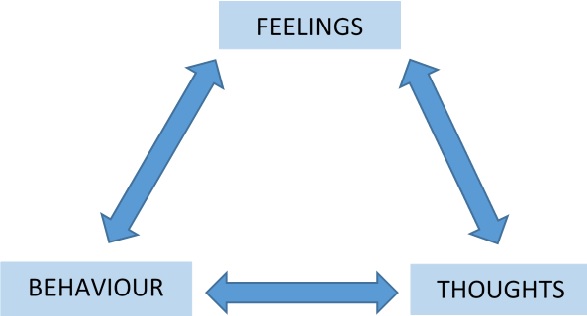
Cognitive behavioural therapy (CBT) is an evidence-based psychological therapy, most commonly used to treat anxiety disorders and depression. CBT is a talking therapy that explores the relationship between thoughts, feelings and behaviours. It is a structured, goal-oriented, skills-based treatment that uses both cognitive and behavioural techniques to change the way an individual thinks (cognitive) and what they do (behaviour). It has proven to be successful, leading to remission in approximately half of patients with anxiety or depression. Here we give an introduction to the theories and techniques used in CBT.
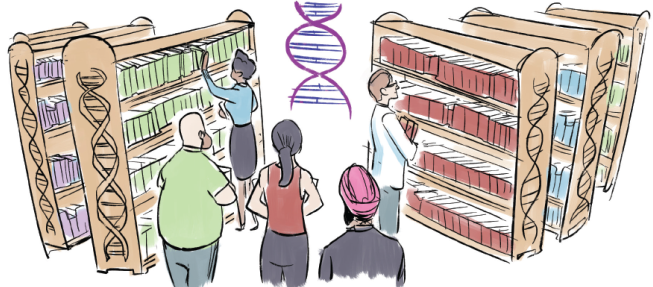
Next in the ‘A-Z’ series is B, for ‘Biobank’ or ‘BioResource’. Biobanks and bioresources are frequently used to support an abundance of research looking into all kinds of different disorders and phenotypes. This blog outlines exactly what a biobank and a bioresource are, and how they are used to support research.

The scientific process is being used to help researchers reflect on the work being conducted in different fields of science (an approach known as ‘meta-science’). Today, Tom McAdams discusses how meta-science is changing the way scientists understand and approach their work.

Welcome to the very first post of our “A-Z” series, where we will give summaries of common themes, methods, or concepts that are often mentioned or discussed on the blog. Here, we start at the beginning (which is where things normally start) with the letter A, for Anxiety. Everybody feels anxious sometimes. We are all familiar with those moments when you can feel your heart start to race or you can’t stop worrying about your upcoming presentation. But when does anxiety become clinical and what are the different sub-types? This blog also outlines what we know about prevalence, onset patterns, heritability, and available treatments.

In November 2015 I started working in the EDIT Lab as a Research Assistant (and part-time PhD student), helping to set up a new longitudinal research project in collaboration with the Twins Early Development Study (TEDS). It’s been two and a half years since I started, but what have we done and how far have we come?

WHAT are we working on?
TEDS is one of the world’s premier studies of how genes and environments shape our development from birth to young adulthood. The TEDS team have followed around 10,000 twin pairs since they were born in England and Wales in 1994 – 1995, collecting data from the twins every few years as they grew up. With the help of these twins and their families, the TEDS team have built an enormous dataset relating to child development from birth to young adulthood. The TEDS twins are now in their early twenties and many of them are starting to have children of their own. Our new project, called Children of TEDS (or CoTEDS for short), is designed to follow the children of TEDS twins as they grow up. This means starting the entire TEDS project again from scratch with the new generation of babies. Funding for this project was awarded to my supervisor, Dr Tom McAdams, as part of his Sir Henry Dale Fellowship, jointly funded by the Wellcome Trust and the Royal Society.
WHY are we working on it?
While we collect data on the children of TEDS twins, we are building the world’s first ever twin study to include information on twin parents and their offspring from birth. With a lifetime’s worth of data on two generations, we will research the ways in which different traits are passed down through generations over time, and the roles that parents play during the development of their offspring (see a previous post from Tom on this). We will also be able to examine the impact of parenthood on adult wellbeing, and the ways in which parents respond to their children. It is important that we study the children of TWINS in particular, because identical and non-identical twins provide us with a natural experiment in which we can examine the relative roles of both genes and environments on the transmission of traits from one generation to another (see this paper for a detailed description of the children-of-twins research design). Our research group is especially interested in the ways in which common mental health problems, such as anxiety and depression, run in families.
HOW far have we got?
Around 300 TEDS twins have joined the CoTEDS project with their children. So far we have started collecting our first wave of data from the parents of children with a child older than 12 months. Data is collected via questionnaire and we’re asking parents to report on their child’s pregnancy, labour and health, their sleeping, crying, feeding, and development, as well as other aspects of their child’s behaviour such as activity levels and shyness. The questionnaire then asks twins about their parenting behaviour and wellbeing as a parent – which includes questions about the amount of sleep that they are getting and support from other adults. When twins complete this first wave of data collection we send a CoTEDS t-shirt to their child, to say thank you and to welcome our new participants! So far, almost 100 twins with one-year-olds have completed this questionnaire, and another 100 twins with children older than two.



While these twins have been busy completing their first questionnaires, we have been designing the next wave of data collection to be answered by twins after their child turns two. In this wave we repeat many of the questions from the first questionnaire, but this time we also ask twins to play some short games with their two-year-old child. These are the same games that the twins completed with their parents when they were two-years-old through TEDS. So we will be able to compare how well the twins did on the games when they were two, with how their children do on the games now that they are two!
Highlights and challenges?
The first highlight was at the beginning of the project when we started to reach out to the twins to ask whether any of them had become parents. We weren’t sure what to expect but slowly our inbox was littered with photos of children along with excited messages about the new study. The next highlight came about one year later when the first twin completed the first CoTEDS questionnaire, and then again when we received the first photo of a child in their CoTEDS t-shirt!
The biggest challenge has been trying to design questionnaires that will remain relevant for many years to come, for all families and children from all cultures and backgrounds. In TEDS the twins were all the same age and so they all provided data at the same time while they grew up. However, the children of TEDS twins are all being born at different times, and will continue to be born indefinitely for several decades. This means that (if CoTEDS continues to run for as many years as TEDS) twins will continue to complete the same questionnaires about their children for many years to come. How do we predict the kinds of questions that will still be relevant to our research in 15 years’ time? And how will we keep up with collecting data from so many children of different ages, living all over the world? It will be a challenge to work out the logistics for running this recruitment and data collection as our sample size grows, and we will definitely need a bigger team!

Three generations: TEDS twins Jonathan and Catherine with their parents and their children (two of which are also twins!)