Research on the development and treatment of emotional disorders, discused and digested by the EDIT Lab Team and collaborators

Author: Yasmin Ahmadzadeh

Measuring race, ethnicity and ancestry in research: time for new tools

Yasmin considers the ways in which we measure and discuss race, ethnicity and ancestry in human research. When scientists use these terms incorrectly, they reinforce and perpetuate inaccurate and often racist narratives.

 

Dr Yasmin Ahmadzadeh


Everyone loses when science is not diverse. But how do we measure diversity?


In scientific research, the information (or variables) that we measure must be valid. Whole careers and research fields are built around the quest to achieve accurate measurement of human traits and characteristics. This is to ensure the validity of our results and evidence-based recommendations. 

Race, ethnicity and ancestry are among the most commonly used variables in human research. Many journals require inclusion of these data before research is accepted for publication. However, measurement protocol for these variables remains murky and, in some instances, unacceptable (some countries [e.g., Germany] do not collect demographic data on race or ethnicity).

In an ideal world, we would use categories that allow us to group populations according to relevant common features in an accurate and systematic way, so that the resulting statistics can be easily reproduced and compared over time and between sources. However, the categories used for measuring race, ethnicity and ancestry are inconsistent and can be harmful. When scientists use these terms incorrectly, they reinforce and perpetuate inaccurate and often racist narratives.

In search of valid categories for labelling populations


Race, ethnicity and ancestry are multifaceted terms subject to shifting definitions. They are related, but they are not all the same. These terms should not be used interchangeably to define participant groups in research. Unfortunately, this mistake is often made, resulting in the misrepresentation of participant groups.

Race categories were developed as a taxonomic grouping of humans, formed during the heyday of European colonialism. They are typically associated with physical characteristics such as skin colour or hair texture (e.g., ‘Black’ or ‘white’). They are not valid indicators for any underlying biological differences between individuals (e.g., genetics), or place of origin. Racial categories are a social construct. That is, there are no observable, biological measures that can be used to reliably classify individuals within racial groups. The history of racial categorising is entrenched with oppression and subjugation of non-European people. Many agree that race is the invented product of racism.

Ethnicity refers to the grouping of humans based on cultural expression and identification (e.g., ‘Latino’, ‘European’, ‘Chinese’). This can include factors such as shared ancestry, language or traditions. As with race, ethnicity is a social construct, categorised into groups that are deemed distinct by society. There is no consensus on what constitutes an ethnic group, and membership is self-defined and subjectively meaningful to the person concerned.

Ancestry typically refers to the geographical origin of populations (e.g., ‘European ancestry’ or ‘African Americans’). It can also be used in terms of the heritage or descent of a group, (e.g., ‘Ashkenazi Jewish ancestry’). Ancestry is considered the most objective of the three defined terms, but it is not without flaws. Populations are never homogenous in their ancestry because genetic diversity is continuous, not categorial. There is no such thing as a population with a single direct (or, as some have put it, ‘pure’) ancestry. Therefore, the borders that we place around ancestries are arbitrary and, again, socially constructed.

Categories that we currently use in research


The ‘race’ and ‘ethnic group’ categories currently recommended for use in the USA (by the NIH) and the UK (by the ONS) are outdated and unsystematic. They were not designed for research. They pool a range of racial, ethnic and ancestry terms within single categories (e.g., ‘Black/African/Caribbean/Black British’). They include derogatory words (e.g., ‘American Indian’) and group people by skin colour (e.g., ‘white’). They include some cultural groups (e.g., ‘Arab’ or ‘Hispanic’), but not others. Some countries are listed individually (e.g., ‘Ireland’ or ‘India’), while other countries are clustered in large geographical regions (e.g., ‘Africa’ or ‘Asia’). Personally, I find that my Middle Eastern ancestry is grouped with ‘white’ Europeans on one scale, then with ‘non-white’ Asians on another. 

In sum, these categories are inadequate for representing the global population equally and fairly. As researchers, we must work to break perpetual cycles of racism in research, and not remain complicit. We can strive to do things differently and develop new tools for research. We must not stop talking about race, but we must understand and use racial terms correctly. Abandoning racial categories would be a mistake. If we stop using racial categories, then we will not be able to identify racial inequity in research.

A call for action


Correct your vocabulary, and the vocabulary of others. Consider the context.


* Racial terms (e.g., ‘Black’) are only appropriate when discussing the racialisation of participants. (see here for why many are now deciding to capitalise the B in Black).

* By using racial categories in the wrong context, we risk reinforcing the notion that they are biologically and scientifically valid.

* Stop referring to race, ethnicity or ancestry as ‘risk factors’ in health research. There is no evidence to suggest that ethnicity is a causal risk factor for health problems. There is evidence to suggest that racism and marginalisation is.

* Stop using the term ‘Caucasian’ in research. This is a pseudoscientific term, derived from an 18th century racist classification system. You should use either ‘white’ or ‘European ancestry’, depending on your context. (see more here)


Consider how the data that you collect will be used in your research.

Is it valid? Who will it serve? What can it really tell you? Wherever possible, be specific.


* Do not pool all ‘Black, Asian and Minority Ethnic’ (BAME) groups into one category. The BAME label (and related acronyms, such as BME) is insufficient to reflect, and therefore help, the many groups captured within that definition. The BAME categorisation creates a dichotomy of ‘white’ versus ‘non-white’ (or ‘majority’ versus ‘minority’ groups), which serves to reinforce racism in research. If you must refer to multiple communities under a single label, the terms ‘marginalised groups’ or ‘racialised communities’ are preferable. (see here for further critique of the BAME label). 

* Categories need to be consistent across research and health services, to support research efforts and policy recommendations. But categories also need to capture what it is that matters for the study at hand. For example, ancestry will be more important for geneticists exploring the role of population stratification; while racial terms will be more important for psychologists exploring the influence of racial inequality.

* Where possible, data collection should support an intersectional approach to understanding the multiple identities that individuals hold, encapsulating different forms of privilege or disadvantage in society. Information on participant race, ethnicity and ancestry cannot tell the whole story. Within groups there is diversity of experience. 


Individuals of non-European descent – i.e., the majority of the global population – remain under-represented in human research (among research teams and research participants). Their narratives are excluded and their data are under-reported. Many teams and institutions are now striving to change and improve their research strategies to address this imbalance. This involves confronting the systemic racism that exists in human research. An important first step will be to consider how we define diversity among participants in the first place. We must be meticulous in our planning as to what data we need for our research, and why we need it. We must involve participant perspectives in this process. We must be honest with participants about the limitations of the variables that we use, and communicate how we intend to use any data that we collect about their race, ethnicity or ancestry in our work. 

We must see this as an active learning process, requiring constant reflection and challenging of assumptions that are so deeply ingrained in our practise and institutions.

Resources

Saini, A. (2019). Superior: the return of race science. Boston: Beacon Press.

Rutherford, A. (2020). How to Argue with a Racist: History, Science, Race and Reality. London: Hachette UK.

Kendi, I. X. (2019). How to be an antiracist: One world.

Miika Tervonen, historian and social scientist, on the “the myth of a monocultural Finland”.

Professor Dorothy Roberts, professor of law and sociology, on race-based medicine.

Recording of a recent webinar chaired by the Mental Elf: “Mental health research is racist, so what are we all going to do about it?“.


NB: the last national survey of racial and ethnic minority mental health in the UK was published almost 20 years ago, in which researchers pooled all “Black, Asian and Minority Ethnic” (BAME) groups into one category.
 

You either have a mental health disorder or you don’t? It’s not that simple.

Yasmin

Next up in our myth-busting series, Yasmin [EDIT lab PhD student] and Elisavet [EDIT lab placement student] address the common misconception that you either have a mental health disorder or you don’t. The truth is, it’s not that simple.


We all have mental health, be it good or average or not so good. It “includes our emotional, psychological, and social well-being and affects how we think, feel, and act”. Just as with physical health, everyone’s mental health can fluctuate. Some people experience one-off episodes of bad mental health, when they might exceed the ‘cut off’ for a diagnosis of a mental health disorder. Some people go on to have repeated episodes of mental ill-health that they will have to live with for the rest of their life. But these individuals can also have periods when they experience high levels of mental well-being. So really, it’s quite hard to define someone as definitively mentally healthy.

Symptoms of mental health disorders are common within the population. For example, everyone has experienced the symptoms of anxiety (e.g. nervousness, increased heart rate or stomach tensing), depression (e.g. low mood, hopelessness or low self-esteem), and psychosis (e.g. paranoid thoughts – such as worrying that everyone is laughing at you when you walk into a room). These symptoms are our body’s natural responses to unfamiliar or stressful situations (e.g. see a previous blog post on the evolution of fear). But it is when these symptoms occur more often than usual, last for prolonged periods of time, become severe, and finally disrupt people’s everyday lives that individuals receive a diagnosis of a disorder, such as Generalised Anxiety Disorder (GAD), for which they seek treatment (e.g. Cognitive Behavioural Therapy (CBT)).

Take a look at the image below:


If we measured everyone’s mental health in the population today, we would find that most people would score somewhere in the middle of the spectrum with “average symptom level” (this is called a ‘normal distribution’). Fewer people would sit at the extreme ends of the distribution with “severe symptoms” or “no symptoms”. Individuals who score further towards the “severe” end would be more likely to receive a diagnosis of a mental health disorder (i.e. those people in red). But where we draw the red ‘cut-off’ line for a clinical diagnosis is somewhat arbitrary and debatable.

“It is when these symptoms occur more often than usual, last for prolonged periods of time, become severe, and finally disrupt people’s everyday lives that individuals receive a diagnosis of a disorder”

Health care professionals assess the severity of patient symptoms to inform their decisions in making a diagnosis. To help with this process they use diagnostic statistical manuals, self report inventories and other classification systems that outline specific criteria for disorders. These can include the use of standardised questionnaires to derive a ‘score’ for the patient’s symptom severity. For example, using the Generalized Anxiety Disorder 7-item (GAD-7) scale, a score of 10 points or more is usually taken as the cut-off point for a moderate to severe anxiety disorder.
However, your ‘score’, or severity of symptoms, is not fixed. Although you might exceed the clinical cut-off for a mental health disorder at one point in your life (1 in 4 people in the UK will fall within the ‘red section’ of the distribution in a given year), this is likely to change over time. Once a disorder is diagnosed, there are a variety of treatments available that can help to reduce the severity of an individuals’ symptoms. With the help of such treatments, individuals may go into remission and eventually no longer require a diagnosis. Equally, with successful treatment and adequate support, individuals who experience long term mental illness may retain their diagnosis for a while longer but have periods of high mental well being, when their symptoms remain low.

Image reference: http://www.togethertolive.ca/mental-health-continuum

As with physical problems, some people may be more vulnerable or more resilient than others to experiencing a mental health disorder, due to a range of genetic and/or environmental factors (see our previous post on gene-environment correlation for further discussion on how genetic and environmental risk factors can be associated). Furthermore, individuals will only receive a diagnosis for a mental health disorder if they have access to professional services, which is not always the case.

“Diagnoses are not fixed and individuals with long-term conditions may not always show signs of mental illness.”

In summary, it is important for us to understand that we all have mental health and will all experience symptoms of mental health disorders at various points throughout our lives. However, individuals receive a diagnosis for a mental health disorder when these symptoms become frequent and debilitating. Diagnoses are not fixed and individuals with long-term conditions may not always show signs of mental illness. With the correct treatment and support, some individuals may experience optimal mental well-being, despite previously receiving a diagnosis of a mental health disorder.

Anxiety in the family

Yasmin [EDIT Lab PhD student] outlines our latest publication on anxiety symptoms in the family. Anxiety in parents is associated with anxiety in offspring, but it’s not yet clear how this happens. We conducted the first study to use a ‘genetically sensitive’ research design to examine the effects of mother, father and child anxiety symptoms on each other over time.

Continue reading

Life as a Research Assistant in the EDIT Lab: the Children of TEDS (CoTEDS)

In November 2015 I started working in the EDIT Lab as a Research Assistant (and part-time PhD student), helping to set up a new longitudinal research project in collaboration with the Twins Early Development Study (TEDS). It’s been two and a half years since I started, but what have we done and how far have we come?


WHAT are we working on?

TEDS is one of the world’s premier studies of how genes and environments shape our development from birth to young adulthood. The TEDS team have followed around 10,000 twin pairs since they were born in England and Wales in 1994 – 1995, collecting data from the twins every few years as they grew up. With the help of these twins and their families, the TEDS team have built an enormous dataset relating to child development from birth to young adulthood. The TEDS twins are now in their early twenties and many of them are starting to have children of their own. Our new project, called Children of TEDS (or CoTEDS for short), is designed to follow the children of TEDS twins as they grow up. This means starting the entire TEDS project again from scratch with the new generation of babies. Funding for this project was awarded to my supervisor, Dr Tom McAdams, as part of his Sir Henry Dale Fellowship, jointly funded by the Wellcome Trust and the Royal Society.

WHY are we working on it?

While we collect data on the children of TEDS twins, we are building the world’s first ever twin study to include information on twin parents and their offspring from birth. With a lifetime’s worth of data on two generations, we will research the ways in which different traits are passed down through generations over time, and the roles that parents play during the development of their offspring (see a previous post from Tom on this). We will also be able to examine the impact of parenthood on adult wellbeing, and the ways in which parents respond to their children. It is important that we study the children of TWINS in particular, because identical and non-identical twins provide us with a natural experiment in which we can examine the relative roles of both genes and environments on the transmission of traits from one generation to another (see this paper for a detailed description of the children-of-twins research design). Our research group is especially interested in the ways in which common mental health problems, such as anxiety and depression, run in families.

HOW far have we got?

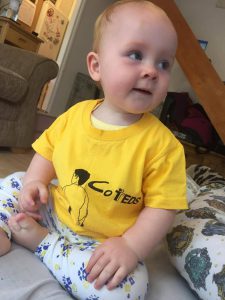
Around 300 TEDS twins have joined the CoTEDS project with their children. So far we have started collecting our first wave of data from the parents of children with a child older than 12 months. Data is collected via questionnaire and we’re asking parents to report on their child’s pregnancy, labour and health, their sleeping, crying, feeding, and development, as well as other aspects of their child’s behaviour such as activity levels and shyness. The questionnaire then asks twins about their parenting behaviour and wellbeing as a parent – which includes questions about the amount of sleep that they are getting and support from other adults. When twins complete this first wave of data collection we send a CoTEDS t-shirt to their child, to say thank you and to welcome our new participants! So far, almost 100 twins with one-year-olds have completed this questionnaire, and another 100 twins with children older than two.


While these twins have been busy completing their first questionnaires, we have been designing the next wave of data collection to be answered by twins after their child turns two. In this wave we repeat many of the questions from the first questionnaire, but this time we also ask twins to play some short games with their two-year-old child. These are the same games that the twins completed with their parents when they were two-years-old through TEDS. So we will be able to compare how well the twins did on the games when they were two, with how their children do on the games now that they are two!

Highlights and challenges?

The first highlight was at the beginning of the project when we started to reach out to the twins to ask whether any of them had become parents. We weren’t sure what to expect but slowly our inbox was littered with photos of children along with excited messages about the new study. The next highlight came about one year later when the first twin completed the first CoTEDS questionnaire, and then again when we received the first photo of a child in their CoTEDS t-shirt!

The biggest challenge has been trying to design questionnaires that will remain relevant for many years to come, for all families and children from all cultures and backgrounds. In TEDS the twins were all the same age and so they all provided data at the same time while they grew up. However, the children of TEDS twins are all being born at different times, and will continue to be born indefinitely for several decades. This means that (if CoTEDS continues to run for as many years as TEDS) twins will continue to complete the same questionnaires about their children for many years to come. How do we predict the kinds of questions that will still be relevant to our research in 15 years’ time? And how will we keep up with collecting data from so many children of different ages, living all over the world? It will be a challenge to work out the logistics for running this recruitment and data collection as our sample size grows, and we will definitely need a bigger team!

Three generations: TEDS twins Jonathan and Catherine with their parents and their children (two of which are also twins!)

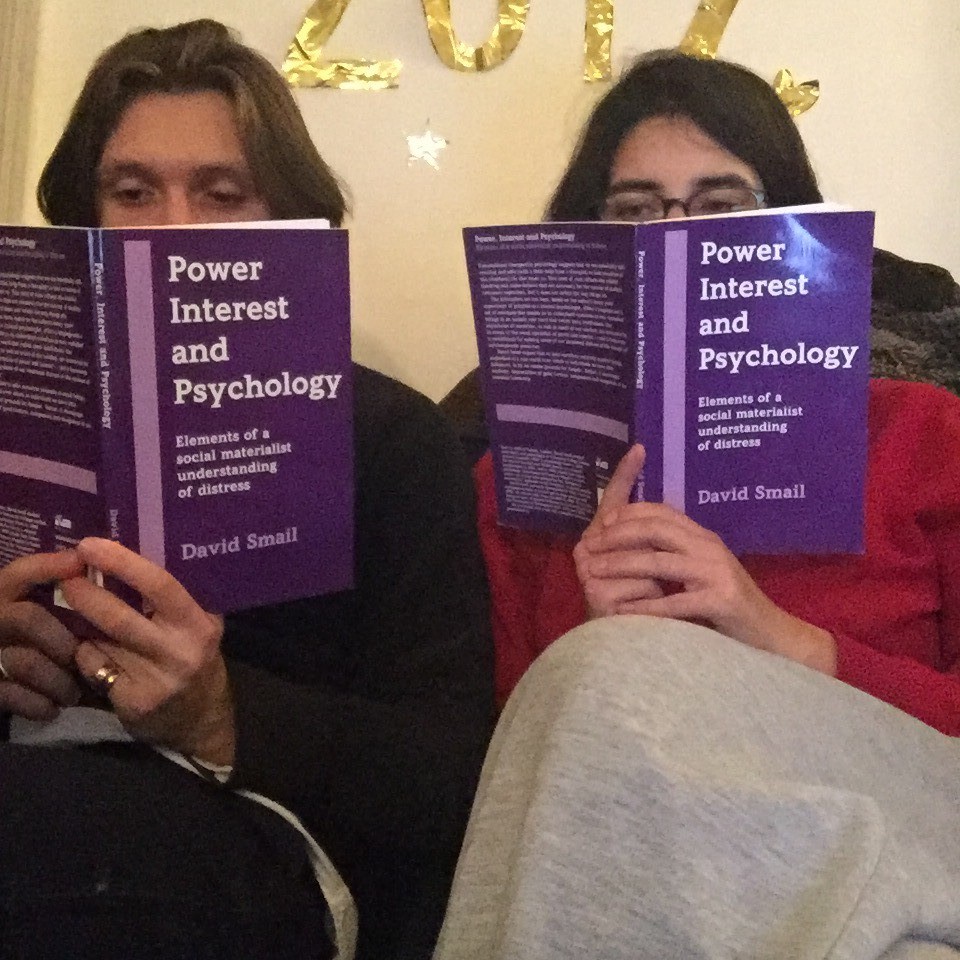
A book by David Smail: Power Interest and Psychology

I have just finished reading a book by the British clinical psychologist David Smail (1938 – 2014), called “Power Interest and Psychology: Elements of a materialist understanding of distress”. My housemate bought Smail’s book after I complained that his opinions on mental health were out of date, based on literature from half a century ago. With Smail’s book we hoped to gain insight into a more modern perspective on mental health in our society.

Continue reading

© 2026 The EDIT Blog

Theme by Anders Norén — Up ↑