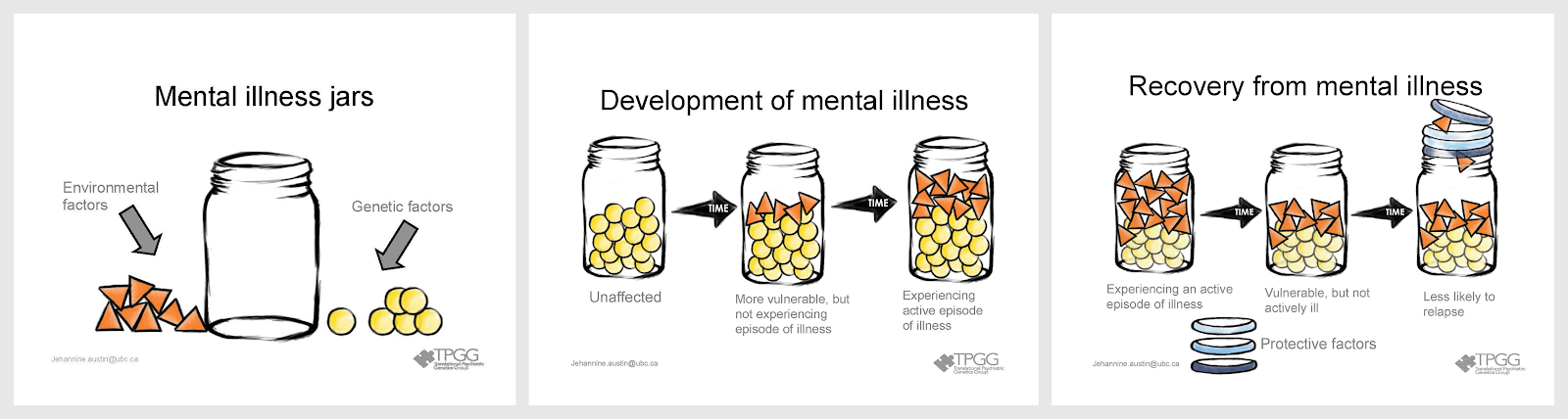
Heritability is the proportion of variation in a given population that is due to genetic differences. If a trait is highly heritable, it is more likely to be shared between individuals of close genetic relatedness, regardless of whether they share the same environment. This concept can be difficult to wrap your head around, and as a result it is commonly misunderstood. In this post Kirstin and Meg [EDIT Lab PhD students] explain how heritability is measured and clear up some common misconceptions.


Heritability has been a controversial topic over the years. Many people have probably heard the phrase “nature or nurture”. This suggests an “either/or” situation where either genes OR the environment influence traits such as cognition, personality or well-being. Sometimes people hear the term ‘heritability’ and assume that this takes the side of ‘nature’ in this debate – and that some deterministic claim is being made. In reality, ‘nature vs nurture’ is a false dichotomy. Both genes and environments have a role to play. Determining the relative influence of genes and environment on a given trait, especially those relating to mental health and wellbeing, is difficult, but will hopefully help us to understand the extent to which they can be prevented or treated through environmental interventions. See last week’s blog post for a really helpful summary of gene environment correlations.
Twin Heritability
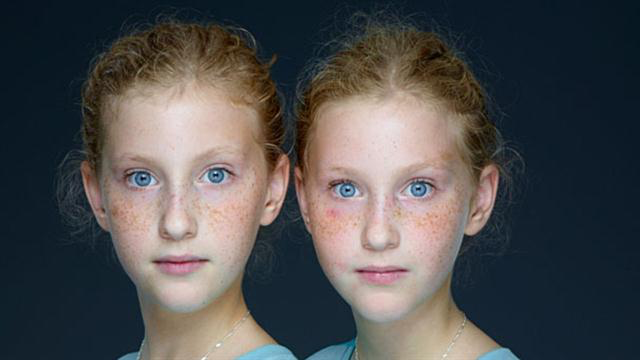
Historically, heritability was studied by observing similarities between family members. However, this method did not allow the separation of the effects of the environment from those of genes, because people in a biological family usually share both. Researchers realised that by using twins they could better untangle the relative contribution of genes and environment (defined as anything not genetic in this case) to any given trait. There are two types of twins: (1) monozygotic (MZ) – identical twins who develop from a single fertilised egg splitting into two embryos, thereby sharing the same genetic information, like genetic clones; and (2) dizygotic (DZ) – fraternal twins who are the result of two separately fertilised eggs, therefore they are no more genetically similar than any other full siblings. Both MZ and DZ twins share their in-utero environment, birth date and familial experiences and environment. Twin studies maximise on the fact that MZ and DZ twins each have the same proportion of shared environment (100% the same), but a different proportion of shared genes (100% same for MZ, 50% same for DZ).
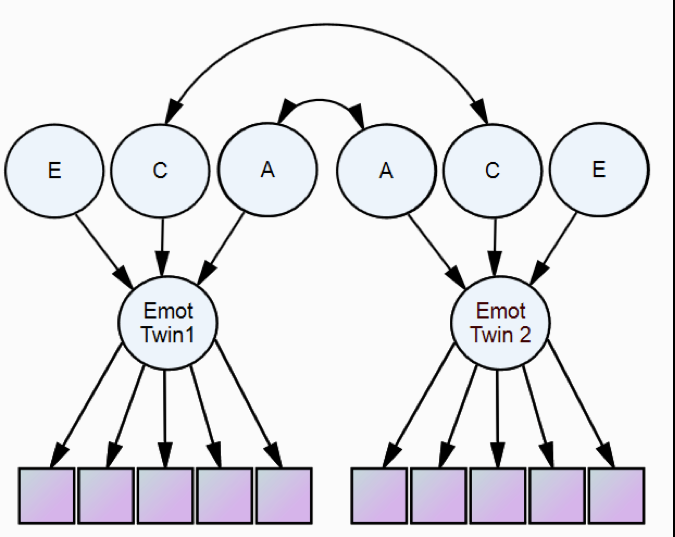
In twin studies the variance of a trait can be broken down into three contributing factors: genetic (A), shared environmental (C; those that lead to similarity within the pair, such as family socio-economic status), and non-shared environmental (E; Environmental factors that have a child-specific effect, such as life events). E does not contribute to the phenotypic correlation between twins as it is, by definition, unique to each twin.

The proportion genes and the assumption of shared environment for MZ and DZ twins
There are various assumptions that the twin method relies on – namely the assumption that MZ and DZ twins share an equal amount of their environments. It is useful to be aware of the assumptions; they have been the source of much controversy! In general, estimates of heritability from twin studies are relatively consistent and the twin approach (as well as more complicated extensions of it) are still widely used.
SNP Heritability
A SNP refers to a Single Nucleotide Polymorphism – and is the most common type of genetic variation. It is basically a point in the genome where a single base pair is replaced with another. Importantly, this means that it is a location in the genome where people can differ. For example, maybe I have a section of one strand of my DNA that looks like this:
C G T A G
But the person next to me looks like this in the same section:
C T T A G
The part highlighted in red is a SNP – and we both have different polymorphisms. This is also called an allele. I have one allele (G) and my neighbour has another allele (T) at this point in the genome.
When we estimate SNP heritability, we measure these common polymorphisms all across the genome for as many people as possible (think thousands at least!). In the same people we measure the trait that we are interested in (maybe this is height, or even something more complicated like depression). We then test the extent to which genetic similarity (i.e. having more of the same polymorphisms across the genome) predicts phenotypic similarity on the trait measured. In its simplest form you essentially derive a regression coefficient that relates genetic and phenotypic similarity in your sample of unrelated individuals. Here is a useful reference if you want to know more of the gritty details.
Interpreting heritability: Clearing up some common misconceptions
-
Heritability tells us how much of a trait is ‘genetic’
Not always. If something does not vary at all in a given population then it will have zero heritability (even if the thing in question is definitely under genetic control). For example, having a brain is not a heritable trait, but variation in brain function could be. Similarly, if the environment is highly constrained and prevents variation, then heritability will also be low, or non existent even if genetic influences do exist.
-
I’ve seen that trait x is y% heritable. Great! That applies equally across all populations, right?
It is important to be aware that heritability is specific to the population and environment in which it is measured. As a result, you should be careful not to assume that heritability will be the same for all studies or groups (although often it is really similar!).
-
Soo… if x% of personality is heritable, then if I know someone’s genome I’d know about x% of their personality! This seems like an awesome idea for finding the right partner/housemate/diet and exercise regime!
This one comes back to the point about population differences again. Saying that genetic differences contribute to ~30% of differences in height across a population is not the same as saying that you could predict or “explain” ~30% of someone’s height based on their genome (so if you get one of those emails trying to genetically match you with your perfect flatmate / partner I’d give that a miss).
-
Isn’t it a little deterministic to say something is genetic?
Not at all. Something being heritable might mean in certain circumstances it is more likely, but it definitely doesn’t mean anything is inevitable. Also remember that heritability is influenced by the interaction between genes and environments. In fact changing an environment can have a huge influence on traits that have genetic influence in a population. There is nothing fatalistic about the fact that genes play a role in traits – it is just one facet of a very complicated picture.

-
Does this mean we can tell things about different groups of people based on their genes?
No! Nope. Not at all. Heritability does not imply any inherent differences between groups. Heritability is affected by things like how we choose to measure traits and genes, time (of life or in history), environment, and population. It is not fixed. It is not valid to use estimates of heritability to draw conclusions about differences between groups.
For a very prescient and much more detailed summary of heritability, its measurement and how it should be interpreted (or not) you should read this great article by Peter Visccher (2008