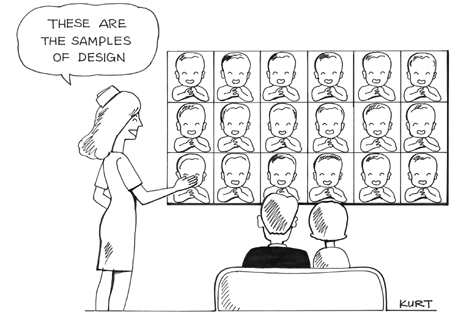
Mention that you are researching ‘genetics and mental health’ and you might notice a sense of unease in your audience. We usually tack on additional information, which ranges from, “investigating how we can predict response to psychological therapies using genetic information, and of course we incorporate environmental factors too”, to “but don’t worry, not in a eugenics-y way”, depending on the context. Here, Meg [EditLab PhD student] discusses why we shouldn’t be afraid to talk about the genetics of mental health.
Category: Life Scientific (Page 4 of 5)
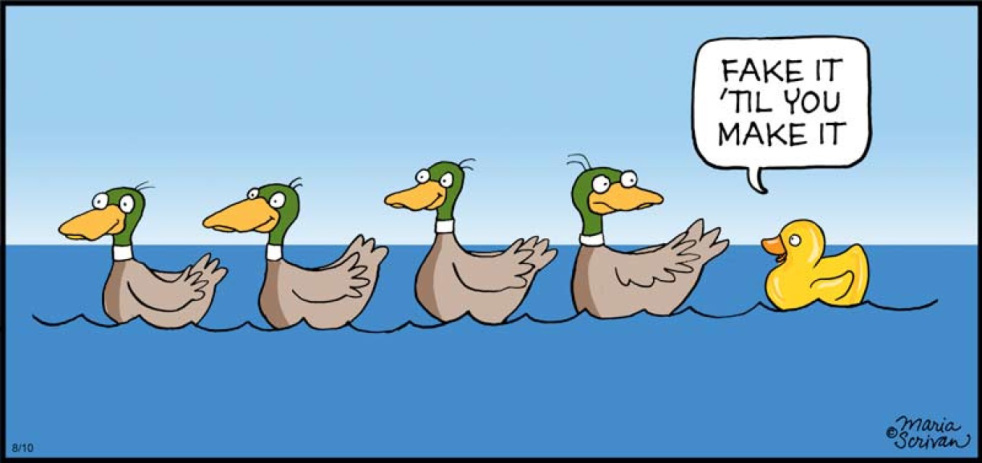
This week, following on from our previous blog on mental health in mums, we are delighted to welcome past EDITlab PhD student, Hannah Brown, now mum to a one-year-old boy. In this post she shares her fears and strategies about depression and anxiety in the early days of motherhood.

A recent blogpost in the research policy section on the website of HEFCE (the Higher Education Funding Council for England) – a place which might well have a creditable claim to the highly-contested title of ‘Nerdiest Corner of the Internet’ – highlights the body’s continuing focus on interdisciplinary research in the next Research Excellence Framework (known colloquially as ‘The REF’); the system by which the quality of research in UK universities is assessed. While pretty much everyone is in agreement that interdisciplinary work is a Good Thing, I often wonder if we are appreciative enough of the potential stresses associated with trying to work across disciplines .
In mid-October, I attended a Mental Health First Aid (MHFA) training course, which is available to all staff at King’s College London. The training course aims to (1) raise awareness of mental health, and (2) teach how to recognize and provide initial support to someone who is struggling.

Molly Davies
Research Assistant
A bit about me: my entire higher educational background is in psychology and psychological services. As such, I was excited to learn that King’s College London offers a Mental Health First Aid (MHFA) course to all of their employees. The MHFA organization first began in Australia in 2001 and since then has spread to 24 countries. It came to England in 2007 as part of a national movement to improve public mental health. One of my coworkers had taken it previously and highly recommended it. I needed very little convincing; I signed up for the course out of personal interest, but I was also curious to see how issues around mental illness were disseminated and explained to those outside the field.

The training course I attended lasted two full days, and the attendees were from all faculties at King’s College London and from all different backgrounds. The first thing I noticed, as soon as I entered the training room, was that we were all women (see Michela’s [Clarke, EDIT Lab placement student] blog post from earlier this week for more information on why this is not surprising, but is very significant). The second thing I noticed, as the course progressed, was that everyone was willing to be open and honest about their personal history and reasons for attending this course. Most people were there to learn how to support friends, family, and/or colleagues or students that they worked with on a daily basis.
For the most part, the course dealt with the topics that I would have expected. One of the more notable takeaways of the course itself was the idea of mental health vs. mental ill health.
Everyone has mental health.

The MHFA instructors emphasised the fact that everyone has mental health. Just as physical health does not only refer to infirmity, mental health does not only refer to mental disorders but rather to the whole spectrum of mental well-being and mental illness. We all fluctuate on this spectrum and at times, perhaps even from one day to the next, our mental health may change to mental ill health.
I greatly enjoyed all the activities, videos, and slides that the instructors utilised in order to teach us about the various mental health diagnoses, what they look like/feel like, how to recognize the signs in others, and what to do with someone in crisis and how to direct them to the appropriate professional services. The course does well at providing information and raising awareness of mental ill health.
“Awareness goes beyond stigma.”
As someone who has been studying mental health for years, I tend to forget that others are not as familiar with the topic and perhaps don’t know what is classed as a mental health disorder. Oftentimes in this field, the main issue we discuss around awareness is about stigma and the need to normalise mental illness so sufferers feel empowered to seek and ask for help when needed.
However, a potentially negative side effect of normalisation is people begin to think of their mental ill health as just that: normal. If you say everyone gets stressed, then that means I am weak if I feel overwhelmed by my own stresses. If you say everyone feels anxiety, then the fact that I feel anxiety on a daily basis isn’t cause for concern. In fact, one of my peers on the course was unaware that there was such a thing as clinical anxiety. It wasn’t that she felt she would be judged for seeking help; it was that she genuinely had no idea that her daily feelings of anxiety weren’t “normal”, and were something that she could seek help for.
“She genuinely had no idea that her daily feelings of anxiety weren’t “normal”.”
As it turns out, awareness isn’t only about making it acceptable to seek help, but also about realizing when something is, quote-on-quote, “normal”, and when there is a need to ask for assistance. Although the MHFA course was centered on teaching us to recognize the signs of someone else in crisis, a side benefit was learning to recognize those signs in yourself as well.
I would highly recommend the course to anyone.

Recently I attended the annual Behavior Genetics Association (BGA) meeting in Oslo. Having gone every year for the first decade or so of my career, since having children it has been a rarer pleasure, and I was delighted to be there. Before going, some of us had talked about writing a blog reporting on the new findings presented, but something even closer to my heart than the science struck me most in the time I spent there. This was the greatly increased visibility of the women at the meeting.


All a-Twitter
I have a mild obsession (well, actually I have several, but only one is pertinent to this piece). Most of us have a thing we spend too much time on given its relative importance – computer games, knitting, running, animal species where the genus and the species are the same word (that last one might be quite specific). My obsession is Twitter. I love Twitter. I also hate Twitter. It’s one of those things. Like Marmite, except more socially acceptable to use on the train.

It’s about 18 months since I started my latest fellowship, and I am still a couple of years away from the feeling of impending doom that will no doubt accompany the last 18 months of my contract. So as I sit here on my temporary island of temporary calm I thought that I would share some thoughts and advice that I hope will be of use to anyone thinking of applying for fellowships themselves…

I was recently chatting with an early career researcher in a colleague’s group, who had read some of the pieces on our blog about balancing different activities. He was particularly interested to hear my thoughts about saying no… So here they are.

A friend of mine recently gave birth to a beautiful baby boy, but within months she was at the end of her tether with sleep deprivation. Like many parents, she was confused by conflicting advice from midwives, nurses and well-meaning friends – not to mention the many books available. But as a professor of psychology who specialises in sleep research, my advice was to consider the science, then make a choice that suits the whole family. This advice is shared by paediatric sleep experts worldwide who have now introduced Baby Sleep Day on March 1. 

A book about how James Watson and his sidekick Francis Crick won the Nobel Prize. Also there was Maurice Wilkins. Oh – and some woman who wouldn’t wear lipstick (but was handy with a camera).