Tag: Science Communication

Today we have some reflections from Dr Holan Liang, part-time Consultant at Great Ormond Street Hospital and Honorary Senior Clinical Lecturer at UCL, on her journey through academia, motherhood, writing and part-time clinical work in medicine. You can follow her on Twitter on @shrinkgrowskids.
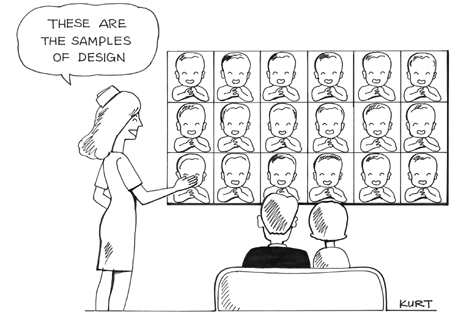
Mention that you are researching ‘genetics and mental health’ and you might notice a sense of unease in your audience. We usually tack on additional information, which ranges from, “investigating how we can predict response to psychological therapies using genetic information, and of course we incorporate environmental factors too”, to “but don’t worry, not in a eugenics-y way”, depending on the context. Here, Meg [EditLab PhD student] discusses why we shouldn’t be afraid to talk about the genetics of mental health.

Methods and concepts in Behavioural Genetics are intrinsically statistical, and jargon and acronyms abound. This often makes the research difficult for people outside of the field (and in the field) to understand and critique. In light of this, Rosa [EditLab PhD student] takes a look at the world’s most famous statistics book, pulling out examples of everyday statistical slip-ups, and applying them to behavioural genetics.

Most behavioural geneticists probably hope that their research will be understood by their family and friends, other researchers, and even journalists and politicians. It is not very handy, then, that an accurate definition of heritability, the most important concept in behavioural genetics, cannot be reduced to much more than ‘the proportion of variance in a trait that is explained by genetic variance’*. For us all to interrogate and interpret evidence, and spread good ideas, we need to demystify definitions, and get everyone on the same page with some of the basics of statistical fluency.
‘How to Lie with Statistics’, a humorous statistics primer for the general reader (first published in 1954) offers much inspiration. The writer, Darrell Huff, was not a trained statistician, but the relatable, vivid and breezy language resulting from this makes the book an absorbing read. Many of the ‘ways to lie with statistics’ included in the book are crude and apply more to advertising in the 1950s than modern peer-reviewed science (e.g. chopping off much of the axes on a graph to make a curve appear steep). However, the uncomfortable truth is that behavioural research is difficult and messy. Sometimes, research articles tread the fine line between a neat summary and a purposeful misrepresentation. Bias of journals and media outlets towards ‘exciting’ ‘novel’ ‘positive’ results is only one of the problems reducing the reliability and transparency of research. It is essential to think about how things can go wrong in research right from the initial design to analysis and publication, in order to spot what information is not presented as well as potential problems with what is.
Here are three examples of general statistical concepts from Huff’s book and how they relate to Behavioural Genetics.
‘The sample with the built-in bias’ (selection bias)
“A psychiatrist reported once that practically everybody is neurotic. Aside from the fact that such use destroys any meaning in the word ‘neurotic, take a look at the man’s sample”. The psychiatrist’s impression has been biased by their line of work.
To be useful, a sample for a scientific study should be representative of the population it is trying to investigate. But by definition, a sample doesn’t give a complete objective picture of the whole human population. Often, it has selected itself. We need to work out where the bias is coming from and take it into account. This is difficult when the people we want to know about are precisely the people who aren’t participating. These people could be less likely to agree to take part and to remain in a study over time for many factors such as old/young age, disinterest, ill-health, living far away, not being able to afford a bus trip and so on. So when we use our biased sample to investigate conscientiousness, we might reach the conclusion, like the psychiatrist in the book, that ‘practically everyone is conscientious’.

Our samples are not necessarily representative of the population we’re interested in – and this can bias our results.
Turning to genetic research, we know that conscientiousness, as well as all the other factors listed are heritable. If we search for genetic variants that are more common in very conscientious people than non-conscientious people, we could be scanning for genetic markers that influence correlated traits more than they influence conscientiousness. Researchers often adjust for such heritable correlated traits in order to discover genetic variants independently associated with the primary trait. However, it isn’t as simple as that – adjusting for covariates can lead to false positives.
There are many sample-related problems for genetic association studies, such as genetic ancestry differences between cases and controls and the neglect of individuals with non-European ancestry. This is particularly problematic if we come to use genetic variants (amongst other factors) to predict the onset of medical and psychiatric issues, because our ‘precision medicine’ solutions won’t be helpful for everyone around the world.
Difficulties with reporting and measuring
When samples rely on people to tell the truth about themselves, we might find out more about who they want to be than who they are. Duff uses the example of the university alumni questionnaire. In addition to the problem that the questionnaire reaches a probably biased sub-sample (e.g. with known addresses), there is the problem that people can’t be trusted to give accurate self-reports. Bragging likely inflates universities’ figures for the average graduate salary. Although this could be balanced out by people minimising their salaries to evade tax.
Unfortunately, the traits that are most interesting to behavioural scientists are often not easily measured and quantified. For example, studies of mental health problems rely on self-reports of symptoms such as abnormal experiences and beliefs, which are vulnerable to response bias, rather than ‘objective’ biomarkers. Some samples, such as the Twins Early Development Study, have valuable cross-reporter data. Interestingly, parents, teachers and children themselves do not agree much about the severity of childrens’ behavioural problems: their ratings tend to have a correlation of only ~0.3. Genetic research shows that the strongest genetic influences are on what raters see in common about children’s behaviour (‘trans-situational behaviour’), but there are also rater-specific genetic and environmental influences. We might assume that tapping into what is shared, and removing rater-specificity, gives a better, more accurate measure. However, rather than emphasising disagreement and reporter-specific error, many researchers now highlight that parents, teachers and children have different insights, and are reporting on different aspects of a child’s behaviour. For example, children don’t necessarily behave in the same way at home as at school. These aspects of behaviour seem to have different genetic and environmental influences on them.
Correlation vs causation
Duff discusses the ‘fallacy that if B follows A, then A caused B’. Smokers may end up with worse grades than non-smokers, but smoking isn’t necessarily what is causing the worse results. The relationship could be the other way round, with poor grades driving individuals to chain-smoking, or there could be no real relationship at all. More likely, some third factor influences both such that they appear related. Perhaps more extraverted people, or less intelligent people, are more likely to both smoke and achieve worse results. There are countless reasonable explanations.

Correlation does not equal causation (Image from xkcd)
In terms of our research, it is well-established that the development of anxiety is partly down to environmental factors. But negative parenting, for example, doesn’t necessarily have a simple, one-way influence on anxiety. It can go the other way around, with childhood anxiety shaping negative parenting. Importantly, we need to account for the role of genetics (analogous to the third factor in Duff’s example) in studies. This is because parenting, like most measures of the environment, shows significant genetic influence. Consequently, genetic influences on both parenting and child anxiety may account for their association. Genetic influence on exposure to environments is termed ‘genotype-environment correlation’. Passive genotype-environment correlation reflects the fact that biological parents provide both genes and the environment to their children, leading the two to be correlated. For example the offspring of anxious mothers will likely receive a genetic predisposition for anxiety as well as the environmental effects of an anxious parent. Another mechanism is evocative genotype-environment correlation, where environmental responses are evoked by genetically-influenced behaviour. For example, infants who cry easily might be more likely to evoke negative parenting.
The Children-of-Twins (CoT) design can control for shared genes between generations and so help unravel the mechanisms of intergenerational transmission. CoT data indicate that the association between parental and adolescent offspring anxiety largely arises because of a direct association between parents and their children independent of genetic confounds (i.e. living together) (Eley et al., 2015). [Edit: For more on the CoT design and intergenerational associations see this great post by Tom McAdams]
* Or, ‘the extent that trait differences can be explained by inherited differences in our DNA’. Heritability is a property of the population and its variability, not the individual – it does not capture why a particular person has a trait/disease. It is specific to how the trait was measured, and to the population sample it was measured in. Therefore, we look more at overall patterns across different studies rather than specific estimates.
In mid-October, I attended a Mental Health First Aid (MHFA) training course, which is available to all staff at King’s College London. The training course aims to (1) raise awareness of mental health, and (2) teach how to recognize and provide initial support to someone who is struggling.

Molly Davies
Research Assistant
A bit about me: my entire higher educational background is in psychology and psychological services. As such, I was excited to learn that King’s College London offers a Mental Health First Aid (MHFA) course to all of their employees. The MHFA organization first began in Australia in 2001 and since then has spread to 24 countries. It came to England in 2007 as part of a national movement to improve public mental health. One of my coworkers had taken it previously and highly recommended it. I needed very little convincing; I signed up for the course out of personal interest, but I was also curious to see how issues around mental illness were disseminated and explained to those outside the field.

The training course I attended lasted two full days, and the attendees were from all faculties at King’s College London and from all different backgrounds. The first thing I noticed, as soon as I entered the training room, was that we were all women (see Michela’s [Clarke, EDIT Lab placement student] blog post from earlier this week for more information on why this is not surprising, but is very significant). The second thing I noticed, as the course progressed, was that everyone was willing to be open and honest about their personal history and reasons for attending this course. Most people were there to learn how to support friends, family, and/or colleagues or students that they worked with on a daily basis.
For the most part, the course dealt with the topics that I would have expected. One of the more notable takeaways of the course itself was the idea of mental health vs. mental ill health.
Everyone has mental health.

The MHFA instructors emphasised the fact that everyone has mental health. Just as physical health does not only refer to infirmity, mental health does not only refer to mental disorders but rather to the whole spectrum of mental well-being and mental illness. We all fluctuate on this spectrum and at times, perhaps even from one day to the next, our mental health may change to mental ill health.
I greatly enjoyed all the activities, videos, and slides that the instructors utilised in order to teach us about the various mental health diagnoses, what they look like/feel like, how to recognize the signs in others, and what to do with someone in crisis and how to direct them to the appropriate professional services. The course does well at providing information and raising awareness of mental ill health.
“Awareness goes beyond stigma.”
As someone who has been studying mental health for years, I tend to forget that others are not as familiar with the topic and perhaps don’t know what is classed as a mental health disorder. Oftentimes in this field, the main issue we discuss around awareness is about stigma and the need to normalise mental illness so sufferers feel empowered to seek and ask for help when needed.
However, a potentially negative side effect of normalisation is people begin to think of their mental ill health as just that: normal. If you say everyone gets stressed, then that means I am weak if I feel overwhelmed by my own stresses. If you say everyone feels anxiety, then the fact that I feel anxiety on a daily basis isn’t cause for concern. In fact, one of my peers on the course was unaware that there was such a thing as clinical anxiety. It wasn’t that she felt she would be judged for seeking help; it was that she genuinely had no idea that her daily feelings of anxiety weren’t “normal”, and were something that she could seek help for.
“She genuinely had no idea that her daily feelings of anxiety weren’t “normal”.”
As it turns out, awareness isn’t only about making it acceptable to seek help, but also about realizing when something is, quote-on-quote, “normal”, and when there is a need to ask for assistance. Although the MHFA course was centered on teaching us to recognize the signs of someone else in crisis, a side benefit was learning to recognize those signs in yourself as well.
I would highly recommend the course to anyone.
Sometimes you find yourself stumbling across little titbits of surprising information. Those moments that stop and make you go “Huh”. Some of these moments are more surprising than others. So today, for your blog enjoyment, I present you with a carefully curated series of things I learned this week. Things that I came across that made me stop and go “Huh”. I might even spend a bit of a time telling you more about what made them interesting, and what I’ve learned.