
Tag: research (Page 3 of 5)

This post was reposted from its original version on the Said and Dunn blog.
In this week’s post, we focus on recent work by Dr. Karmel Choi, a postdoc collaborator in the Dunn Lab, who studies the protective role of physical activity for depression. As summarized below, Karmel recently published a research study looking at exercise as a way to prevent depression. However, we also know that exercise can help people who may already experience depression. To learn more about how exercise can help in preventing depression and reducing its symptoms, check out our thoughts below.
There appears to be a general belief that the number of people experiencing anxiety and depression is on the rise. In this blog Clinical Research Training fellow Georgina and Lecturer Katie explore why this is not the case by looking at the prevalence of these disorders over time.

Katie

Georgina

Studying the causes of mental health helps remove blame within families
Mental health research does not aim to identify a single factor to “blame” for a disorder. Instead, researchers hope to understand the complex interplay of a number of different factors and use this information to generate new approaches to prevention and treatment.

Alicia

Tom
“Our mental health is the result of the interaction of many biological, social and environmental influences.”
Those who have concerns about research leading to all the accountability being placed on one aspect of their life, be it their relationships, lifestyle or biology, may be reassured to know that mental health is very rarely influenced by just one thing. Our mental health is the result of the interaction of many biological, social and environmental influences. Even then, it is not the case that a specific combination of these influences leads to mental health difficulties. Rather, all these factors combine to influence a person’s likelihood to suffer from poor mental health.
This is the principle that most modern research is built upon. Although sometimes studies may focus on one experience that can impact our mental health, it is understood that these experiences do not occur in isolation. It is important to interpret the findings while bearing in mind the other factors that are at play in our lives. For example, even if research were to find that a family factor was associated with mental health, the findings would need to be considered alongside the biological, cultural and social background of the participants. An association between two things does not simply mean that this factor has caused the problem, just that they more commonly occur together.
“Identifying the factors that influence our mental health is also a necessary first step to creating treatments and interventions.”
Identifying the factors that influence our mental health is also a necessary first step to creating treatments and interventions. Researching the biology underlying some mental health conditions has enabled the development of medications that help reduce symptoms. For example, exploring the neural mechanisms involved in emotion processing has helped to identify the benefits of using selective serotonin reuptake inhibitors (SSRIs) in the treatment of anxiety. If relationships between family members are found to influence the likelihood of developing a particular mental health disorder, then this relationship may also be a good place to start when deciding what treatments to offer. For example, many mental health services for young people in the NHS offer family therapy, where family members are encouraged to come along to the sessions so that they can work together to solve things that they are struggling with at home.

In any case, no research finding should lead to blame being placed on family members. As our understanding of genetic influences on mental health conditions is growing, there are some concerns that this could lead to tension between children and their parents. However, it is important to remember that our genetics are what make us similar to our families. Each parent shares approximately half of their genes with their offspring. Finding that genetics plays a role in our mental health should not be viewed as something that could divide families, but as something that can help them to understand each other.

What we can (and cannot) do with your DNA sample
Your DNA is a fundamental part of who you are. Unless you have an identical twin (and possibly not even then), it is incredibly unlikely that anyone else has, or will ever have, the same DNA sequence as you. As such, when you provide your DNA for research, or to a doctor, and especially to a company, it is important to ask “what will happen to my DNA?” In this blog, Chris [EDIT Lab PhD Student] and Joni [Post Doc at the SGDP Centre] tackle what happens (and what doesn’t) to your DNA.

Next in our Mythbusters blog series, we tackle the common question “why is it worth participating in research?”. Although it can be easy to overlook the benefits, many find participating in research studies to be a very fulfilling experience…

Genetics research has played a vital role in improving our understanding of biology, disease, treatments and even the environment. EDIT lab PhD students Chris and Daniel provide a couple of examples to illustrate why genetics research is important.

Daniel Rotbardt, PhD student

Chris Rayner, PhD student

Molly Davies, PhD student
Welcome to the first post in our next blog series: Mythbusters! This series is about common “myths” or beliefs about genetics and psychology, particularly those that have arisen in conversations we have been having with members of the public about the “Genetic Links to Anxiety and Depression” or GLAD Study. There are many easily made misunderstandings about the meaning of research findings , including issues such as research ethics and data security, and about the big picture of why our research is important. Below are examples of some of the questions/comments that we have received:
- “Not more money for research! We should be putting all of that money into the NHS to treat these disorders instead.”
- “Everyone feels depressed or anxious sometimes. People should just learn how to deal with their emotions!”
- “Nobody has found the gene for depression or anxiety, so they must not be genetic.”
- “Anxiety and depression are all about trauma so why look at genetics?”
- “If I have the genes for depression or anxiety, my children will definitely develop these disorders”
Our mythbusting blog series aims to address some of the most common misconceptions that we have come across, and explain more about taking part in studies, why research is important, and how this will help future generations. We hope that these mythbusters will be accessible and interesting for everyone, and we’d love feedback on them!

Last but not least in our A-Z series of blog posts, guest contributor Professor Alice Gregory [co-head of the Goldsmiths Sleep Lab] writes about the importance of sleep.
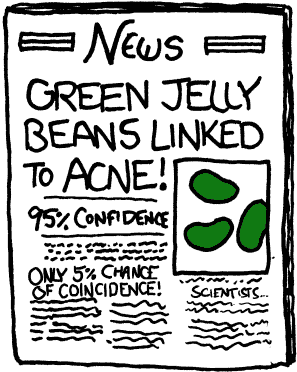
This week for our S blog, we bring a post on the important issue of statistical significance, written by a guest blogger from the Said & Dunn blog, led by Dr Erin Dunn. This post is by Khalil Zlaoui, a graduate student in the Dunn Lab. We are very grateful to him for sharing this content with us. The standard measure of statistical significance in science (i.e. whether you believe a result is true) is when your effect is associated with a p value of less than 0.05. What this means is that you would expect that finding by chance no more than one in twenty times. Here Khalil discuss various problems with that approach and suggestions that have been made to address them.