Elisavet and Iona, PhD students in the EDIT Lab, write about women’s mental health in the perinatal period and the current interventions available.

Iona, PhD student

Elisavet, PhD student
Research on the development and treatment of emotional disorders, discused and digested by the EDIT Lab Team and collaborators
Iona, PhD student
Elisavet, PhD student
Elisavet, PhD student

Aliyah, placement student

Tin Tin, BioResource placement student
Aliyah, EDIT Lab placement student

Filip Kaleta, 2nd year PhD student

Prabhleen, CoTEDS Placement Student

Thandeka, TEDS Placement Student
In recent years, there has been a rise in concern for mental health among children and young people. According to the 2017 Mental Health of Children and Young People (MHCYP) survey, 18% of children aged 7 to 16 years and 22% of young people aged 17 to 24 years old were found to have had a probable mental health disorder in 2022 alone.
In response to these concerns, various initiatives have been implemented in the UK. Here, we will take a look at three in particular: The Young People’s Advisory Group within the Biomedical Research Centre (BRC), Mentally Healthy Schools and The Peer Education Project (PEP). Each initiative aims to tackle youth mental health from a different angle, either by involving young people in the planning of mental health initiatives, focusing within schools or utilising peer relationships in supporting mental health
The Young People’s Advisory Group
One way to improve mental health is to ensure we undertake work that addresses the issues considered important by those individuals living with the relevant conditions(s). Advisory Groups are initiatives that aim to include members of the public and people with lived experience in the planning of projects. Young People’s Advisory Groups specifically allow young children and people to take on the role of research partners, assisting in the design of the research. This is very different from just being participants of research as it allows their voices to be heard. The roles of an advisory group include gathering opinions on the appropriateness of the research idea and on aspects of the design, such as the approach to recruitment. Advisory groups strive to achieve ‘meaningful involvement’ amongst young people and researchers.
An example of such an advisory group is the Young Persons Advisory Groups within The Biomedical Research Centre (BRC). This includes children and young people in order to obtain their opinions on how research should be conducted. Meetings are held either virtually or at Guy’s hospital or London Bridge every couple of months, and members are given the opportunity to provide feedback on projects. This also gives them the chance to learn about careers focused on health research .Young People’s Advisory Groups can also help ensure that mental health research is delivered in such a way that is accessible and easy to understand to the public.

Mentally Healthy Schools
Children and young people spend a large proportion of their lives in school, making it an optimal environment for implementing mental health strategies. Mentally Healthy Schools, developed through a partnership between the Royal Foundation, the Anna Freud Centre, Young Minds and Place2Be, is one such initiative.
Mentally Healthy Schools aims to equip education institutions across the UK with resources, advice and information on mental health. The initiative strives for a ‘whole- school approach’ such that all areas of the school work together in achieving positive mental health and wellbeing amongst their students. Services such as ‘mental health toolkits’ and a mental health and wellbeing calendar are provided, which aim to raise awareness of mental health amongst students. There are also resources for staff members, allowing them to understand and recognise the signs of mental health in their students.
Mentally Healthy Schools recognises the importance of supporting young children and people in educational settings with tools that allow them to develop life skills and coping strategies. The initiative equips schools with activities they can use with their students, in a way which allows them to reflect on their mental health and wellbeing.

The Peer Education Project
On an interpersonal level, peer relationships can be powerful for mental health education. The Peer Education Project, led by the Mental Health Foundation, is an initiative designed to deliver a mental health education programme to secondary schools across the UK. With the goal of ensuring that everyone can access mental health information, the Peer Education Project trains older pupils within schools to be ‘peer educators’ delivering mental health information to younger pupils.
The Peer Education Project is an unusual initiative in that it utilises peer relationships. This offers another route beyond time-pressured teachers to ensure young people are educated about and able to recognise the importance of mental health and positive wellbeing. This in turn should equip students at a young age with skills on supporting good mental health.

In summary…
Whilst it may take some time to see the impact of these initiatives, it is clear that they have value in providing education around mental health at the very least. In addition to bringing attention to the need for mental health support, they also enable a variety of hands-on approaches outside of clinical services to bring about change in the wellbeing of our youth.
Links to further mental health related initiatives:
[vc_row type=”in_container” full_screen_row_position=”middle” scene_position=”center” text_color=”dark” text_align=”left” overlay_strength=”0.3″ shape_divider_position=”bottom”][vc_column column_padding=”no-extra-padding” column_padding_position=”all” background_color_opacity=”1″ background_hover_color_opacity=”1″ column_link_target=”_self” column_shadow=”none” column_border_radius=”none” width=”1/1″ tablet_width_inherit=”default” tablet_text_alignment=”default” phone_text_alignment=”default” column_border_width=”none” column_border_style=”solid”][vc_column_text]
Bullying is a major problem in schools across the UK. The purpose of the anti-bullying week, happening from 14th to 18th November 2022, is to bring attention to this issue and discuss the ways by which we raise awareness and help victims of bullying.

Genevieve Morneau-Vaillancourt, Postdoctoral Research Fellow
[/vc_column_text][divider line_type=”Full Width Line” line_thickness=”1″ divider_color=”default”][vc_column_text]
The Anti-Bullying Alliance, a coalition of various institutions and individuals hosted by the National Children’s Bureau, has organised various events and activities happening this week. These activities focus on initiating meaningful conversations about bullying, finding concrete means to address this issue, and providing useful tools to help support children and adolescents. For example, the Odd Socks day, which is on Monday 14th November 2022, invites everyone to wear odd socks to celebrate the fact that everyone is unique. The hope is that this small gesture brings attention to the importance of inclusion and acceptance of individual differences.
What is bullying exactly? Many people often confuse bullying with other forms of interpersonal violence, such as victimisation or domestic violence. Therefore, providing a correct definition of bullying is important to identify how and when it happens. Bullying typically occurs between peers (which excludes siblings or romantic relationships). It can happen in person or online (cyberbullying) and can take many forms, including physical, verbal, emotional, or sexual. Bullying is mainly composed of three characteristics (Olweus, 1993). First, it must happen repeatedly over time between the same individuals, meaning that victims of bullying are consistently targeted by the same people (it can be a single individual or a group). Secondly, bullying involves an imbalance of power between bullies and victims. For example, the perpetrators may have a higher social status among their peers or may be physically stronger than their victim. Finally, bullying results from the negative intention to hurt the other person. As a result, victims of bullying often end up feeling down, humiliated, and alone. Whenever violent interactions between children or adolescents meet these three conditions, we can consider that it is bullying.
Why is bullying so concerning? Because research shows that it affects many young individuals and that it can have detrimental consequences on their health. Although prevalence estimates tend to vary across studies, between 10% to 30% of young people may be victims of bullying at school (Chester et al., 2015; Singham et al., 2017; National Center for Education Statistics, 2016). Estimates regarding cyberbullying also tend to fall within this range (Hamm et al., 2015). This means that up to one in three young individuals are affected by some form of bullying, either in person or online. These numbers are especially worrying when considering that bullying is associated with serious mental and physical health problems that often persist over time (Takizawa et al., 2014, 2015). Although this blog focuses to a larger extent on in-person bullying, you can learn more about research on cyberbullying by having a look at this blog in which bullying expert Louise Arseneault shared her thoughts about the subject. You can also check this blog by Alicia Peel about the benefits and drawbacks of online anonymity and its connections with cyberbullying .

Finally, what can we do about it? The good news is that bullying is modifiable so we can put interventions in place to address this problem. Many studies have tested this question empirically. For example, a recent meta-analysis of randomised control trials (which are often considered the gold standard in experimental research) suggests that implementing interventions reduces bullying perpetration and exposure, as well as the negative mental health outcomes often experienced by victims of bullying, like anxiety and depression (Fraguas et al., 2020). This meta-analysis shows that the positive impact of anti-bullying interventions is likely to last over time, with studies showing significant reductions in bullying lasting up to 30 weeks after the intervention ended. Lastly, one interesting finding from this meta-analysis is that anti-bullying interventions involving 140 people have the potential to prevent 1 person from being bullied (if the average rate of bullying is 15%). For cyberbullying interventions this estimate was 167 people. Although these effect sizes may be considered small, they are still encouraging because they mean that universal anti-bullying interventions, offered to entire schools, athletic and cultural groups involving young people have the potential to limit the number of young people exposed to bullying.

This year, the theme for the anti-bullying week is Reach Out. It encourages children, adolescents, parents, friends, teachers, and everyone noticing or experiencing bullying to talk about it with someone they trust. Last year, 80% of primary and secondary schools in England and Wales participated in the anti-bullying week, reaching out to over 7.5 million children and adolescents. Let’s hope that, again, it reaches as many people as possible this year. If you’re interested in learning more about the anti-bullying week and the events taking place this week, you can visit this website.
[vc_row type=”in_container” full_screen_row_position=”middle” scene_position=”center” text_color=”dark” text_align=”left” overlay_strength=”0.3″ shape_divider_position=”bottom”][vc_column column_padding=”no-extra-padding” column_padding_position=”all” background_color_opacity=”1″ background_hover_color_opacity=”1″ column_link_target=”_self” column_shadow=”none” column_border_radius=”none” width=”1/1″ tablet_width_inherit=”default” tablet_text_alignment=”default” phone_text_alignment=”default” column_border_width=”none” column_border_style=”solid”][vc_column_text]
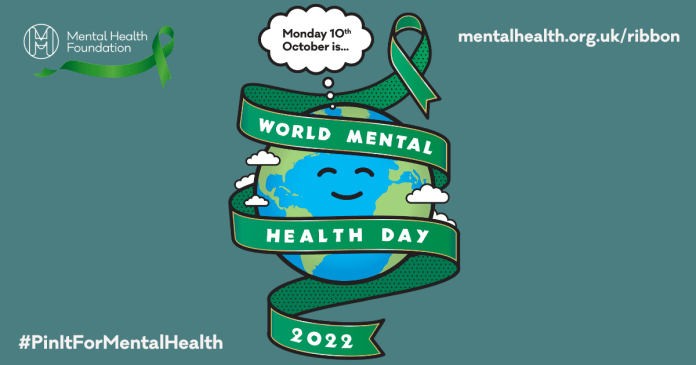
To celebrate, members of the EDIT Lab have reflected on why mental health and well-being should be a global priority and the role of research in meeting this goal.
“ Mental health problems may begin at a young age, present themselves through various symptoms and persist into adulthood, if left untreated. With our research, we hope to better understand the different patterns of mental health symptomatology and to identify the risk factors associated with poorer outcomes.” ~Elisavet Palaiologou (PhD student)
“When talking about health in general, there are still unfortunately false preconceptions and taboos surrounding mental health problems. My hope is that our research can help understand the vast repercussions that mental health can have and that we can ultimately contribute to the ongoing and growing conversation about the real place that mental care should have in our health care and education systems” ~Dr Genevieve Morneau-Vaillancourt
“Mental health difficulties can affect people of any age and change across a lifetime. Research plays an important role in helping to understand the factors contributing to these changes and how to best support people across development. I hope our research will highlight the need for continued conversations, funding and support of mental health initiatives around the world.” ~Celestine Lockhart (research assistant and PhD student)
“The majority of individuals who experience mental health symptoms in childhood go on to experience symptoms in adulthood. Researching why and when symptoms develop allows us to pinpoint both risk and protective factors as well as target appropriate timings for intervention” ~ Dr Ellen Thompson[/vc_column_text][vc_column_text]
 “Our research is beginning to understand which individuals are at risk of mental health problems or poor outcomes following treatment. But we need to improve the diversity of our participants so what we find applies to everyone.” ~Prof Thalia Eley
“Almost everyone will know someone who has struggled with mental health difficulties and know how debilitating it can be. This drives many of us to contribute to research that will ultimately help improve prevention and treatment. However, the majority of the global population are underrepresented in genetics research, as studies primarily rely on participants of European ancestry. More work is needed to ensure the experiences of underrepresented groups are included in genetics research so that everyone can benefit from any progress made.” ~Abigail ter Kuile (PhD student)
“Mental health problems can be very disabling and are often associated with many other health-related problems. They tend to worsen the situation and outlook for already vulnerable groups with increased disparities as a result. If we can continue to do research that highlights the full spectrum of human diversity worldwide it will help us understand the equally diverse settings and mechanisms that psychopathology can act through, and ultimately also be of benefit to otherwise disadvantaged groups.” ~Johan Zvrskovec (PhD student)
[/vc_column_text][vc_column_text]
 “Everybody has been affected or knows someone who has been affected by poor mental health. By researching the underlying causes of these problems, we hope that new understanding leads to more effective treatments, and reduced stigma, for those who are suffering.” ~Dr Tom McGregor
“The impacts of mental health difficulties are far-reaching especially when they begin in childhood. They can impact multiple aspects of life including emotional development, academic, vocational and occupational attainments, and interpersonal relationships. Where possible, no one should have to endure these alone when support can be provided.” ~Dr Kunle Oginni
“No one is immune from mental health problems, and they can catch up with you when you least expect it. Most people have experienced some form of poor mental health in their lives, and that’s why research such as ours that tries to identify triggers and risk factors for the start of symptoms is so important for both raising awareness, and ensuring that people know how to help themselves, and how to seek external help when in need.” ~ Shannon Bristow (research associate and PhD student)
[/vc_column_text][vc_column_text][/vc_column_text][/vc_column][/vc_row][vc_row type=”in_container” full_screen_row_position=”middle” scene_position=”center” text_color=”dark” text_align=”left” overlay_strength=”0.3″ shape_divider_position=”bottom”][vc_column column_padding=”no-extra-padding” column_padding_position=”all” background_color_opacity=”1″ background_hover_color_opacity=”1″ column_link_target=”_self” column_shadow=”none” column_border_radius=”none” width=”1/1″ tablet_width_inherit=”default” tablet_text_alignment=”default” phone_text_alignment=”default” column_border_width=”none” column_border_style=”solid”][/vc_column][/vc_row]


Katherine Thompson, PhD Student

Elisavet ( EDIT Lab 1st year PhD student)

Elena (EDIT Lab 2020-2021 MSc Student)
© 2026 The EDIT Blog
Theme by Anders Norén — Up ↑