Tag: Depression (Page 4 of 6)


This week on the blog, Daniel [EDIT Lab PhD student] summarises the findings of a recently published study by Taraban et al. investigating the influence of parental depression on the development of behaviour problems in children through its effect on parenting.

Parenting can be stressful, so it comes as no surprise that around 20-40% of mothers and slightly fewer fathers experience depression during the first year of their child’s life1. Some will already have had depression before their child’s birth, and unfortunately, many go on suffering symptoms for years after. It is well-established that children of depressed parents are at higher risk of developing various mental health problems, but we still don’t know exactly why this is2. There is a substantial body of evidence showing that depressed parents have an impaired ability to be attentive and responsive to their children, and tend to be more irritable and hostile during parent-child interactions3.

We aren’t yet sure why children of depressed parents are at higher risk for developing mental health problems.
However, we can’t be sure that these factors themselves drive later changes in children’s mental health. An alternative explanation could be that genetic factors that increase parents’ risk of depression are passed on to their child, affecting their later risk of developing depression and other mental health problems. This is called a passive gene-environment correlation, because in biological families, the child’s rearing environment and their genes are provided by the same individuals, their parents. To really understand how parenting and parent mental health affect child development, we have to find ways to measure the complex interplay of genes and environments within families. A great way of doing this is to study children who were adopted at or shortly after birth. This gives us a lot more confidence about what drives children’s development, because birth parents only provide genes and prenatal environments (conditions in the womb), while adoptive parents only provide postnatal environments (parenting and other family factors).
“To really understand how parenting and parent mental health affect child development, we have to find ways to measure the complex interplay of genes and environments within families.”
A recent study used the adoption design to explore the relationship between parental depression, overreactive parenting and child externalising problems in 519 adoptive families4. Overreactive parenting included self-reported irritable, mean or angry responses to child challenges or misbehaviour, while child externalising problems included combined parent reports of children’s behavioural problems, such as destroying others’ things, attacking people and getting into fights.

Taraban et al. found that parental depression may lead to overreactive parenting, which itself leads to childhood behavioural problems.
The study found that for mothers and fathers, parental symptoms of depression when children were aged 9 months predicted overreactive parenting at 18 months. In mothers but not fathers, this went on to predict child externalising problems at 27 months. Depression itself had no influence on child externalising when accounting for the effects of overreactive parenting. Furthermore, birth mother mental health problems didn’t explain these relationships, suggesting that children weren’t just developing externalising problems due to inherited genetic risk.
“Depression itself had no influence on child externalising when accounting for the effects of overreactive parenting”
The study also looked at social support, an important protective factor for mental health5. Both parents’ satisfaction with their social support was associated with lower levels of depression, overreactive parenting, and later child externalising problems. However, it didn’t affect the relationship between mothers’ depression, overreactive parenting and child externalising. This doesn’t mean social support made no difference – it just means that mothers’ overreactive parenting predicted later child externalising problems regardless of how satisfied they were with their social support.
Implications for parenting
How do we make sense of these results? The most resounding finding was that mothers’ overreactive parenting, rather than depression itself, consistently predicted later child externalising problems. Importantly, while fathers’ overreactive parenting didn’t predict child externalising, it could still have influenced other child outcomes that weren’t measured in this study. Though results on social support were mixed, the emerging picture was that social support is important in predicting parents’ mental health and its longer-term consequences for parenting.
“The most resounding finding was that mothers’ overreactive parenting, rather than depression itself, consistently predicted later child externalising problems.”
The study had several limitations. For example, the authors noted that findings may have been explained by depressed parents over-reporting their overreactive parenting as well as their children’s externalising problems. They suggested that observational measures of parenting and child externalising could be used to address this in future studies. Another issue is that findings from adoptive families can’t necessarily be generalised to regular families. Adoptive parents tend to be older and have higher incomes, as was the case in this study, so we can’t be sure that the same relationships would be seen in higher-risk or lower-income families. Another limitation was that birth father mental health problems weren’t measured, so children’s outcomes may have been explained by unmeasured genetic factors inherited from fathers.
Despite its limitations, the study does provide insight into how parent mental health can influence child outcomes through its impact on specific parenting behaviours. The findings could have important implications for screening and targeted interventions for parents whose mental health problems may impact on their parenting and the long-term health of their child.
For more information on Depression see our previous post on the blog: D for Depression
References
- Field T. Postpartum Depression Effects on Early Interactions, Parenting, and Safety Practices: A Review. Infant Behav Dev 2010;33(1):1. doi: 10.1016/j.infbeh.2009.10.005
- Goodman SH, Rouse MH, Connell AM, et al. Maternal depression and child psychopathology: A meta-analytic review. Clinical child and family psychology review 2011;14(1):1-27.
- Lovejoy MC, Graczyk PA, O’Hare E, et al. Maternal depression and parenting behavior: a meta-analytic review. Clin Psychol Rev 2000;20(5):561-92. [published Online First: 2000/06/22]
- Taraban L, Shaw DS, Leve LD, et al. Parental Depression, Overreactive Parenting, and Early Childhood Externalizing Problems: Moderation by Social Support. Child Dev;0(0) doi: doi:10.1111/cdev.13027
- Ozbay F, Johnson DC, Dimoulas E, et al. Social support and resilience to stress: from neurobiology to clinical practice. Psychiatry (Edgmont) 2007;4(5):35.
D for Depression
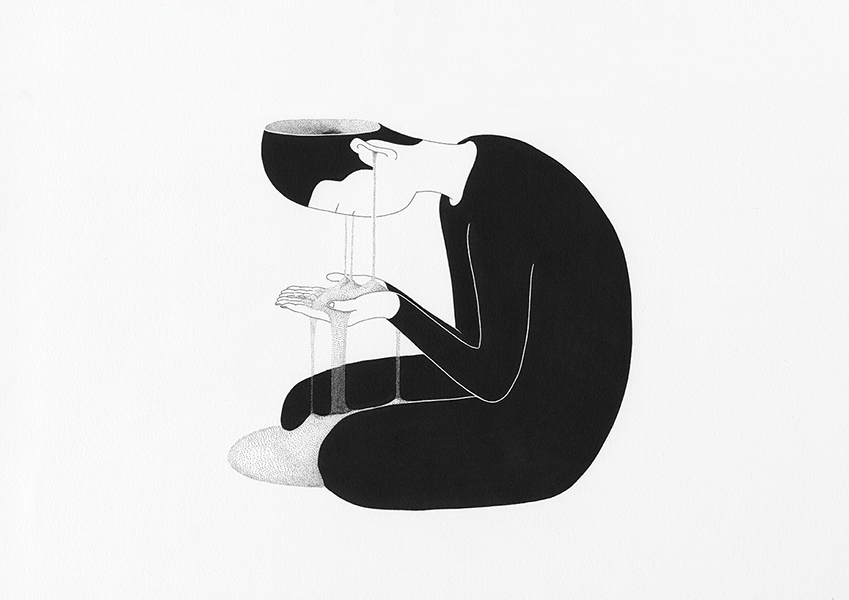
Depression is the fifth leading cause of the global burden of disease and first leading mental health cause (Vos et al., 2017). Whilst everyone experiences sadness and perhaps even depression at times in their lives, perhaps following loss of a loved one, those with clinical depression experience symptoms that go on for longer, are more severe, and/or interfere with the activities that make up normal daily life.
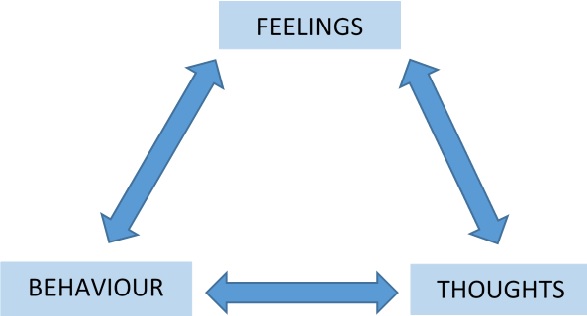
Cognitive behavioural therapy (CBT) is an evidence-based psychological therapy, most commonly used to treat anxiety disorders and depression. CBT is a talking therapy that explores the relationship between thoughts, feelings and behaviours. It is a structured, goal-oriented, skills-based treatment that uses both cognitive and behavioural techniques to change the way an individual thinks (cognitive) and what they do (behaviour). It has proven to be successful, leading to remission in approximately half of patients with anxiety or depression. Here we give an introduction to the theories and techniques used in CBT.
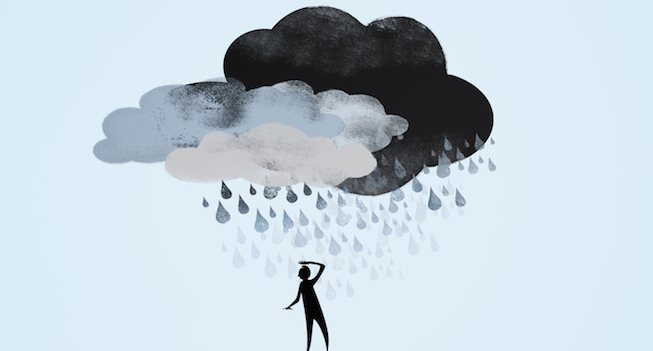
The Depressive Realism theory argues that those who are depressed have a more accurate and realistic view of reality than those who are not depressed. But how should this theory inform the way we think about, and treat, depression?

This week, following on from our previous blog on mental health in mums, we are delighted to welcome past EDITlab PhD student, Hannah Brown, now mum to a one-year-old boy. In this post she shares her fears and strategies about depression and anxiety in the early days of motherhood.
On the 28th of November the BBC and BBC Radio 5 Live were raising awareness for mums and mental health. Mothers everywhere were invited to join in online using the hashtag: #MumTakeOver. They had presenters come in to discuss their own, sometimes difficult experiences of having babies and becoming mothers. The discussion ranged from post-natal depression and anxiety, to work/life balance and tackling loneliness. This was supported by Netmums, Maternal Mental Health Alliance (MMHA) and Blackpool Better Start.
This week we talked to Kaye Blegvad, author of the incredible “Dog Years: An illustrated Book About Mental Health” her experience of living with depression, including friendships, genetics and stigma.


How did you come up with the idea of a naughty black dog to represent your depression?
I wish I could say the black dog as a metaphor was my idea, but it’s actually a really old one – apparently it dates back to Roman times. I knew of it from quotes by Winston Churchill, who referred to his own depression as a black dog. I remember hearing it as a teenager, and it really stuck with me. I find it helpful sometimes to use metaphor when trying to explain these fairly abstract feelings – describing depression in simple terms is pretty challenging, and getting some distance from the emotions can help make it clearer to others, as well as helping me understand the situation better myself.
How did your black dog affect your friendships when you were a child and then later as a teenager and now and adult?
I was a pretty insular child. I had friends, but I often felt on the outside of the group, and spent quite a lot of time alone. As a 
teenager I had several pretty intense friendships, and often with other people who’d also struggled with depression or similar issues, with whom I didn’t have to explain. But the main impact I think that depression has had on my friendships is to do with the ability to socialize, as it forces you into a world that’s slightly separate from others. At times it has felt impossible to reach out to friends, or even leave my room. Most often it is that depression sucks every ounce of energy, and it feels like I can’t “afford” the energy required to see people, even if I would love to. So I have often been quite an absent or unreliable friend. On the whole, I’ve been lucky that my friends are understanding.
Do you wish that your family/friends had known about your dog sooner?
I talked to my parents about it pretty much as soon as I understood that something felt definitely “wrong” – it wasn’t just teen angst, I was really feeling things that weren’t normal at all. I’m lucky that my parents were understanding and took me seriously. I’ve also always been pretty open about it with friends – as a teenager I would say I was an over-sharer to my close friends. So I don’t think there was much of a delay between me realizing about the dog, and others knowing about it too.
We were interested to hear that you feel you were born with your dog. Our team explores the role of genetic factors on depression, and on treatment response. Do you have views about whether and how such information should be used?
I certainly don’t know much about the scientific basis of being born with a dog. But I do feel that there is something intrinsic in
me that makes me prone to this – perhaps I am inherently depressive, but not necessarily inherently depressed. My family has a long history with depression, and some of that feels pretty likely to be genetic. Also, I’ve never felt like my depression was really “about” anything. It has always been amorphous and abstract, which makes it feel like it comes from within, rather than from outside sources. I know depression is different for everyone, and some people certainly have a concrete “root” to it, whereas others seem more chemical based. If a certain type of treatment can help even a few sufferers, that seems worth pursuing to me.
Are there any signs that indicate someone that is good/bad for your dog?
I guess it’s much the same as people who are good/bad for you in general. I think I’ve gotten better at identifying certain things that don’t mix – beyond avoiding people who just seem explicitly cruel, which is a bit obvious, there are people who have behaviours which are triggering, or who just aren’t very sensitive or interested in the feelings of others. If somebody gets offended or angry when I have to cancel a plan due to depression, or double check the details due to anxiety, it’s probably just going to become a spiral.
Do you feel like there is less stigma around mental health?
lt does feel like the stigma is reducing. I don’t know if that’s because I’m getting older and therefore the people I’m around have more life experience and are more likely to understand, or if there are real shifts in social perception. I’d like to think the latter. I have appreciated seeing many awareness campaigns and movements about it in recent years, and I’m sure that’s having an impact. For myself, the more I’m aware of how many people suffer in similar ways, the less self-conscious I feel about having my own dog tagging along.
Has this stigma had an effect on your depression?
I think the stigma gets internalized, and I probably view myself through that lens more than other people do. It reinforces low
feelings and can cause a spiral. I had a (bad) therapist tell me “depression isn’t very attractive” once, and that feels like it’s written in neon lights everywhere when I’m feeling bad.
Do you have any advice for young people out there who are wondering where to turn?
My main advice is just: tell someone, ask for help. Do not be afraid to reach out. See a therapist if you possibly can. Do not keep the feelings inside. And remember that you are not alone – those words might seem empty but try to really feel them. There are countless people out there who know what you’re going through, who will understand you, and even if you don’t know them yet, you will find them.
Is there anything you’d have liked someone to tell you when you first began to recognise you were suffering from depression?
Hmm. This is hard. I can think of what I’d have liked people not to have told me, which is “it’s just a phase”. A lot of people tried to dismiss it as hormones or teenage angst, which set me back quite a lot in feeling like I would actually be able to get effective help. I knew perfectly well that what I was experiencing was not what most of my peers were experiencing. But it took quite a while to have adults believe that that wasn’t just me exaggerating. I think it’s so, so important to take somebody seriously when they tell you that something feels wrong. It took them a lot of courage to tell you in the first place. Do not brush it off.
Is there anything that you have found particularly helpful?
The predictable answer: therapy and medication. Therapy has helped me understand what’s going on better, and be able to intercept or examine thoughts as they appear. Medication allows me some space from depression so that I can be present in therapy, and be present in life in general. I also find working very helpful – throwing myself into a project that I believe in has been very good medicine for me. And I also find mindfulness meditation and yoga helpful – more with regards to anxiety than depression, but the two feed off of each other so much that it’s hard to disentangle the effects. I try to meditate for ten minutes every day (though I often do it more like once a week) and that seems to clear some extra space in my mind where calm or happiness could slip in.

You can see more of Kaye’s work on her website kayeblegvad.com. You can also support creation of a hard copy book (and we hope an animation!) of “Dog Years” here.
In mid-October, I attended a Mental Health First Aid (MHFA) training course, which is available to all staff at King’s College London. The training course aims to (1) raise awareness of mental health, and (2) teach how to recognize and provide initial support to someone who is struggling.
Molly Davies
Research Assistant
A bit about me: my entire higher educational background is in psychology and psychological services. As such, I was excited to learn that King’s College London offers a Mental Health First Aid (MHFA) course to all of their employees. The MHFA organization first began in Australia in 2001 and since then has spread to 24 countries. It came to England in 2007 as part of a national movement to improve public mental health. One of my coworkers had taken it previously and highly recommended it. I needed very little convincing; I signed up for the course out of personal interest, but I was also curious to see how issues around mental illness were disseminated and explained to those outside the field.

The training course I attended lasted two full days, and the attendees were from all faculties at King’s College London and from all different backgrounds. The first thing I noticed, as soon as I entered the training room, was that we were all women (see Michela’s [Clarke, EDIT Lab placement student] blog post from earlier this week for more information on why this is not surprising, but is very significant). The second thing I noticed, as the course progressed, was that everyone was willing to be open and honest about their personal history and reasons for attending this course. Most people were there to learn how to support friends, family, and/or colleagues or students that they worked with on a daily basis.
For the most part, the course dealt with the topics that I would have expected. One of the more notable takeaways of the course itself was the idea of mental health vs. mental ill health.
Everyone has mental health.

The MHFA instructors emphasised the fact that everyone has mental health. Just as physical health does not only refer to infirmity, mental health does not only refer to mental disorders but rather to the whole spectrum of mental well-being and mental illness. We all fluctuate on this spectrum and at times, perhaps even from one day to the next, our mental health may change to mental ill health.
I greatly enjoyed all the activities, videos, and slides that the instructors utilised in order to teach us about the various mental health diagnoses, what they look like/feel like, how to recognize the signs in others, and what to do with someone in crisis and how to direct them to the appropriate professional services. The course does well at providing information and raising awareness of mental ill health.
“Awareness goes beyond stigma.”
As someone who has been studying mental health for years, I tend to forget that others are not as familiar with the topic and perhaps don’t know what is classed as a mental health disorder. Oftentimes in this field, the main issue we discuss around awareness is about stigma and the need to normalise mental illness so sufferers feel empowered to seek and ask for help when needed.
However, a potentially negative side effect of normalisation is people begin to think of their mental ill health as just that: normal. If you say everyone gets stressed, then that means I am weak if I feel overwhelmed by my own stresses. If you say everyone feels anxiety, then the fact that I feel anxiety on a daily basis isn’t cause for concern. In fact, one of my peers on the course was unaware that there was such a thing as clinical anxiety. It wasn’t that she felt she would be judged for seeking help; it was that she genuinely had no idea that her daily feelings of anxiety weren’t “normal”, and were something that she could seek help for.
“She genuinely had no idea that her daily feelings of anxiety weren’t “normal”.”

As it turns out, awareness isn’t only about making it acceptable to seek help, but also about realizing when something is, quote-on-quote, “normal”, and when there is a need to ask for assistance. Although the MHFA course was centered on teaching us to recognize the signs of someone else in crisis, a side benefit was learning to recognize those signs in yourself as well.
I would highly recommend the course to anyone.