Research on the development and treatment of emotional disorders, discused and digested by the EDIT Lab Team and collaborators

Tag: Depression (Page 3 of 6)

Trauma is not the only cause of anxiety or depression

In fact, there’s no single cause for anxiety and depression. Find out more in Molly’s post, as part of the EDIT Blog Mythbusters series.


“But we already know that anxiety and depression are caused by _______.”

When I talk to people about our team’s research and our goal of finding causes (aka risk factors) for anxiety and depression, I commonly hear this response – particularly on social media, but also when speaking with family or friends who work outside of the mental health sphere. You can fill in the blank with your preferred risk factor. Trauma is one of the most common (hence the title of this blog), but I’ve also heard “society”, “poverty”, “Brexit”, “family”, etc.

“it’s like trying to solve a puzzle, where the puzzle is different for each person”

As a researcher, I would love it if there were a single thing that would explain why people have depression or anxiety. Having a single cause would enable us to focus our treatments, and so it’s understandable why we are seeking simple causal explanations.

Unfortunately, it’s not that easy. Mental health is complex, and mental health disorders have a wide range of causes which combine and interact in different ways that can change from one person to the next. In some ways it’s like trying to solve a puzzle, where the puzzle is different for each person. For example, trauma is a known risk factor for depression. Yet some people are depressed and have never experienced a trauma. Others have had something traumatic happen to them in the past, but haven’t developed depression…

“Typically, research studies will take one group of people with depression and another group without depression and compare them to try and find differences between the two groups.”

When researchers speak about risk factors as a general concept (e.g. trauma is a risk factor for depression), they are not making a statement about individuals. Rather, they are talking about comparing groups of people. Typically, research studies will take one group of people with depression and another group without depression and compare them to try and find differences between the two groups. Results from these types of studies will then report that the group with depression have experienced more trauma than the group without depression overall. This research is useful and necessary to better understand these disorders. These discoveries help guide us by indicating important areas to focus on to prevent (e.g. additional support for individuals who have experienced trauma) or treat depression (e.g. address trauma and teach coping strategies in therapy). However, this doesn’t necessarily tell us why an individual person within that group has depression. That’s where we want to get to next.

“To help us reach that goal of individualised risk assessment, mental health researchers have turned to “big data” to help understand these disorders better.”

To help us reach that goal of individualised risk assessment, mental health researchers have turned to “big data” to help understand these disorders better. Studies such as the Genetic Links to Anxiety and Depression (GLAD) Study, UK Biobank, and Generation Scotland (among others) recruit thousands of participants and collect large amounts of data to investigate the social, environmental, developmental, and genetic risk factors for mental health disorders.

The aim is to eventually be able to identify how all of these different factors tie together, and what combinations may increase an individual’s (not just a group’s) risk for depression, anxiety, or any other complex disorder. By getting a more complete picture, we will be better able to prevent, identify, and treat disorders for each person.


Introduction to the new blog series: Mythbusters

Molly Davies, PhD student

Welcome to the first post in our next blog series: Mythbusters! This series is about common “myths” or beliefs about genetics and psychology, particularly those that have arisen in conversations we have been having with members of the public about the “Genetic Links to Anxiety and Depression” or GLAD Study. There are many easily made misunderstandings about the meaning of research findings , including issues such as research ethics and data security, and about the big picture of why our research is important. Below are examples of some of the questions/comments that we have received:

  • “Not more money for research! We should be putting all of that money into the NHS to treat these disorders instead.”
  • “Everyone feels depressed or anxious sometimes. People should just learn how to deal with their emotions!”
  • “Nobody has found the gene for depression or anxiety, so they must not be genetic.”
  • “Anxiety and depression are all about trauma so why look at genetics?”
  • “If I have the genes for depression or anxiety, my children will definitely develop these disorders”

Our mythbusting blog series aims to address some of the most common misconceptions that we have come across, and explain more about taking part in studies, why research is important, and how this will help future generations. We hope that these mythbusters will be accessible and interesting for everyone, and we’d love feedback on them!


Could you take time off work for your mental health?

It’s 2019 and society is slowly winning the battle against stigma surrounding mental health. NHS posters across London ask commuters “How are you feeling?”, “How is your sleep?” and “Are you able to look forward to things as much as you used to?” – and charity campaigners are working to make sure we’ve all heard that “approximately 1 in 4 people in the UK will experience a mental health problem each year”. But are these campaign messages really sinking in enough to change our behaviour in everyday life? How would you feel if your colleague took a week off work for their mental health, leaving you to cover their job, and would you feel able to do the same?

Continue reading

Extracting stability gives a more powerful and heritable measure of emotional problems

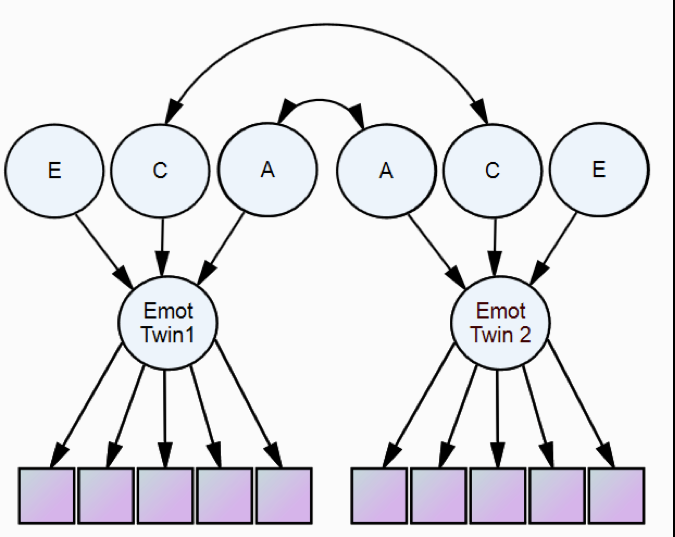
This blog explains our latest publication in which we analysed Twins Early Development Study data on emotional problems across childhood and adolescence. Accurate assessment is difficult but essential if we are to understand the influences on emotional problems. We took advantage of longitudinal data (i.e. taken across time) to define a core trait: stable emotional problems. This trait is highly heritable and significantly increases power for research. Continue reading

R is for Rumination

Most of us have probably heard friends or family tell us to “stop overthinking things”. Is this good advice? The answer is probably yes, if what you’re doing is ruminating. Daniel fills us in on rumination, how it increases our risk of mental health problems, and what we can do to prevent negative situations taking an excessive toll on our lives.

Continue reading

Q is for Quiz

After a short break (most of the team have been off enjoying their summer holidays!) the A-Z blog is back! Since we are just over halfway through the A-Z series, Tom [EDIT Lab PhD student] has put together a quiz based on all our previous posts for you to test how much you’ve learnt so far!

Continue reading

N for Neuroticism

Neuroticism is a personality trait characterised by easily experiencing negative emotions. This A-Z blog offers some highlights of what is currently known about the genetic and environmental influences on neuroticism, as well as its overlap with and relevance for psychiatric disorders.

Continue reading

M for Missing Heritability

Decades of twin studies have yielded evidence of the heritability of many different traits. What we mean by this is the proportion of variation in a trait that can be explained by genetic differences between individuals. Research has moved towards identifying specific genetic variants associated with these traits through Genome-Wide Association Studies (GWAS). However, across most psychiatric phenotypes studied by geneticists, individual genetic variants identified by GWAS do not account for much of the heritability. This gap has been termed ‘Missing Heritability’. This A-Z blog goes through some of the possible reasons for this gap.

Continue reading

« Older posts Newer posts »

© 2026 The EDIT Blog

Theme by Anders Norén — Up ↑