Research on the development and treatment of emotional disorders, discused and digested by the EDIT Lab Team and collaborators

Tag: Academia (Page 1 of 3)

C for Career Case Studies, and what to do with them

Who doesn’t love a story? People’s career stories can make brilliant case studies, for inspiration and advice. This blog will help you think about where to find case studies and what to do with them once you have them.

Kate Murray, Senior Careers Consultant for Researchers


The Life Scientific thread on the EDIT blog is a wonderful way to access people’s career stories.  From Karen’s story, on moving on from a long career in the NHS, and Helen’s here, on becoming a blogger and writer on mental health matters, via some excellent advice on academic career planning from Thalia here, there are some inspiring stories and pieces of advice.  


And the internet is not short of more places to find out how people with PhDs have moved on.  Find more case studies:

  • In the researcher-specific section of King’s Careers KEATS pages (just self-enrol with your KCL IDs)
  • The IoPPN postdoc Careers Day video is a recording of a Spring 2022 event for IoPPN researchers with an incredible array of speakers who’ve moved industries
  • Research Careers is continually-updating platform with case studies of researchers
  • Don’t forget the box of treasures that is LinkedIn: used as a tool for researching job titles and employer names, it’s a never-ending source of case studies
  • And, finally, Careers in Your Ears is the podcast from King’s Careers aimed at researchers – with interviews with people from a variety of research backgrounds talking about their career journeys and issues that affect researchers.


But faced with this choice, what to do?  How does reading about others help you and your career thinking? After all, what one person does in their current role is not necessarily what you are interested in, have the knowledge to do, or would even exist in five years’ time.

In examining the how, what and why¹ of people’s case study career journeys, utilising them could support your own decision-making, fact-finding or moving roles.  Use these questions to reflect and make sense of these case studies.

How did they find out about their new roles?

How did they make that transition?

How did they shift identities as they moved on?

What did they do to be ready for a career move?

What did they have to do to apply successfully?

What do they do, day to day?

Why did they move on?

Why was that particular role, or organisation, interesting?

Why were they satisfied, or not, with their new role?


Keep being inspired by Life Scientific; come and chat if you’d like some support.

Kate Murray, Senior Careers Consultant, Careers Consultant for Researchers

References:

¹See Yin, cited in https://www.ncbi.nlm.nih.gov/pmc/articles/PMC3141799/ accessed 10/6/22

Advice to myself: Starting the final year of a PhD

Having completed a good ¾ of my PhD remotely, I like to think that I’ve learnt a thing or two about motivation, reflection, and time-management. Here are a few things I’ve realised over the last 18 months that I am going to try and keep reminding myself of as I navigate the next year. Even if I don’t follow my own advice, there’s always hope that it’ll help another student.


Alicia Peel, EDIT Lab PhD student


Continue reading

CASE Studentships

Helena discusses collaborative (CASE) PhD studentships and the mutual benefits of working with her non-academic partner, Beat charity.

Helena Davies


What are CASE studentships?

Collaborative (CASE) Studentships, formerly known as “Collaborative Awards in Science and Engineering”, are funded PhD studentships in which the student works in partnership with a non-academic institution. This could include organisations in the public, private, or third sector. Examples of partners include charities, hospitals, clinical services, government agencies, technology companies, and even museums. The work of the non-academic partner is typically directly related to the student’s research. Students on CASE studentships work closely with their non-academic partners to conduct mutually beneficial collaborative research projects, as well as to gain additional training and work experience outside of academic environments.


How do CASE studentships work?

Most CASE studentships will have a minimum required amount of time that the student spends on placement with them, for example, three months. The placement can be at any point during the studentship, and that time can be spent however works best for the student and the partner, whether it be a single three month period, a few shorter placements, or spread across the years by working one or two days a week.


What type of work do you do on placement?

My main role can be thought of in two parts. First, I am liaising with Beat to get their thoughts and advice on the promotion and running of the Eating Disorders Genetics Initiative (EDGI). This is a large project exploring how environmental and genetic influences contribute to eating disorder risk, on which Beat are a charity partner. Second, I aim to bring my own thoughts and advice, from an academic perspective, to Beat’s work. Overall, it’s a real mixture, which I think reflects the range of work that Beat does.

In terms of the first part of my role, Beat has advised us on the use of social media (our main recruitment method for EDGI), specifically with regards to the ways in which we can reach the maximum number of people in the most effective way. They have also helped us with difficult decisions as to whether to use trigger warnings (or not). In addition, Beat assisted us with the development of our new social media content, which was aimed at recruiting more people with binge-eating disorder and bulimia nervosa.

For the second part of my role, I’ve been involved in things like helping a Beat colleague with his organisation of the All Party Parliamentary Group (APPG) inquiry into eating disorders research funding. I have also helped review Beat’s website for unconscious bias, tone, and accuracy of information. Most recently, I led on the design and analysis of a survey on the experiences of those with binge-eating disorder, the results of which were used in Beat’s campaign messaging during Eating Disorders Awareness Week.


What have you gained from having a non-academic partner during your PhD?

In short: a lot! It’s been really interesting to see ‘behind the scenes’ of a non-academic organisation. I went straight from an undergraduate degree, to a masters, to a PhD, so I haven’t previously seen the inner workings of any organisation other than a university (and the various bars I worked at before and during my degree!). Despite the fact that EDGI and Beat arguably have the same goal – to improve the lives of those with eating disorders – the type and pace of work is very different. It can be thought of as taking a different route towards the same end.

Things in academia can sometimes move very (very) slowly. At Beat, however, the pace is much faster. For example, I started the work on the binge-eating disorder survey in early January and sent round a summary of the results by mid-February, for use in campaign messaging in early March. In contrast, I’ve been developing a new EDGI survey since September (almost there now!). Regarding the type of work, in academia, with our large databases of anonymised results, you can sometimes feel quite distant from what you’re investigating. Beat, however, works closely with those with lived experience, and offers a range of services that give direct support to sufferers. Both perspectives and working practices are valuable and equally important, and it’s exciting to see what we can learn and achieve when we work closely together.

In a more practical sense, having close links with Beat has definitely come in handy on more than one occasion. For example, I’ve been developing a new survey for inclusion in EDGI, and Beat has kindly allowed me to pilot it with their ambassadors. I also recently wrote an article about the difficulties EDGI are having with recruiting people with binge-eating disorder, and was able to, on rather short notice, get a quote from Beat as to why this might be (thank you Tom and Rebecca!).

What are the benefits to Beat of being involved in a CASE PhD studentship?

The Beat team said: “Having Helena work with us has really helped give us a better understanding of the eating disorder research landscape, and not only how we can partner with researchers but also seek to influence policy makers regarding research and funding. We now also have a better understanding of EDGI and therefore an improved ability to communicate to our supporters about EDGI, which is vital for recruitment. It’s also been great having someone who has a really strong understanding of research being able to support us with some of our own research. The findings from this have improved our understanding of the impact of eating disorders on our beneficiaries and enabled us to better communicate that to the media and our supporters. Helena has also brought a different perspective to our work and this has been invaluable in terms of identifying options that we might not have considered. The CASE studentship has really highlighted what can be achieved when different organisations with the same goal come together. Also, Helena’s just lots of fun to have around!”


Check out LISS DTP website for examples of funded CASE studentships and details of how to apply.


Intersectionality in Academia

We must maintain an intersectional perspective in discussions around race and racism, to better understand and reflect on the diverse realities experienced by individuals across racialised groups. In this post, Marie Skłodowska-Curie Fellow, Dr Ziada Ayorech, reflects on her experiences as a Black academic, as well as a female, and mother of two toddlers.

 

Dr Ziada Ayorech


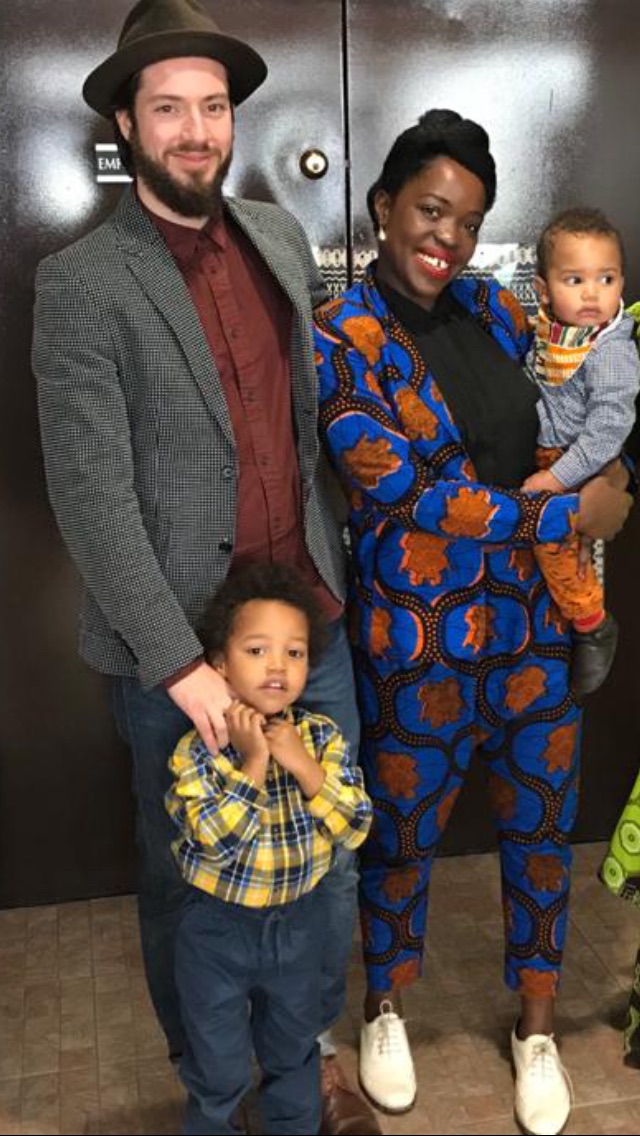
The term ‘intersectionality’ was coined by Professor Kimberlé Williams Crenshaw. It refers to the many overlapping, sometimes contradicting, social categories an individual occupies – and how these contribute to their experience of discrimination and privilege. As a Black, female, mother of two toddlers, my lived experiences pursuing a career in academia can illuminate some of the challenges of bringing your full self to the workplace.

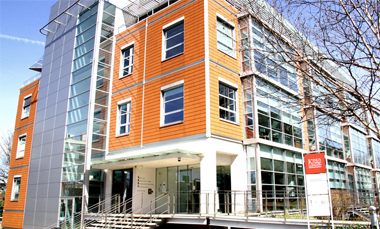
Like many moments which result in a career changing opportunity, I distinctly remember the interview that culminated in my obtaining a Research Assistant position, which subsequently turned into a PhD in Behavioural Genetics. I arrived in the SGDP lobby at King’s College London for the final interview of the day, after an Oxbridge candidate had as good as cemented the panel’s decision. The details of how I nailed the job, which was intended for my competitor, are often relayed to me by colleagues (now turned dear friends), as an example of my capacity. But like many academics, the experience of obtaining a coveted position left me with imposter syndrome.

Navigating imposter syndrome is challenging in its own right. But as a Black woman, I grappled with both the internal and the societal messages about my ability. Belonging to these two systematically oppressed categories can amplify narratives that you are lesser. Achievements which challenge that long-standing narrative are a perfect breeding ground for imposter syndrome. A shared reality of Black Indigenous and people of colour (BIPOC) is the inherent lack of representation across all spheres of our lives. From grade school, through university, to a glance at the senior faculty members at our institutions, the resounding message is loud and clear: these spaces weren’t built for you.

“Belonging to these two systematically oppressed categories can amplify narratives that you are lesser.”

The internal story I told myself (backed by personal experience of over 30 years of structural racism) was that I’d duped them: I am under qualified and any day now, the jig will be up, I will be fired. This meant that when my partner and I decided to have our first child, less than one year into my PhD, the idea of telling my supervisor that I was pregnant was almost too much to bear. Unlike so many female academics I have spoken to, I was fortunate to have an extremely compassionate supervisor, who’d seen many PhD students embark into parenthood during their degree. Despite this, I worked flat out until the birth, submitted a paper days before my maternity leave began, responded to reviewer comments weeks after my son was born, and left my 4-month-old for the first time during my maternity leave to conduct interviews. The reality for female academics who choose to pursue their careers as well as start a family is a head spinning balancing act. Have your children, but don’t let that interfere with your career. Publish at all costs, but still be at every parent-teacher meeting. Say yes always, to indicate that you are still career driven.
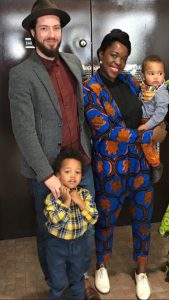
Ziada and her family

The challenges of navigating the demands of motherhood and academia are amplified as a Black woman. Again, intersectionality rears its ugly head. Black women in the UK are four times more likely to die in childbirth than white women (1) – a staggering statistic attributable to systemic racism in the health care system. Consistent with these statistics, the birth of my firstborn was riddled with hostile encounters at the hospital; a dangerously long labour; and eventually a traumatic emergency caesarean. I was lucky in comparison to many BIPOC mothers, who I eventually had the courage to speak with. We’d both made it home. Nonetheless, when returning to work and relaying this experience to my colleagues, I refrained from discussing the reality of structural racism at the hospital.

“I was lucky in comparison to many BIPOC mothers, who I eventually had the courage to speak with.”

Speaking up about racism can feel isolating. Repeated experiences of ‘gaslighting’ can often lead us to wonder whether we will even be believed. Additionally, Black women may internalise stereotypes such as the ‘strong black woman’; a perception that we are naturally resilient and self-sacrificing. These narratives can negatively impact mental health and reduce the likelihood to seek help. Images of motherhood are often white centred. Valid concerns about raising Black children in a racist society don’t often feature in mainstream discussions around the challenges of parenthood.

I was eight and a half months pregnant with my second born when I defended my PhD thesis, driven in part by the knowledge that I was one of the only Black female Behavioural Geneticists that I had seen at conferences, in statistics courses, at lectures, and across the many international institutions I had studied in. Letting my foot off the gas was not an option. I’ve been in conference calls where another male academic has called out his colleague for having an entirely male working group — quietly wondering to myself what would happen if I mentioned that not a single Black geneticist was pictured across the multi-centre initiative they were describing, let alone a female one.

“I was one of the only Black female Behavioural Geneticists that I had seen at conferences, in statistics courses, at lectures, and across the many international institutions I had studied in”

Open discussions about the structural racism underpinning our academic institutions, field and world are a key component of the shift of 2020. Along with the pandemic, which brought life as we know it to a standstill, came a long overdue awakening to the second pandemic affecting global citizens. As the dust settles and we emerge in 2021, how can we take an intersectional approach to our anti-racist initiatives? How can we engage in meaningful change to address the structural inequalities that, by doing nothing, we perpetuate? How can we have real lasting change?

Know your blind spots

I can speak on the Black female mother experience, because this is my reality. Other experiences, for example of ableism and transphobia, need to be brought honestly to the table if we are truly engaging in intersectionality.

Inclusivity, not just diversity

Often academic institutions describe perceived challenges in recruiting or keeping BIPOC employees. True inclusivity requires creating spaces where diversity is celebrated, welcomed and encouraged, where all voices are given a platform to wield influence. Efforts to recruit BIPOC that do not include these structural changes can be perceived as ‘tokenism’. Indeed, ‘if diversity is a sprint, inclusivity is a marathon’ (2).

Go beneath the surface

Conference surveys on whether you experienced a specific discriminative event fall short of addressing the issues at the bedrock of our institutions. Yes, I had sexist and racist comments uttered to me by senior faculty at my first genetics conference, and yes explicit codes of conduct can discourage overt discrimination — but until we use an intersectional lens to address the structural inequalities inherent in our institutions, the bandage will always fall off.

Do the work

Relying on BIPOC to lead the initiatives is disingenuous. Speaking up is risky for those who don’t hold the power. It can have a negative impact on career trajectories and wellbeing. These risks shouldn’t be left to BIPOC to take.

Change the language

Be intentional about the language you use and consider how it may perpetuate narratives (see our previous blog on this here)

The road to building new institutions that reflect our global diversity will be a long one. Engaging in honest and frank discussions about the structures that perpetuate inequality require intersectionality. It is only by considering the multitude of identities that can intersect and amplify discrimination that we can begin to create a space where each of us feel empowered to lead with our full selves.


(1) Mother and Babies: Reducing Risk through Audits and Confidential Enquiries across the UK (MBRRACE-UK) published in 2020

(2) Quoted from Dana Browlee, Forbes senior contributor and Author of ‘The dangers of mistaking diversity for inclusion in the workplace’)

Being a placement student at the SGDP 

Liv and Elizabeth are two of our undergraduate psychology students who have taken a break from studying to undertake a placement year in the EDITlab. Their work spans the Genetic Links to Anxiety and Depression Study (GLAD), the Eating Disorders Genetics Initiative project (EDGI), and COPING, a project recently launched in collaboration with the Repeated Assessment of Mental Health in Pandemic (RAMP) Study. In this blog, they discuss their experiences of being a placement student at the SGDP Centre and what they have learnt.

Continue reading

“J” for Jobs in Academia

This week we continue our alphabetical A-Z series with a post on J for Jobs in Academia. Shivani and Michela [EDIT lab placement students] talk to academics from a range of different career levels based at the Social, Genetic and Developmental Psychiatry Centre, King’s College London. Representing the PhD/MSc Level (Meg Skelton), Post-Doctoral Research Associates (Dr Elena Constantinou and Dr Erin Quinlan), two Lecturers (Dr Chloe Wong and Dr Tom McAdams) and a Senior Lecturer (Dr Helen Fisher). Shivani and Michela ask about the different paths that can lead to academia, challenges faced by those in the field, ways to deal with setbacks and get some helpful tips for early career researchers. (For the full biographies of our interviewees please scroll to the end of the post.)

Continue reading

« Older posts

© 2026 The EDIT Blog

Theme by Anders Norén — Up ↑