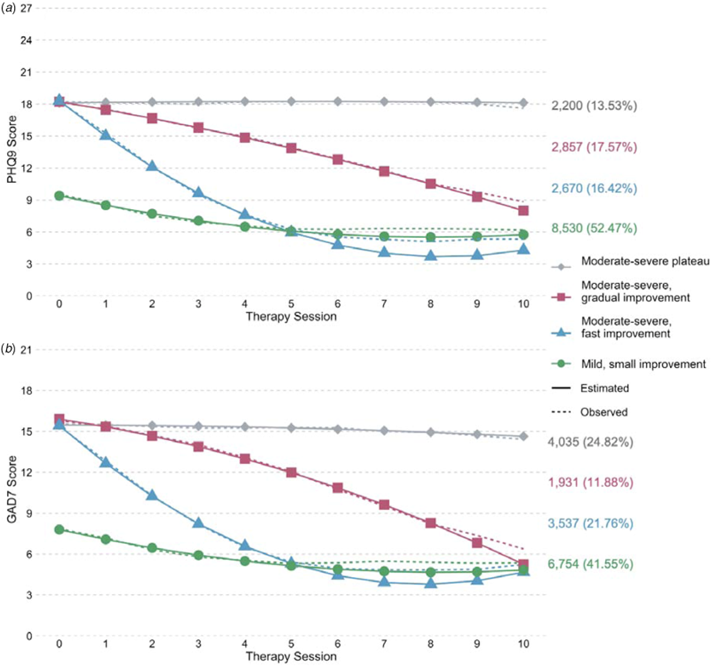
In this blog, EDIT Lab Postdoc Meg Skelton discusses our recent paper looking at patient trajectories of symptom and impairment during internet-based psychological therapy for anxiety and depression.

Meg Skelton, EDIT Lab Postdoctoral Researcher
Research on the development and treatment of emotional disorders, discused and digested by the EDIT Lab Team and collaborators
Meg Skelton, EDIT Lab Postdoctoral Researcher
Meg Skelton, EDIT Lab Postdoctoral Researcher

Caroline, final-year Psychology student
What is functional impairment?
Functional impairment relates to what is more commonly known as a disability. Whilst the latter term is usually associated with conditions limiting someone’s physical functioning, functional impairment is characteristic of conditions such as depression, anxiety, or schizophrenia. It can be defined as an individual’s inability to perform day-to-day tasks due to a given condition (Üstün et al., 2009). Concretely, this can include disruptions in social relationships, leisure activities, employment, home responsibilities and family life.
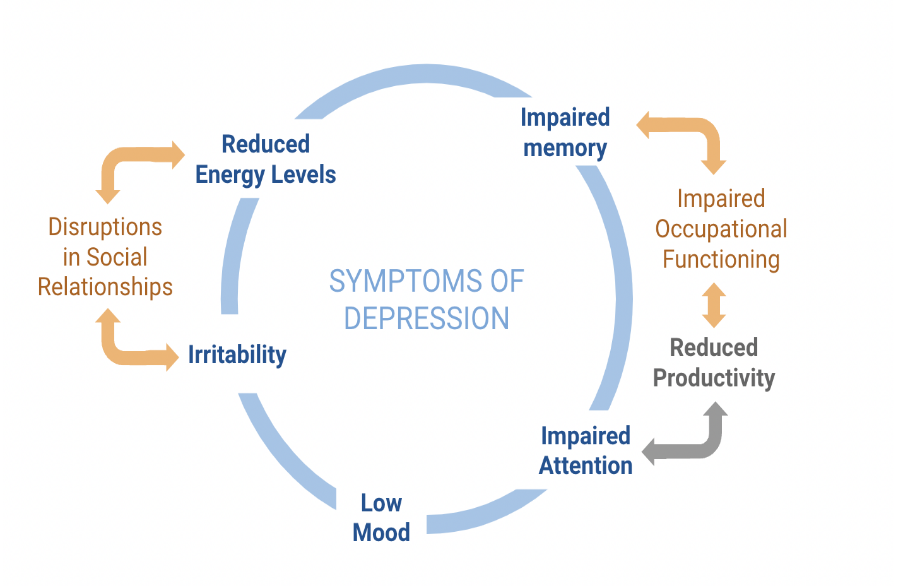
To illustrate, the diagram below shows how the symptoms of a fictious patient with a diagnosis of depression may be related to their functional impairment. This example includes various options taken from McKnight et al. (2009) and does not represent any causal relationships or the general experience of impairment, which can significantly differ between individuals.
What is the link between functional impairment and symptom severity?
Whether functional impairment causes or is caused by a given condition is an open question and is likely to depend on individual cases and conditions. However, it seems relatively clear that it is linked to both anxiety and depression. At the same time, we know that a decrease in functional impairment does not necessarily imply a decrease in symptom severity (Skelton et al., 2021). This means that a patient can have few symptoms of anxiety yet still be unable to maintain their social relationships or fulfil their responsibilities at home. 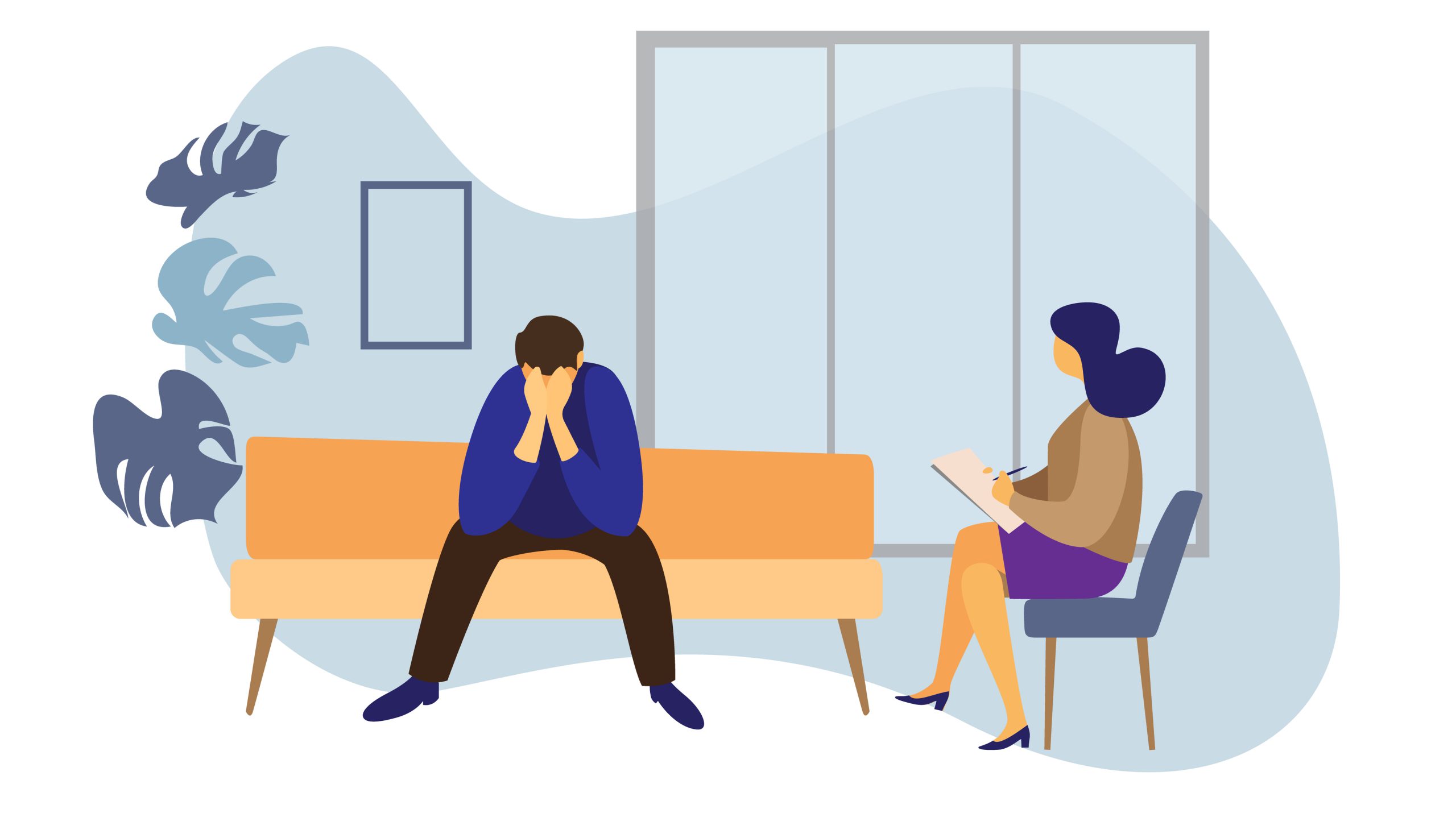
What does this mean for treatment?
This difference is relevant to the way we define the recovery of both anxiety and depression. Should the patient who has few anxiety symptoms but is still unable to function well at home be considered as recovered or not? Typically, clinicians use scores on standardised measures to determine the severity of someone’s condition. However, these measures focus mainly on symptom severity rather than functional impairment (Kamenov et al., 2015). As a result, sometimes a patient is currently considered better whilst retaining a high level of functional impairment. This is true even though many patients with depression have said that a return to their usual level in terms of functioning was one of the most important factors determining their recovery (Zimmerman et al., 2006). In recent years, researchers and clinicians have begun to consider how to incorporate functional impairment into measures of treatment outcome, but much remains to be understood.
Why is it important to think about functional impairment?
Depressive and anxiety disorders are leading factors contributing to the global burden of disease (GBD 2019 Mental Disorders Collaborators, 2022). Functional impairment is one of the key contributors towards their financial burden. In addition, it is incredibly important as it significantly influences likelihood of relapse (Hardeveld et al., 2009). Furthermore, at the end of the day, for someone to truly be better, they not only need to feel better, but be back to their usual self in terms of their daily life.

References:
GBD 2019 Mental Disorders Collaborators. (2022). Global, regional, and national burden of 12 mental disorders in 204 countries and territories, 1990–2019: a systematic analysis for the Global Burden of Disease Study 2019. The Lancet Psychiatry, 9(2), 137–150. https://doi.org/10.1016/S2215-0366(21)00395-3
Hardeveld, F., Spijker, J., de Graaf, R., Nolen, W. A., & Beekman, A. T. F. (2009). Prevalence and predictors of recurrence of major depressive disorder in the adult population. Acta Psychiatrica Scandinavica, 122(3), 184–191. https://doi.org/10.1111/j.1600-0447.2009.01519.x
Kamenov, K., Cabello, M., Coenen, M., & Ayuso-Mateos, J. L. (2015). How much do we know about the functional effectiveness of interventions for depression? A systematic review. Journal of Affective Disorders, 188, 89–96. https://doi.org/10.1016/j.jad.2015.08.035
McKnight, P. E., & Kashdan, T. B. (2009). The importance of functional impairment to mental health outcomes: A case for reassessing our goals in depression treatment research. Clinical Psychology Review, 29(3), 243–259. https://doi.org/10.1016/j.cpr.2009.01.005
Skelton, M., Carr, E., Buckman, J. E., Davies, M. R., Goldsmith, K. A., Hirsch, C., Peel, A., Rayner, C., Rimes, K. A., Saunders, R., Wingrove, J., Breen, G., & Eley, T. C. (2021). Trajectories of depression and anxiety symptoms during psychological therapy for common mental health problems. https://doi.org/10.31234/osf.io/8scpx
Üstün, B., & Kennedy, C. (2009). What is “functional impairment”? Disentangling disability from clinical significance. World Psychiatry, 8(2), 82–85. https://doi.org/10.1002/j.2051-5545.2009.tb00219.x
Zimmerman, M., McGlinchey, J. B., Posternak, M. A., Friedman, M., Attiullah, N., & Boerescu, D. (2006). How Should Remission From Depression Be Defined? The Depressed Patient’s Perspective. American Journal of Psychiatry, 163(1), 148–150. https://doi.org/10.1176/appi.ajp.163.1.148


Megan Skelton, EDIT Lab PhD Student

Alicia Peel, EDIT Lab PhD student
Over the past year, we’ve all been trying to adapt to our new way of life during the pandemic. Whether it’s exercising at home or video chatting with loved ones, several aspects of our lifestyles have changed to help keep our community safe. Many of us are also using this opportunity to explore new hobbies, especially for those people whose usual ones have been completely disrupted during the lockdown.
As research surrounding mental health during the pandemic continues, we already know that a lot of people are experiencing poor mental health. In fact, a recent study (1) has found that in over 4,000 Spanish adults, 65% reported having symptoms of depression or anxiety two weeks after the first lockdown. Fortunately, most of these experienced symptoms were indicated as being mild. Out of the adults experiencing symptoms of anxiety or depression, 39% and 29% respectively belonged to this mild symptom category. However, a small minority were shown to be experiencing severe symptoms for at least one of these disorders.
But there are many ways in which we can be more actively focusing on our mental health during this pandemic. In this same study, following a healthy diet and avoiding regular news updates about the pandemic were both associated with reduced anxiety symptoms. These behaviours were similarly associated with lower levels of depression, along with pursuing hobbies and following routines. This result is especially encouraging because many people with mild symptoms may notice a positive response by simply incorporating these behaviours into their lifestyle.
Some of the authors’ other findings may come as a surprise. For example, doing relaxing activities and exercising were not noticeably related to the participants’ anxiety and depression symptoms. There may be several different reasons for these findings. For example, many people enjoy exercising because of its social element. Exercising alone may therefore not feel as pleasurable in contrast to heading to the gym or a sports centre, which have temporarily closed during the lockdown. More simply, it could also be a finding that is specific to this group of participants. Another study investigating athletes and people who regularly exercise might find that this behaviour more strongly associates to their mental health outcomes.
Ultimately, we must keep in mind that we cannot draw any casual relationships from this study. You might expect that behaviours like engaging in hobbies and following a healthy diet will cause a lower level of depression and anxiety symptoms. However, any scientist will quickly tell you that correlation is not causation. Another interpretation would be that people who are less anxious and depressed just tend to engage in these behaviours. Therefore, occasionally skipping out on your hobbies or following a healthy diet may not necessarily be followed by a bout of poorer mental health.
A “longitudinal” study may better clarify the relationships between these coping behaviours and mental health. By repeatedly assessing a selection of behaviours and mental health outcomes over a longer period of time, clearer patterns of relationships between these factors may become more noticeable. Nevertheless, it seems that following a healthy diet, pursuing hobbies, following routines, and not overly checking the news updates about COVID-19 may all be worth trying to incorporate into your lifestyle during the pandemic.
References
[1] Fullana MA, Hidalgo-Mazzei D, Vieta E, Radua J. Coping behaviors associated with decreased anxiety and depressive symptoms during the COVID-19 pandemic and lockdown. Journal of Affective Disorders. 2020 Oct 1;275:80-1
(DOI to paper: https://doi.org/10.1016/j.jad.2020.06.027)

Jess

Emma
© 2026 The EDIT Blog
Theme by Anders Norén — Up ↑