The EDIT Blog

Research on the development and treatment of emotional disorders, discused and digested by the EDIT Lab Team and collaborators

Page 8 of 27

Reflecting on resilience: Part 1

In the first of a pair of blogs, Dr Kirstin Purves reflects on resilience from the perspective of an early career researcher. Next up will be the sister blog where Prof Thalia Eley will answer the same questions from the perspective of a senior academic.   
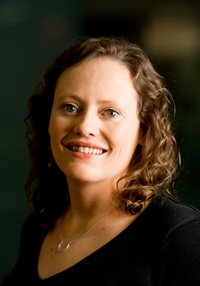
 

Kirstin


What have been your toughest experiences as an ECR that have required you to build resilience? 

While your first paper rejection or first set of difficult reviews is definitely tough, I think the toughest so far was being rejected for a fellowship for which I had gotten to the final interview round, and that from planning to rejection took the best part of a year to prepare.  I suppose it was the first really significant rejection in my academic career, and it hit me pretty hard at first.


What did you find helps at these times?

First: wallowing. Don’t get me wrong, I think the more positive coping strategies are important, but personally, I find it helps me if I let myself just feel rubbish for a little while and acknowledge the fact that this sucks! Alongside the wallowing, one of the most helpful things is good, kind and thoughtful people, particularly those who could relate or understand the particular brand of academic rejection from a  range of different career stages. The kind words and gestures that remind me that we all experience these things, that it doesn’t devalue me as a scientist, and that I have a supportive network who will continue working with me regardless, was really powerful. Finally, starting the process of reframing, reappraising, and moving forward. Even something that ends in rejection can give you a lot of really useful feedback and action points along the way. I’ve worked out what I can do to make things stronger next time, and am trying (mostly successfully now) to see this as an opportunity to make my ideas stronger and even more developed next time around.


What makes you want to keep going? 

A big part is coming to the realisation that a rejection isn’t a reflection of my potential. A wise friend told me recently that you have to focus on what you can and can’t control. A rejection based on something you can control (even if it feels super hurtful) is an opportunity to get better than you would have been if you weren’t rejected. Sometimes something that initially feels out of your control (“the reviewer didn’t understand my analysis and suggested that I change something I didn’t even do?!”), actually is (“Oh. I really need to write this better so it is super clear what I did and how I did it so that readers can follow it easily”). Also, realising that rejection might be an opportunity to make things better and stronger really helps me keep going. Eventually.

Before that positive reframing malarky, I get by remembering that if everything falls apart on the back of this one rejection (don’t judge me – exaggerating the awfulness helps sometimes) there are still other options. Even a harsh rejection is not a total dead-end, at worst it’s a detour. As someone who usually finds detours interesting in the real world when there is no time pressure on reaching the destination, I find this helps me too. 


What would you say to ECRs that might help them prepare for these challenges?

Brace yourselves! It’s going to happen. Sometimes it’s probably going to be more devastating than others. So maybe keep that emergency comfort at hand, whatever that might be for you. I’m thinking of installing a “break glass in case of major rejection” box next to my desk. Inside I will stash an escapist  (totally fiction!) book, drink of choice, and bar of chocolate, ready at all times!

Remember it happens to everyone. Do not rely on Twitter or university newsletters for your perception of reality. It was amazing how many people who are brilliant and successful sent me messages about their first and various major rejections to offer me comfort. I still find it comforting to know that this does happen all around. 

Build that network! Reach out to new people, make time for coffee and chats with colleagues and co-workers, or even people who work on the same floor but on something totally different. Send someone a message on Twitter, or speak to them at a conference (in person or chat box, whatever the world allows for), or connect with people however you feel comfortable doing so. Share your successes and rejections with a supportive network who will get it! Just remember that being a scientist never means you have to go it alone. 

And finally, celebrate every win! I think it’s easier to handle rejection if you can fall back on all the successes you’ve had and will have. And I think this is way easier if you start noticing those successes along the way. Don’t get me wrong, this takes active attention and practice, and sometimes reminders, but you can do it! And maybe you can be that reminder for your friends, students and co-workers when they need it. Let me help you practice:

Got an analysis running? That can take days! And even if it just took an hour or two, having wrapped your head around what was needed and how to achieve it and actually make it happen deserves a self-congratulatory pause at the very least! 

Finished the analyses for a paper?! Do you know how complex this part of a paper is? You’ve probably learned a lot along the way, resolved challenges and issues you didn’t even know existed before you started! Maybe built up your network as you’ve sought advice, help and feedback. I bet you even used a whole new package/approach/software you clever duck. Tell someone. Make yourself a special dinner!


You get the idea…


Admittedly, I fail to celebrate many successes, and often they hold less space in my head than the rejections, but I see it as a work in progress and fully intend to get better at it.

So, on that note, I’m going to go celebrate finishing this blog with a quick chat with a friend and a cup of tea.

 

The evidence behind different coping behaviours during the COVID-19 pandemic

In this blog, Placement student Steven Bright writes about the evidence behind different coping behaviours during the COVID-19 pandemic.


Over the past year, we’ve all been trying to adapt to our new way of life during the pandemic. Whether it’s exercising at home or video chatting with loved ones, several aspects of our lifestyles have changed to help keep our community safe. Many of us are also using this opportunity to explore new hobbies, especially for those people whose usual ones have been completely disrupted during the lockdown.


As research surrounding mental health during the pandemic continues, we already know that a lot of people are experiencing poor mental health. In fact, a recent study (1) has found that in over 4,000 Spanish adults, 65% reported having symptoms of depression or anxiety two weeks after the first lockdown. Fortunately, most of these experienced symptoms were indicated as being mild. Out of the adults experiencing symptoms of anxiety or depression, 39% and 29% respectively belonged to this mild symptom category. However, a small minority were shown to be experiencing severe symptoms for at least one of these disorders.


But there are many ways in which we can be more actively focusing on our mental health during this pandemic. In this same study, following a healthy diet and avoiding regular news updates about the pandemic were both associated with reduced anxiety symptoms. These behaviours were similarly associated with lower levels of depression, along with pursuing hobbies and following routines. This result is especially encouraging because many people with mild symptoms may notice a positive response by simply incorporating these behaviours into their lifestyle.


Some of the authors’ other findings may come as a surprise. For example, doing relaxing activities and exercising were not noticeably related to the participants’ anxiety and depression symptoms. There may be several different reasons for these findings. For example, many people enjoy exercising because of its social element. Exercising alone may therefore not feel as pleasurable in contrast to heading to the gym or a sports centre, which have temporarily closed during the lockdown. More simply, it could also be a finding that is specific to this group of participants. Another study investigating athletes and people who regularly exercise might find that this behaviour more strongly associates to their mental health outcomes.


Ultimately, we must keep in mind that we cannot draw any casual relationships from this study. You might expect that behaviours like engaging in hobbies and following a healthy diet will cause a lower level of depression and anxiety symptoms. However, any scientist will quickly tell you that correlation is not causation. Another interpretation would be that people who are less anxious and depressed just tend to engage in these behaviours. Therefore, occasionally skipping out on your hobbies or following a healthy diet may not necessarily be followed by a bout of poorer mental health.


A “longitudinal” study may better clarify the relationships between these coping behaviours and mental health. By repeatedly assessing a selection of behaviours and mental health outcomes over a longer period of time, clearer patterns of relationships between these factors may become more noticeable. Nevertheless, it seems that following a healthy diet, pursuing hobbies, following routines, and not overly checking the news updates about COVID-19 may all be worth trying to incorporate into your lifestyle during the pandemic.


References

[1] Fullana MA, Hidalgo-Mazzei D, Vieta E, Radua J. Coping behaviors associated with decreased anxiety and depressive symptoms during the COVID-19 pandemic and lockdown. Journal of Affective Disorders. 2020 Oct 1;275:80-1


(DOI to paper: https://doi.org/10.1016/j.jad.2020.06.027) 


Intersectionality in Academia

We must maintain an intersectional perspective in discussions around race and racism, to better understand and reflect on the diverse realities experienced by individuals across racialised groups. In this post, Marie Skłodowska-Curie Fellow, Dr Ziada Ayorech, reflects on her experiences as a Black academic, as well as a female, and mother of two toddlers.


Dr Ziada Ayorech


The term ‘intersectionality’ was coined by Professor Kimberlé Williams Crenshaw. It refers to the many overlapping, sometimes contradicting, social categories an individual occupies – and how these contribute to their experience of discrimination and privilege. As a Black, female, mother of two toddlers, my lived experiences pursuing a career in academia can illuminate some of the challenges of bringing your full self to the workplace.

Like many moments which result in a career changing opportunity, I distinctly remember the interview that culminated in my obtaining a Research Assistant position, which subsequently turned into a PhD in Behavioural Genetics. I arrived in the SGDP lobby at King’s College London for the final interview of the day, after an Oxbridge candidate had as good as cemented the panel’s decision. The details of how I nailed the job, which was intended for my competitor, are often relayed to me by colleagues (now turned dear friends), as an example of my capacity. But like many academics, the experience of obtaining a coveted position left me with imposter syndrome.

Navigating imposter syndrome is challenging in its own right. But as a Black woman, I grappled with both the internal and the societal messages about my ability. Belonging to these two systematically oppressed categories can amplify narratives that you are lesser. Achievements which challenge that long-standing narrative are a perfect breeding ground for imposter syndrome. A shared reality of Black Indigenous and people of colour (BIPOC) is the inherent lack of representation across all spheres of our lives. From grade school, through university, to a glance at the senior faculty members at our institutions, the resounding message is loud and clear: these spaces weren’t built for you.

“Belonging to these two systematically oppressed categories can amplify narratives that you are lesser.”

The internal story I told myself (backed by personal experience of over 30 years of structural racism) was that I’d duped them: I am under qualified and any day now, the jig will be up, I will be fired. This meant that when my partner and I decided to have our first child, less than one year into my PhD, the idea of telling my supervisor that I was pregnant was almost too much to bear. Unlike so many female academics I have spoken to, I was fortunate to have an extremely compassionate supervisor, who’d seen many PhD students embark into parenthood during their degree. Despite this, I worked flat out until the birth, submitted a paper days before my maternity leave began, responded to reviewer comments weeks after my son was born, and left my 4-month-old for the first time during my maternity leave to conduct interviews. The reality for female academics who choose to pursue their careers as well as start a family is a head spinning balancing act. Have your children, but don’t let that interfere with your career. Publish at all costs, but still be at every parent-teacher meeting. Say yes always, to indicate that you are still career driven.

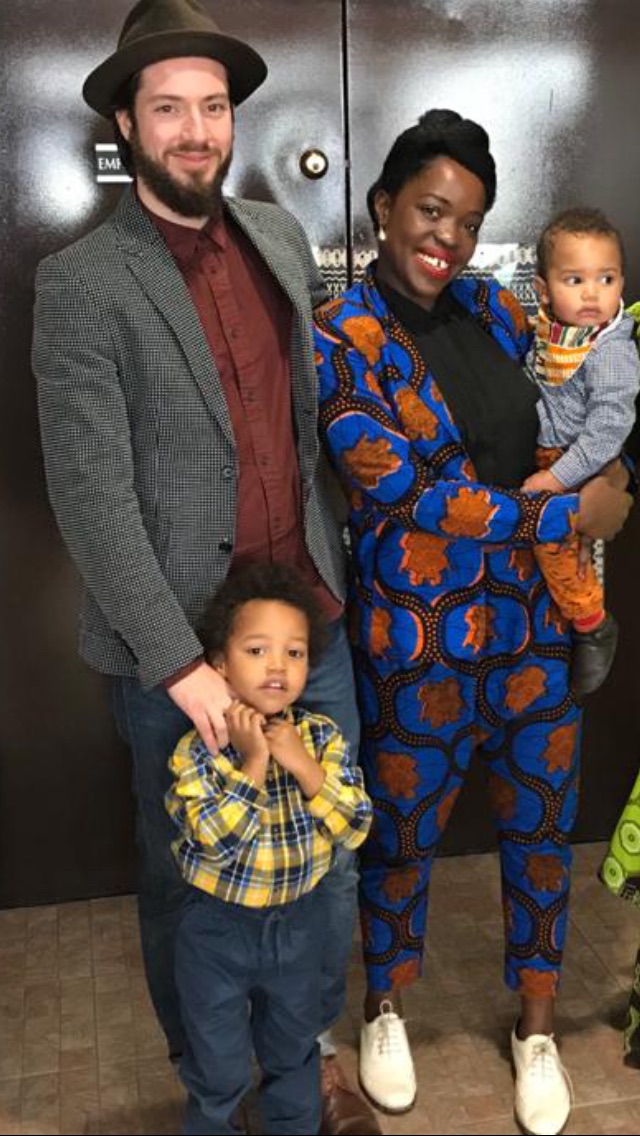
Ziada and her family

The challenges of navigating the demands of motherhood and academia are amplified as a Black woman. Again, intersectionality rears its ugly head. Black women in the UK are four times more likely to die in childbirth than white women (1) – a staggering statistic attributable to systemic racism in the health care system. Consistent with these statistics, the birth of my firstborn was riddled with hostile encounters at the hospital; a dangerously long labour; and eventually a traumatic emergency caesarean. I was lucky in comparison to many BIPOC mothers, who I eventually had the courage to speak with. We’d both made it home. Nonetheless, when returning to work and relaying this experience to my colleagues, I refrained from discussing the reality of structural racism at the hospital.

“I was lucky in comparison to many BIPOC mothers, who I eventually had the courage to speak with.”

Speaking up about racism can feel isolating. Repeated experiences of ‘gaslighting’ can often lead us to wonder whether we will even be believed. Additionally, Black women may internalise stereotypes such as the ‘strong black woman’; a perception that we are naturally resilient and self-sacrificing. These narratives can negatively impact mental health and reduce the likelihood to seek help. Images of motherhood are often white centred. Valid concerns about raising Black children in a racist society don’t often feature in mainstream discussions around the challenges of parenthood.

I was eight and a half months pregnant with my second born when I defended my PhD thesis, driven in part by the knowledge that I was one of the only Black female Behavioural Geneticists that I had seen at conferences, in statistics courses, at lectures, and across the many international institutions I had studied in. Letting my foot off the gas was not an option. I’ve been in conference calls where another male academic has called out his colleague for having an entirely male working group — quietly wondering to myself what would happen if I mentioned that not a single Black geneticist was pictured across the multi-centre initiative they were describing, let alone a female one.

“I was one of the only Black female Behavioural Geneticists that I had seen at conferences, in statistics courses, at lectures, and across the many international institutions I had studied in”

Open discussions about the structural racism underpinning our academic institutions, field and world are a key component of the shift of 2020. Along with the pandemic, which brought life as we know it to a standstill, came a long overdue awakening to the second pandemic affecting global citizens. As the dust settles and we emerge in 2021, how can we take an intersectional approach to our anti-racist initiatives? How can we engage in meaningful change to address the structural inequalities that, by doing nothing, we perpetuate? How can we have real lasting change?

Know your blind spots

I can speak on the Black female mother experience, because this is my reality. Other experiences, for example of ableism and transphobia, need to be brought honestly to the table if we are truly engaging in intersectionality.

Inclusivity, not just diversity

Often academic institutions describe perceived challenges in recruiting or keeping BIPOC employees. True inclusivity requires creating spaces where diversity is celebrated, welcomed and encouraged, where all voices are given a platform to wield influence. Efforts to recruit BIPOC that do not include these structural changes can be perceived as ‘tokenism’. Indeed, ‘if diversity is a sprint, inclusivity is a marathon’ (2).

Go beneath the surface

Conference surveys on whether you experienced a specific discriminative event fall short of addressing the issues at the bedrock of our institutions. Yes, I had sexist and racist comments uttered to me by senior faculty at my first genetics conference, and yes explicit codes of conduct can discourage overt discrimination — but until we use an intersectional lens to address the structural inequalities inherent in our institutions, the bandage will always fall off.

Do the work

Relying on BIPOC to lead the initiatives is disingenuous. Speaking up is risky for those who don’t hold the power. It can have a negative impact on career trajectories and wellbeing. These risks shouldn’t be left to BIPOC to take.

Change the language

Be intentional about the language you use and consider how it may perpetuate narratives (see our previous blog on this here)

The road to building new institutions that reflect our global diversity will be a long one. Engaging in honest and frank discussions about the structures that perpetuate inequality require intersectionality. It is only by considering the multitude of identities that can intersect and amplify discrimination that we can begin to create a space where each of us feel empowered to lead with our full selves.


(1) Mother and Babies: Reducing Risk through Audits and Confidential Enquiries across the UK (MBRRACE-UK) published in 2020

(2) Quoted from Dana Browlee, Forbes senior contributor and Author of ‘The dangers of mistaking diversity for inclusion in the workplace’)

Measuring race, ethnicity and ancestry in research: time for new tools

Yasmin considers the ways in which we measure and discuss race, ethnicity and ancestry in human research. When scientists use these terms incorrectly, they reinforce and perpetuate inaccurate and often racist narratives.


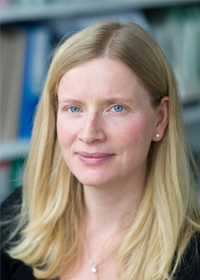
Dr Yasmin Ahmadzadeh


Everyone loses when science is not diverse. But how do we measure diversity?


In scientific research, the information (or variables) that we measure must be valid. Whole careers and research fields are built around the quest to achieve accurate measurement of human traits and characteristics. This is to ensure the validity of our results and evidence-based recommendations. 

Race, ethnicity and ancestry are among the most commonly used variables in human research. Many journals require inclusion of these data before research is accepted for publication. However, measurement protocol for these variables remains murky and, in some instances, unacceptable (some countries [e.g., Germany] do not collect demographic data on race or ethnicity).

In an ideal world, we would use categories that allow us to group populations according to relevant common features in an accurate and systematic way, so that the resulting statistics can be easily reproduced and compared over time and between sources. However, the categories used for measuring race, ethnicity and ancestry are inconsistent and can be harmful. When scientists use these terms incorrectly, they reinforce and perpetuate inaccurate and often racist narratives.

In search of valid categories for labelling populations


Race, ethnicity and ancestry are multifaceted terms subject to shifting definitions. They are related, but they are not all the same. These terms should not be used interchangeably to define participant groups in research. Unfortunately, this mistake is often made, resulting in the misrepresentation of participant groups.

Race categories were developed as a taxonomic grouping of humans, formed during the heyday of European colonialism. They are typically associated with physical characteristics such as skin colour or hair texture (e.g., ‘Black’ or ‘white’). They are not valid indicators for any underlying biological differences between individuals (e.g., genetics), or place of origin. Racial categories are a social construct. That is, there are no observable, biological measures that can be used to reliably classify individuals within racial groups. The history of racial categorising is entrenched with oppression and subjugation of non-European people. Many agree that race is the invented product of racism.

Ethnicity refers to the grouping of humans based on cultural expression and identification (e.g., ‘Latino’, ‘European’, ‘Chinese’). This can include factors such as shared ancestry, language or traditions. As with race, ethnicity is a social construct, categorised into groups that are deemed distinct by society. There is no consensus on what constitutes an ethnic group, and membership is self-defined and subjectively meaningful to the person concerned.

Ancestry typically refers to the geographical origin of populations (e.g., ‘European ancestry’ or ‘African Americans’). It can also be used in terms of the heritage or descent of a group, (e.g., ‘Ashkenazi Jewish ancestry’). Ancestry is considered the most objective of the three defined terms, but it is not without flaws. Populations are never homogenous in their ancestry because genetic diversity is continuous, not categorial. There is no such thing as a population with a single direct (or, as some have put it, ‘pure’) ancestry. Therefore, the borders that we place around ancestries are arbitrary and, again, socially constructed.

Categories that we currently use in research


The ‘race’ and ‘ethnic group’ categories currently recommended for use in the USA (by the NIH) and the UK (by the ONS) are outdated and unsystematic. They were not designed for research. They pool a range of racial, ethnic and ancestry terms within single categories (e.g., ‘Black/African/Caribbean/Black British’). They include derogatory words (e.g., ‘American Indian’) and group people by skin colour (e.g., ‘white’). They include some cultural groups (e.g., ‘Arab’ or ‘Hispanic’), but not others. Some countries are listed individually (e.g., ‘Ireland’ or ‘India’), while other countries are clustered in large geographical regions (e.g., ‘Africa’ or ‘Asia’). Personally, I find that my Middle Eastern ancestry is grouped with ‘white’ Europeans on one scale, then with ‘non-white’ Asians on another. 

In sum, these categories are inadequate for representing the global population equally and fairly. As researchers, we must work to break perpetual cycles of racism in research, and not remain complicit. We can strive to do things differently and develop new tools for research. We must not stop talking about race, but we must understand and use racial terms correctly. Abandoning racial categories would be a mistake. If we stop using racial categories, then we will not be able to identify racial inequity in research.

A call for action


Correct your vocabulary, and the vocabulary of others. Consider the context.


* Racial terms (e.g., ‘Black’) are only appropriate when discussing the racialisation of participants. (see here for why many are now deciding to capitalise the B in Black).

* By using racial categories in the wrong context, we risk reinforcing the notion that they are biologically and scientifically valid.

* Stop referring to race, ethnicity or ancestry as ‘risk factors’ in health research. There is no evidence to suggest that ethnicity is a causal risk factor for health problems. There is evidence to suggest that racism and marginalisation is.

* Stop using the term ‘Caucasian’ in research. This is a pseudoscientific term, derived from an 18th century racist classification system. You should use either ‘white’ or ‘European ancestry’, depending on your context. (see more here)


Consider how the data that you collect will be used in your research.

Is it valid? Who will it serve? What can it really tell you? Wherever possible, be specific.


* Do not pool all ‘Black, Asian and Minority Ethnic’ (BAME) groups into one category. The BAME label (and related acronyms, such as BME) is insufficient to reflect, and therefore help, the many groups captured within that definition. The BAME categorisation creates a dichotomy of ‘white’ versus ‘non-white’ (or ‘majority’ versus ‘minority’ groups), which serves to reinforce racism in research. If you must refer to multiple communities under a single label, the terms ‘marginalised groups’ or ‘racialised communities’ are preferable. (see here for further critique of the BAME label). 

* Categories need to be consistent across research and health services, to support research efforts and policy recommendations. But categories also need to capture what it is that matters for the study at hand. For example, ancestry will be more important for geneticists exploring the role of population stratification; while racial terms will be more important for psychologists exploring the influence of racial inequality.

* Where possible, data collection should support an intersectional approach to understanding the multiple identities that individuals hold, encapsulating different forms of privilege or disadvantage in society. Information on participant race, ethnicity and ancestry cannot tell the whole story. Within groups there is diversity of experience. 


Individuals of non-European descent – i.e., the majority of the global population – remain under-represented in human research (among research teams and research participants). Their narratives are excluded and their data are under-reported. Many teams and institutions are now striving to change and improve their research strategies to address this imbalance. This involves confronting the systemic racism that exists in human research. An important first step will be to consider how we define diversity among participants in the first place. We must be meticulous in our planning as to what data we need for our research, and why we need it. We must involve participant perspectives in this process. We must be honest with participants about the limitations of the variables that we use, and communicate how we intend to use any data that we collect about their race, ethnicity or ancestry in our work. 

We must see this as an active learning process, requiring constant reflection and challenging of assumptions that are so deeply ingrained in our practise and institutions.

Resources

Saini, A. (2019). Superior: the return of race science. Boston: Beacon Press.

Rutherford, A. (2020). How to Argue with a Racist: History, Science, Race and Reality. London: Hachette UK.

Kendi, I. X. (2019). How to be an antiracist: One world.

Miika Tervonen, historian and social scientist, on the “the myth of a monocultural Finland”.

Professor Dorothy Roberts, professor of law and sociology, on race-based medicine.

Recording of a recent webinar chaired by the Mental Elf: “Mental health research is racist, so what are we all going to do about it?“.


NB: the last national survey of racial and ethnic minority mental health in the UK was published almost 20 years ago, in which researchers pooled all “Black, Asian and Minority Ethnic” (BAME) groups into one category.


The balancing act

In this blog Prof Thalia Eley shares some reflections on the difficulties of balancing life and an academic career in the context of a chronic condition. We think much of what she has learned may apply to those finding themselves slow to recover from Covid.


Thalia

Continue reading

Post-doc pathways: your questions answered

In this blog, Dr Kirstin Purves, a post-doc in the EDIT Lab put various questions about the career paths ahead to Prof Thalia Eley. We hope this might be useful to others experiencing this challenging career stage. The focus here is primarily on options within academia, but of course there are many other post-doctoral career pathways, including into work in the charity sector which we plan to cover in another blog.


  1. What are the different options after a post-doc? Is it faculty or bust?

Whilst the most visible next step for a post-doc is a faculty post, it is quite rare to get one without building up a bit of experience first. Some people end up doing two or three post-docs working on different studies, developing new skill sets, gaining experience teaching and producing publications, all of which are useful fodder for the CV. I often tell my team that at this stage, you nearly always need to compromise in some way, as you are unlikely to find a post-doc on the topic you want to study, using the methods you want to learn, in the geographical location you want to be in. It’s not impossible, just quite a big ask. Most end up compromising on some aspect of the research relative to their priorities or move to a new location they might not otherwise have selected. One option to consider as well is whether you want to move towards leading your own team or whether you prefer having a supporting role in an established team. Many extremely highly value post-docs end up as trial/study managers, offering a different balance of responsibility, security, and autonomy to that of the team lead. 

The only way to really ensure you can be where you want, exploring the questions you want, learning the methods that you are most interested in is to get a fellowship. Inevitably, this makes fellowship very popular and thus competitive, but someone has to get them, so don’t assume you won’t! One change though, in the past decade or so, is that most fellowships are aimed at those a few years out of their PhD, so most post-docs need to get a role working with an established investigator first. A third, intermediary option is to help with the writing of a grant that has a post written into it with you in mind. The MRC has a grant writing role called researcher co-investigator, precisely to address this need. But even if you can’t be named as an investigator on the grant, if you work with an established PI who is interested in supporting you in this way, it can be a really good option. 


2. What’s the difference between a post-doc, a fellowship and a lectureship?

Post-doc positions are usually funded by a grant to an established investigator. These are commonly 2 or 3 years long, occasionally longer. During such a position, the post-doc usually has a specific role in a study that they must fulfil in order for the principal investigator to fulfil their promise to the funder. That said, they should also be given opportunities for training and personal development, and wherever possible, some time to pursue their own research interests. A fellowship refers to funding sought by the individual that covers their salary and a range of research associated costs. The earliest fellowships are for those who have recently completed their PhD. These are rare, the Henry Wellcome fellowship being one option, though these are changing summer 2021. The ESRC also offers early post-doctoral fellowships through their Doctoral Training Partnerships. The other end of the range are senior fellowships aimed at those who are approaching professorial levels of research experience. As such, the word fellowship refers to the funding being personal, not to the career stage. 

As described above, fellowships allow you to design your own research programme, and they also usually allow you to focus almost exclusively on research, rather than combining this with teaching. In contrast, a lectureship is a post which usually brings with it specific expectations about contributions to the university with regard to both research and teaching. Furthermore, to progress beyond a lectureship, many universities would also expect the individual to make contributions to the running of the university through sitting on committees or taking on other organisational roles.    


3. If you do get a fellowship, what happens after?

It is possible, though rare, to be funded by a series of successive fellowships. However, at each level of seniority there are fewer fellowships available, so many people end up moving from a fellowship into a university post, such as a lectureship. It is often possible to recycle ideas that were in a fellowship that wasn’t funded into a grant, such as one of the new investigator research grants (offered by both MRC and ESRC). 


4. What are the pros and cons of moving to a new institution, city, or country at this stage, and can you progress without doing at least one of these?

Funders do recognise that it can be difficult to move, especially repeatedly, during the post-doctoral years. Often people at that life stage do not only have themselves to consider, but also a partner, possibly children or elderly parents. That said, if you can move to a new city or even a new country, it is a wonderful opportunity and one that would likely be harder later so worth giving a try! For the fellowship route, if you are proposing remaining at an institution where you held a prior fellowship, it is important to demonstrate that you are becoming ever-more independent and gaining training, opportunities or collaborations beyond those outlined in your earlier application. 


5. What are the pros and cons of a long vs short term contract at the post doc level?

 This is a very personal question. For those with financial commitments, or who find uncertainty difficult, a long-term contract such as that provided by a faculty position is likely to be more attractive. To others without such commitments, it may be worth being on a series of short-term contracts if that allows them to do the work they really want to do.

At the end of the day, you spend much of your waking hours working. If you don’t enjoy what you are doing or don’t feel comfortable with the balance of responsibilities and opportunities it offers, then talk to people in different roles until you figure out what would suit you better. 

« Older posts Newer posts »

© 2026 The EDIT Blog

Theme by Anders Norén — Up ↑