Page 6 of 27


How are genetics associated with self-reports of trauma?
Alicia outlines findings from our recent paper investigating gene-environment correlation in the association between heritable traits and retrospective self-reports of childhood trauma.
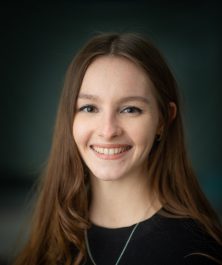
Alicia Peel, EDIT Lab PhD student
It was time for me to talk.
Read Sarah*’s story of her journey with anxiety, and how realising that the time to talk helped her to regain her voice.

Alicia’s do’s & dont’s of working from home communication
To whom it may concern,
Being back to working from home is stressful enough without having to remember all the intricacies of pandemic email etiquette. The things that became second nature to us during the dark days of 2020 were blissfully forgotten as soon as that first dose of Pfizer hit our systems. Allow us to help you ease back in with some reminders of the do’s and dont’s of the WFH communication minefield.
Kind regards,
Alicia
Sent from my kitchen table
Alicia Peel, EDIT Lab PhD student

In conversation with Stella: Perspectives from a black assistant psychologist
Today’s post forms the second part of Hollie’s interview with Stella Ogunlade, inspired by Black History Month which was celebrated in October. Stella is a black female Assistant Psychologist working with individuals with eating disorders in Yorkshire. Here, she describes her experience as a black woman being employed in the field of clinical psychology. We hope Stella’s words draw attention to the issues and challenges faced by black women working within the field.

Stella Ogunlade, Assistant Psychologist

Introducing Stella: a black female student’s journey into clinical psychology
Last month, many academics and researchers celebrated Black History Month. It is well known that Black History Month is particularly relevant in psychology due to a number of long-standing biases in psychological research and clinical practise, which are important to acknowledge.
Across the next two posts, EDIT Lab member Hollie Hymas interviews Stella Ogunlade, who works with individuals experiencing eating disorders at a clinic in Yorkshire, England, and has kindly agreed to discuss her contributions to the field. In the first post, Stella describes her journey into psychology; from migrating from Nigeria to the UK at the age of 8 to receiving a Psychology degree from the University of Bristol at the age of 20 and starting her career. In the second post, Stella gives her perspective on being a black woman in the field of clinical psychology and how this has affected her experiences.
Stella Ogunlade, Assistant Psychologist

Dr Karen Bateson transitioned to the voluntary sector after 20 years of working for the NHS as a Clinical Child Psychologist. She is currently the Head of Clinical Strategy and Development at the Parent-Infant Foundation. In this blog, Karen was interviewed on her career transition and current role by former EDIT lab MSc student, Elena, who completed her MSc placement at the Parent-Infant Foundation. Karen provides advice to those who may (or may not, yet) be considering work in voluntary organisations.
Elena (EDIT Lab 2020-2021 MSc Student)

Dr Karen Bateson, Head of clinical strategy and Development at the Parent- Infant Foundation

Well, here we are. Half way through the first term of the 2021 academic year and due to the lingering impact of the pandemic (and the fact that no one can be bothered to commute anymore) we find ourselves navigating the minefield of hybrid working. As you try to remember which desk you’ve left all your chargers on and readjust to not working in your pyjamas, allow us to share our tips for the new office-remote hybrid world.
Alicia Peel, EDIT Lab PhD student

Why should you remember the 5th November? Because it’s the anniversary of our first EDIT blog post, of course! To celebrate 5 years of the EDIT blog, we’re sharing five insights about our posts, series, sources of inspiration and more!
Alicia Peel, EDIT Lab PhD student
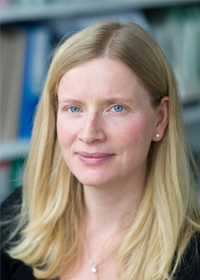
Professor Thalia Eley
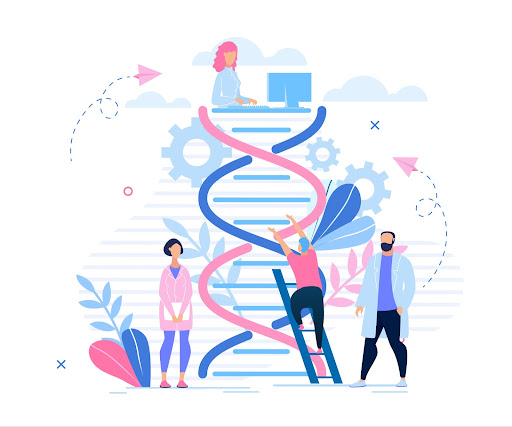
In Part 1 of this blog series, Elisavet [EDIT Lab first-year PhD student] and Elena [EDIT Lab 2020-2021 MSc student] outlined the inherent limitations of not including more diverse – and thus representative – samples in GWASs. In Part 2 below, they discuss the ongoing efforts towards diversifying research at three different levels.
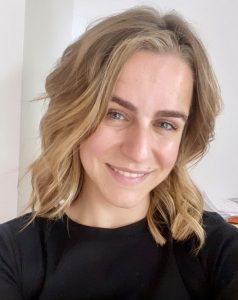
Elisavet ( EDIT Lab 1st year PhD student)
Elena (EDIT Lab 2020-2021 MSc Student)