Research on the development and treatment of emotional disorders, discused and digested by the EDIT Lab Team and collaborators

Category: Research Matters (Page 6 of 7)

Microbes and minds

 It might surprise you that your body is made up of only 10% human cells. There are trillions of microscopic creatures living and dying all over you, and these are particularly diverse and numerous in the human gut. Mounting evidence suggests that microbes aren’t all enemies but are vital to our functioning, influencing our metabolism, health, behaviour, and quality of life. The deep collaboration between humans and their commensal microbes is the focus of much new research that invites us to think about ourselves differently. This article looks at some of the bold claims made from this young field.
 

Continue reading

“So that means there’s nothing you can do about it…?” – Understanding the relationship between aetiology and intervention in psychiatric research

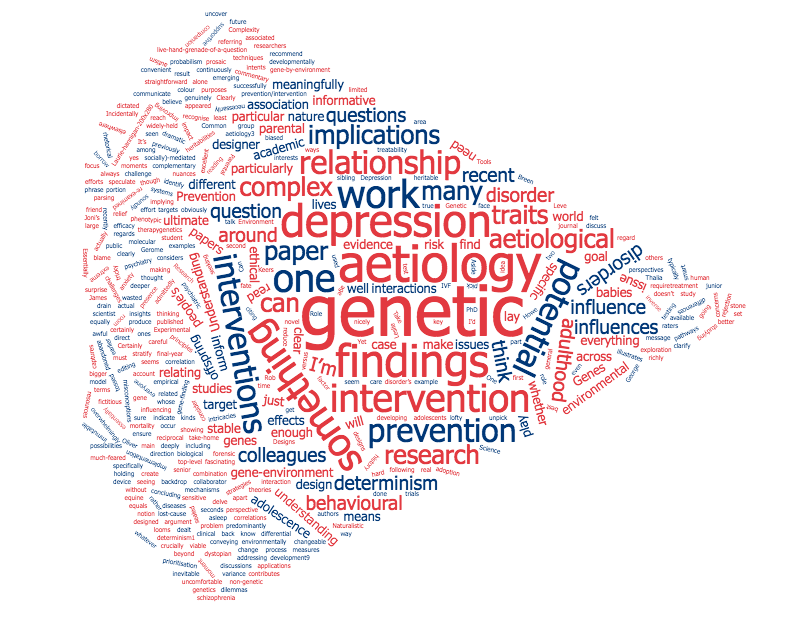
One of the main challenges associated with conveying findings from behavioural genetic research concerns the relationship between aetiology and intervention. In part, this is because of the widely-held understanding among the lay public that something being “in your genes” means that your fate is sealed. But this challenge is more than just one of addressing misconceptions. Understanding the relationship between the aetiology of a disorder and the design, implementation, and potential efficacy of interventions that target it is a hard problem – and one that must be continuously re-examined to ensure that aetiological research contributes meaningfully to the ultimate goal of improving people’s lives.

Continue reading

Cognitive behaviour therapy for adolescent body dysmorphic disorder: latest findings and future directions

Body dysmorphic disorder (BDD) affects up to 2% of the population and is associated with serious impairment and disruption among sufferers. Yet, compared to other psychiatric problems, it remains relatively under-researched. Here, I describe our findings from a recent study of the efficacy of cognitive behavioural therapy for adolescent BDD.

Continue reading

Depression, developmental change, & the home environment: a summary of our latest research paper

Clearly, the onset of depressive symptoms, at any stage of an individual’s life, is a cause for deep concern among loved ones. But the emergence of such problems in young children and adolescents is especially worrisome for parents – and never more so than when it coincides with problems at home. 

But what really underpins the link between children’s emotional problems and their home environments – and how does the onset of adolescence change things? These questions are at the heart of our latest piece of research, published this week in the Journal of Child Psychology and Psychiatry.

Continue reading

Challenging your partner’s harsh parenting could benefit the children

Becoming a parent seems to render you fair game for parenting advice, regardless of whether it is based on evidence, opinion or delusion. Family, friends, and even helpful strangers in the street are likely to advise you on … well, everything. In an ideal world, your partner might be expected to offer support before criticism; validation before censure.
But what if your parenting has crossed a line?

Continue reading

The Language of Mental Health

Do the words we use to talk about different psychiatric disorders, such as anxiety and schizophrenia, have an influence on how we view them? Does the fact that we all have days when we are anxious make us feel that anxiety disorders are less severe, less important than other disorders that relate less obviously to everyday life? If so, we should think again.

Continue reading

Cognitive behavioural therapy (CBT): could genomics be used to predict treatment response?

Recently, I completed my PhD studies in the EDIT lab, wrote my thesis, and retired to a life of luxury and leisure (or two of those three). Across the past four years I have become interested in how now-standard methods in genomics (the study of genetics across the genome) can be used to ask age-old questions about how our genetic code and life experiences influence our behaviour. Here I describe our work investigating associations between genetic variation and better response to cognitive behavioural therapy.

Continue reading

« Older posts Newer posts »

© 2026 The EDIT Blog

Theme by Anders Norén — Up ↑