Category: Research Matters (Page 4 of 7)


Artificial Intelligence has many useful applications – Today on the blog, Shivani tells us a little more about the role of machine learning and discusses the potential (and potential pitfalls!) of AI to help us to better understand, predict and even treat mental health disorders.

Artificial intelligence (AI) is a term used to describe technology that imitates human intelligence which is often achieved through machine learning. Machine learning refers to a system that is able to learn and get better from experience without having to be explicitly programmed. This branch of computer science has been used to inform computational psychiatry, a field that combines multiple types of information and computation methods to try and better understand mental health conditions. One approach commonly used by computational psychiatrists is the application of machine learning to clinical populations. This implementation of AI to diagnose, predict and treat mental health conditions is an exciting and emerging field which could help relieve the burden of mental illness for individuals suffering, and for our health care system (It has been estimated that the global cost of treating mental health illnesses such as psychosis is greater than the cumulative cost of diabetes, cancer and respiratory disorders; IBM Blog Research, 2018)
“This method of automated speech analysis proved to be 100% successful in predicting the development of psychosis in this group”
Early research efforts have used AI to predict individual’s outcomes by analysing the way people communicate. Bedi and colleagues carried out some research in 2015 that involved using AI to predict the onset of psychosis in youths. In this study, individuals who were deemed high risk for developing psychosis were interviewed regularly. Their interview transcripts were then analysed using automated semantic analysis. This method of automated speech analysis proved to be 100% successful in predicting the development of psychosis in this group, and has the potential to be applied as an objective clinical test. IBM research has projected that moving forward, AI will be used to analyse writing and speech, which can be used to predict an individual’s prospect of developing a mental illness. This would be implemented through the use of a mobile phone compatible speech analysis app and could provide early diagnoses for individuals.
In addition, AI has also been successfully used in other ways to develop algorithms which can predict poor mental health. This is shown in Cerasa et al’s 2017 research which used AI as a way of predicting gambling disorder in individuals. The researchers in this study employed classification and regression tree algorithms which automatically selected variables that distinguished whether or not participants went on to develop a gambling disorder. This study found that its machine learning approach was 80% successful in discriminating between controls and patients which demonstrates the efficacy of using AI in this research (Cerasa et al, 2017).

“Stigma still exists today and gets in the way of people seeking treatment”
AI has also been used as a way of delivering treatments for individuals suffering from mental health illnesses. With mental health disorders affecting approximately 1 in 4 people, it can be difficult for sometimes overstretched mental health services and clinicians to get everyone who is suffering the treatment that they need, when they need it (mind.org.uk), and sometimes treatment interventions do not last as long as users need them. In addition, despite a lot of hard work from many organisations and individualso tackle the stigma surrounding mental health issues (if you are looking for some great examples of campaigns, stories and individuals tackling stigma see here, here , here and here and here), this stigma still exists today and gets in the way of people seeking treatment. For these reasons amongst others, artificial intelligent care providers (AICPs) have become increasingly popular. AICPS are online agents which simulate psychotherapists by building therapeutic relationships with individuals. Research has shown that patients were more likely to disclose personal details to AICPs than to an actual clinician which could result in improved treatment outcomes and adherence (Miner, Milstein & Hancock, 2017). In addition, AICPs can deliver appropriate resources to users’ phones, speeding up response times and mitigating potential risks that could arise from delayed treatment (D’Alfonso et al, 2017). Personalised therapy chatbot apps are online help agents that can act as virtual therapists; regularly asking users how they feel and about their mood. This encourages users to express their feelings. Through semantic analysis, these conversations can be analysed by clinicians, giving them access to more layers of information which can help them to better understand their patient, and possibly inform diagnoses and treatment approaches.
“AI assisted treatment can bridge the gap between symptom onset and being seen by a professional”

However, despite the innovative implementation of artificial intelligence in mental health, AICPs cannot fully emulate the therapeutic relationship between a patient and clinician. Furthermore, the idea of AI taking the place of a trained professional raises significant ethical concerns. AI machines are not responsible agents but when used to treat patients, they need to be able to make decisions that are in the best interest of the patient whilst ensuring patient confidentiality and data protection (Luxton, 2018). Moreover, it is not clear who is responsible for AICPs and how they ensure that they are always up to date?
The application of AI to mental health is an exciting and innovative area which aims to embrace digitization by using technology to address poor mental health. AI assisted treatment can bridge the gap between symptom onset and being seen by a professional, however it cannot be expected to replace clinician delivered treatment.
REFERENCES:
Adrienne lafrance. (2018). The Atlantic. Retrieved 28 January, 2018, from https://www.theatlantic.com/technology/archive/2015/08/speech-analysis-schizophrenia-algorithm/402265/
Bedi, G., Carrillo, F., Cecchi, G., Slezak, D., Sigman, M., Mota, N., Ribeiro, S., Javitt, D., Copelli, M. and Corcoran, C. (2015). Automated analysis of free speech predicts psychosis onset in high-risk youths. npj Schizophrenia, 1(1).
D’Alfonso, S., Santesteban-Echarri, O., Rice, S., Wadley, G., Lederman, R., Miles, C., Gleeson, J. and Alvarez-Jimenez, M. (2017). Artificial Intelligence-Assisted Online Social Therapy for Youth Mental Health. Frontiers in Psychology, 8.
IBM Blog Research. (2018). IBM 5 in 5: With AI, our words will be a window into our mental health – IBM Blog Research. [online] Available at: https://www.ibm.com/blogs/research/2017/1/ibm-5-in-5-our-words-will-be-the-windows-to-our-mental-health/ [Accessed 28 Jan. 2018].
Luxton, D. (2018). Recommendations for the ethical use and design of artificial intelligent care providers. (Luxton, 2018)
Miner, A. .S, Milstein, A & Hancock, J. .T. (2017). Talking to Machines aboout Personal Mental Health Problems. Journal of American Medical Association, 318(13), 1217-1218.
Schueller, S., Stiles-Shields, C. and Yarosh, L. (2017). Online Treatment and Virtual Therapists in Child and Adolescent Psychiatry. Child and Adolescent Psychiatric Clinics of North America, 26(1), pp.1-12.
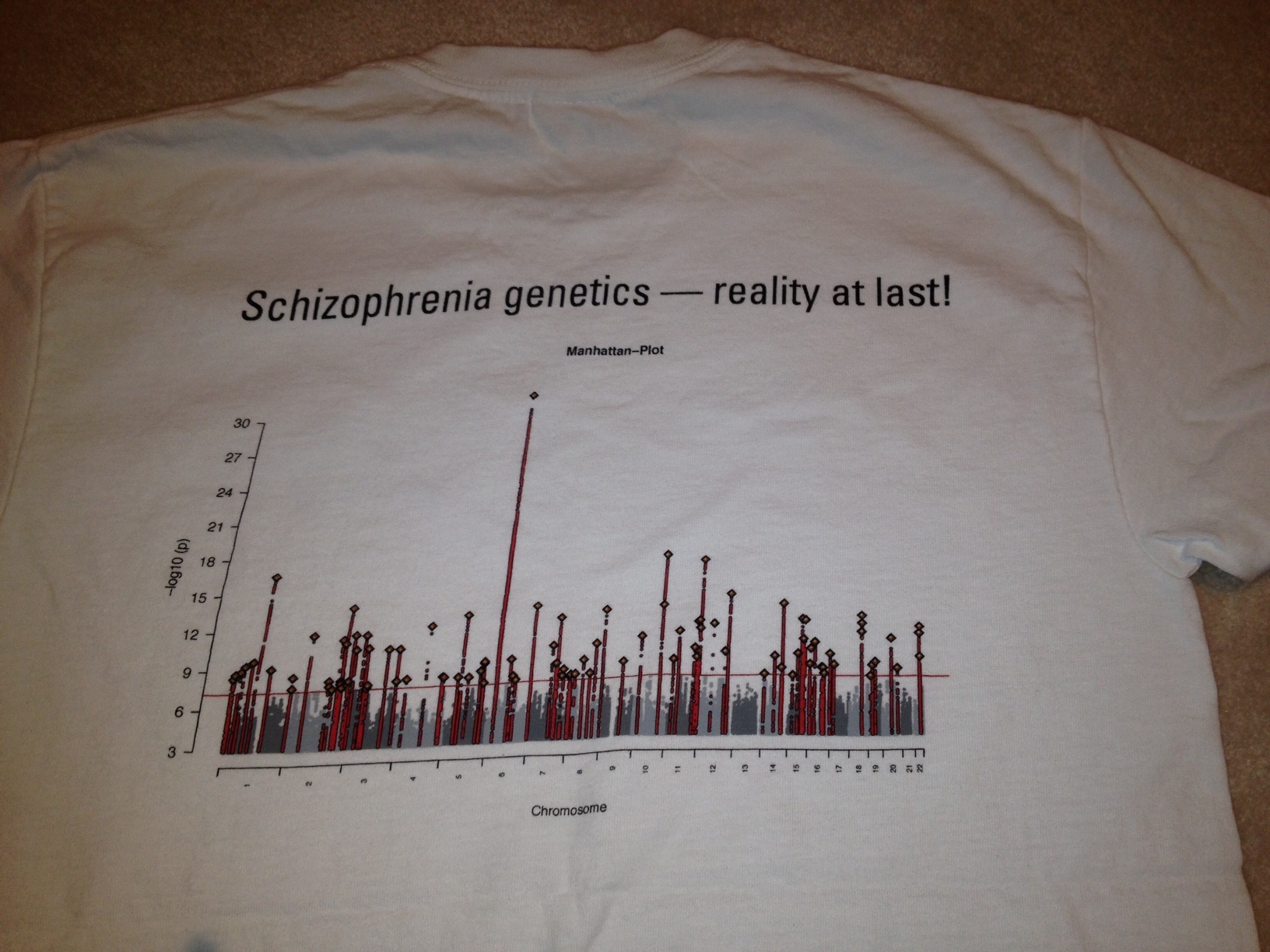
Last time out, I discussed options for replicating findings from a genome-wide association study when no appropriate cohort exists for replication. Perhaps the most effective solution was time – wait for more samples, get more power and prove those pesky doubters wrong. As all good sci-fi fans know (and as all bad sci-fi fans definitely know) time is a two-way street, and so in this blog, I’ll look back in time to explore the early strength of association of genetic regions that would later be classified as genome-wide significant.
The Depressive Realism theory argues that those who are depressed have a more accurate and realistic view of reality than those who are not depressed. But how should this theory inform the way we think about, and treat, depression?

Behavioural problems in childhood, such as anxiety, depression, hyperactivity, and conduct disorder are common. In the US, the likelihood of having one or more such problems is greater than 1 in 10. Our recent study asked to what extent individual differences in behaviour problems can be explained by differences in people’s DNA. Here, Rosa [EditLab PhD student] summarises the findings and their implications.


Replication in the Age of Genomics
Replication is the lifeblood of science – but how do you replicate when your cohort is the biggest available? EDiT Lab Associate Member and genomics crank-turner postdoc extraordinaire Joni gives three ways how.

Methods and concepts in Behavioural Genetics are intrinsically statistical, and jargon and acronyms abound. This often makes the research difficult for people outside of the field (and in the field) to understand and critique. In light of this, Rosa [EditLab PhD student] takes a look at the world’s most famous statistics book, pulling out examples of everyday statistical slip-ups, and applying them to behavioural genetics.

Most behavioural geneticists probably hope that their research will be understood by their family and friends, other researchers, and even journalists and politicians. It is not very handy, then, that an accurate definition of heritability, the most important concept in behavioural genetics, cannot be reduced to much more than ‘the proportion of variance in a trait that is explained by genetic variance’*. For us all to interrogate and interpret evidence, and spread good ideas, we need to demystify definitions, and get everyone on the same page with some of the basics of statistical fluency.
‘How to Lie with Statistics’, a humorous statistics primer for the general reader (first published in 1954) offers much inspiration. The writer, Darrell Huff, was not a trained statistician, but the relatable, vivid and breezy language resulting from this makes the book an absorbing read. Many of the ‘ways to lie with statistics’ included in the book are crude and apply more to advertising in the 1950s than modern peer-reviewed science (e.g. chopping off much of the axes on a graph to make a curve appear steep). However, the uncomfortable truth is that behavioural research is difficult and messy. Sometimes, research articles tread the fine line between a neat summary and a purposeful misrepresentation. Bias of journals and media outlets towards ‘exciting’ ‘novel’ ‘positive’ results is only one of the problems reducing the reliability and transparency of research. It is essential to think about how things can go wrong in research right from the initial design to analysis and publication, in order to spot what information is not presented as well as potential problems with what is.
Here are three examples of general statistical concepts from Huff’s book and how they relate to Behavioural Genetics.
‘The sample with the built-in bias’ (selection bias)
“A psychiatrist reported once that practically everybody is neurotic. Aside from the fact that such use destroys any meaning in the word ‘neurotic, take a look at the man’s sample”. The psychiatrist’s impression has been biased by their line of work.
To be useful, a sample for a scientific study should be representative of the population it is trying to investigate. But by definition, a sample doesn’t give a complete objective picture of the whole human population. Often, it has selected itself. We need to work out where the bias is coming from and take it into account. This is difficult when the people we want to know about are precisely the people who aren’t participating. These people could be less likely to agree to take part and to remain in a study over time for many factors such as old/young age, disinterest, ill-health, living far away, not being able to afford a bus trip and so on. So when we use our biased sample to investigate conscientiousness, we might reach the conclusion, like the psychiatrist in the book, that ‘practically everyone is conscientious’.

Our samples are not necessarily representative of the population we’re interested in – and this can bias our results.
Turning to genetic research, we know that conscientiousness, as well as all the other factors listed are heritable. If we search for genetic variants that are more common in very conscientious people than non-conscientious people, we could be scanning for genetic markers that influence correlated traits more than they influence conscientiousness. Researchers often adjust for such heritable correlated traits in order to discover genetic variants independently associated with the primary trait. However, it isn’t as simple as that – adjusting for covariates can lead to false positives.
There are many sample-related problems for genetic association studies, such as genetic ancestry differences between cases and controls and the neglect of individuals with non-European ancestry. This is particularly problematic if we come to use genetic variants (amongst other factors) to predict the onset of medical and psychiatric issues, because our ‘precision medicine’ solutions won’t be helpful for everyone around the world.
Difficulties with reporting and measuring
When samples rely on people to tell the truth about themselves, we might find out more about who they want to be than who they are. Duff uses the example of the university alumni questionnaire. In addition to the problem that the questionnaire reaches a probably biased sub-sample (e.g. with known addresses), there is the problem that people can’t be trusted to give accurate self-reports. Bragging likely inflates universities’ figures for the average graduate salary. Although this could be balanced out by people minimising their salaries to evade tax.
Unfortunately, the traits that are most interesting to behavioural scientists are often not easily measured and quantified. For example, studies of mental health problems rely on self-reports of symptoms such as abnormal experiences and beliefs, which are vulnerable to response bias, rather than ‘objective’ biomarkers. Some samples, such as the Twins Early Development Study, have valuable cross-reporter data. Interestingly, parents, teachers and children themselves do not agree much about the severity of childrens’ behavioural problems: their ratings tend to have a correlation of only ~0.3. Genetic research shows that the strongest genetic influences are on what raters see in common about children’s behaviour (‘trans-situational behaviour’), but there are also rater-specific genetic and environmental influences. We might assume that tapping into what is shared, and removing rater-specificity, gives a better, more accurate measure. However, rather than emphasising disagreement and reporter-specific error, many researchers now highlight that parents, teachers and children have different insights, and are reporting on different aspects of a child’s behaviour. For example, children don’t necessarily behave in the same way at home as at school. These aspects of behaviour seem to have different genetic and environmental influences on them.
Correlation vs causation
Duff discusses the ‘fallacy that if B follows A, then A caused B’. Smokers may end up with worse grades than non-smokers, but smoking isn’t necessarily what is causing the worse results. The relationship could be the other way round, with poor grades driving individuals to chain-smoking, or there could be no real relationship at all. More likely, some third factor influences both such that they appear related. Perhaps more extraverted people, or less intelligent people, are more likely to both smoke and achieve worse results. There are countless reasonable explanations.

Correlation does not equal causation (Image from xkcd)
In terms of our research, it is well-established that the development of anxiety is partly down to environmental factors. But negative parenting, for example, doesn’t necessarily have a simple, one-way influence on anxiety. It can go the other way around, with childhood anxiety shaping negative parenting. Importantly, we need to account for the role of genetics (analogous to the third factor in Duff’s example) in studies. This is because parenting, like most measures of the environment, shows significant genetic influence. Consequently, genetic influences on both parenting and child anxiety may account for their association. Genetic influence on exposure to environments is termed ‘genotype-environment correlation’. Passive genotype-environment correlation reflects the fact that biological parents provide both genes and the environment to their children, leading the two to be correlated. For example the offspring of anxious mothers will likely receive a genetic predisposition for anxiety as well as the environmental effects of an anxious parent. Another mechanism is evocative genotype-environment correlation, where environmental responses are evoked by genetically-influenced behaviour. For example, infants who cry easily might be more likely to evoke negative parenting.
The Children-of-Twins (CoT) design can control for shared genes between generations and so help unravel the mechanisms of intergenerational transmission. CoT data indicate that the association between parental and adolescent offspring anxiety largely arises because of a direct association between parents and their children independent of genetic confounds (i.e. living together) (Eley et al., 2015). [Edit: For more on the CoT design and intergenerational associations see this great post by Tom McAdams]
* Or, ‘the extent that trait differences can be explained by inherited differences in our DNA’. Heritability is a property of the population and its variability, not the individual – it does not capture why a particular person has a trait/disease. It is specific to how the trait was measured, and to the population sample it was measured in. Therefore, we look more at overall patterns across different studies rather than specific estimates.

In one of my previous blog posts, I discussed the issue of children and adolescents using online social media and the associated risks of cyberbullying. To further explore these issues, I met with Louise Arseneault, Professor in Developmental Psychology, to discuss the impact that bullying can have on young people and whether we should be more worried about bullying that occurs online.

Alicia Peel, EDIT Lab PhD student

