 Caroline Green is Post-Doctoral Fellow at the Policy Research Unit in Health and Social Care Workforce, King’s College London. (709 words)
During the COVID-19 pandemic, the importance of human rights for people needing care and support in care homes or at home, their carers, families and friends became evident. Care home residents, especially people with dementia, were one of the groups who were and still are most severely affected by the virus, with thousands of deaths from a COVID-19 infection not only in England but many countries around the world. The need to protect people requiring care and support and to balance infection control – thus the basic rights to health and life – with the right to a private and family life and to social participation was but one of many examples of a human rights issue that we as a society had to face during this pandemic. Conversations around these topics are often difficult.
Human rights as enshrined in international and national law, notably the Human Rights Act, are directly relevant to people requiring care and support, service providers and care workers. Not only is every human being entitled to have his or her rights respected, protected and implemented but the English legal and regulatory system for care providers also makes them directly relevant in care settings. However, human rights are more than a legal concept. They are also a moral concept, which can help to build a social care system and determine the way care is provided. Human rights in social care is therefore a broad topic, with many different ways of approaching it in conversations, training and research. Continue reading
 At the
 Richard Griffin MBE is Visiting Senior Research Fellow, King’s Business School. (434 words)

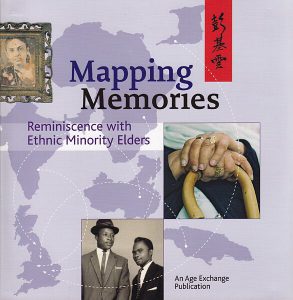 South London is still the home of one of the leading national, even international, organisations that has proven the value of oral history and reminiscence among older people of different faiths, cultures and heritages. Founded in 1983 by Pam Schweitzer MBE,
 Dr Nayyara Tabassum is Evidence Officer in the