Assessing practice: the OSCE adapted for social work

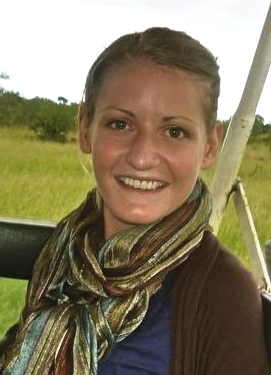
photo of Imogen Taylor

Professor Imogen Taylor, University of Sussex, reports on the first seminar in a new series hosted by the Social Care Workforce Research Unit at which she was discussant. (332 words)

Professor Marion Bogo from the University of Toronto Faculty of Social Work gave the first of the new Social Work Seminar Series at King’s College London on Tuesday 5 May on the topic of the use of the OSCE, an Objective Structured Clinical Exam, in social work.

The invited audience for this virtual seminar [these are Prof Bogo’s presentation slides] came from social work policy, education, research and practice, including key members of stakeholder groups, to hear about the use of the OSCE in North America and debate its application to social work in England.  We learned that the OSCE was initially developed in medical education in the 1970s in Scotland and has been adopted by other health related professions. In North America, it is now being piloted and researched in social work. The essence of the social work OSCE is two-fold: first, practice competence is directly observed and assessed in 15-minute simulated interviews with standardised clients/users played by actors trained to enact the role of a client scenario; second, immediately post-interview, ‘meta-competences’ are assessed  in a rating of the students’ critical reflection on their practice, how they linked theory to practice and what they planned to take forward from the experience. Continue reading

Piloting the Sababu Intervention in the wake of Ebola

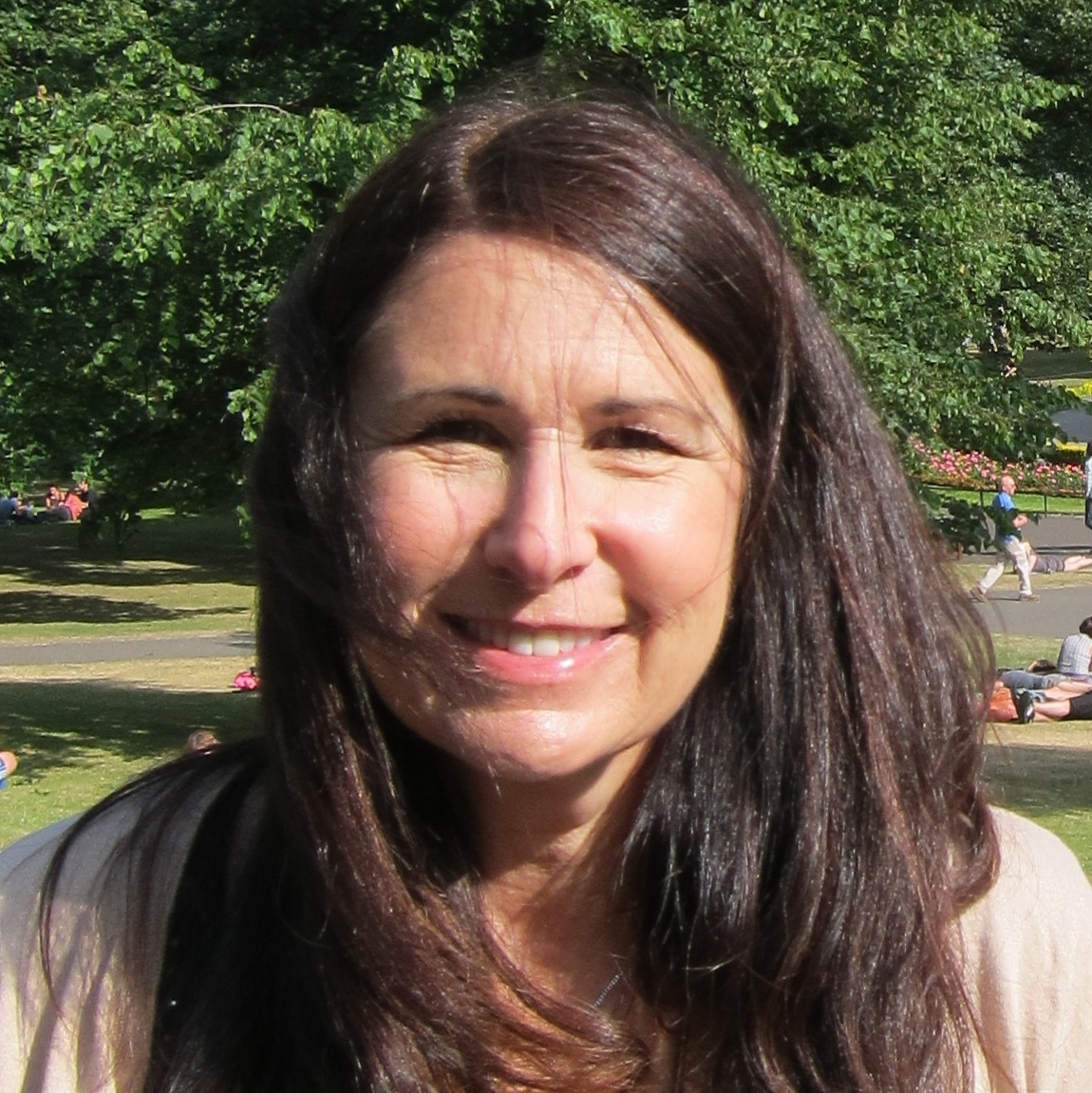
Meredith NewlinMeredith Newlin, Research Fellow at the Social Care Workforce Research Unit in the Policy Institute at King’s, reports from Sierra Leone. Her post incorporates photographs of the Sababu Training Programme in action last month. (1,386 words)

The Ebola outbreak, which reached Sierra Leone in May 2014, quickly became a global health crisis and caused significant psychosocial distress and a disintegration of communities across West Africa. The case numbers are now dropping and Sierra Leoneans talk about the ‘aftermath’ and a shift towards a recovery phase. However, amid a resource-limited system there is still an urgent call to address the psychosocial needs of individuals and families by enhancing the skills and capacity of the existing workforce. Continue reading

Understanding the meaning and context of good social care support for people with learning disabilities from minority ethnic groups

Last week Dr Gemma Unwin spoke at the Learning Disability Workshop Series run by the Social Care Workforce Research Unit and Making Research Count here at King’s. Dr Unwin and her University of Birmingham colleagues have recently completed a project that involved talking to adults with learning disabilities from minority ethnic groups in order to investigate their experiences of using social care support services. Here she introduces the study and discusses the findings. (778 words)

What we did

Thirty-two adults with mild to moderate learning disabilities from different minority ethnic groups in the West Midlands were interviewed about their understanding of ‘support’, their level of involvement with and experiences of services, their views of the support they needed, and the support they received, and the ways in which this met their goals and priorities. Interviews were sensitive to the cultural context of people’s relationship with services, using a ‘Culturegram’ or talking tool developed to help participants talk about the cultural aspects of their identities in their everyday lives. Continue reading

Data and Debate – reflections on the SSRG Annual Workshop

Caroline Norrie, Research Fellow at the Social Care Workforce Research Unit in the Policy Institute at King’s, was at the Social Services Research Group Annual Workshop this week. (801 words)

This year’s Social Services Research Group (SSRG) Annual Workshop, held at the London School of Economics (LSE) on 15 April was a particularly thought-provoking event. Entitled ‘Evidencing Service Improvement for Vulnerable Children and Adults’, the workshop featured an expertly chosen group of speakers whose presentations stimulated animated discussion from the floor. With the Care Act coming on stream and the increased drive for integration, participants, who were predominantly social care managers with responsibilities for data and organisational performance, enjoyed a great opportunity to discuss service re-figuration and its measurement. Continue reading

New models of social care

Dave MartinThe Centre for Policy on Ageing (CPA) and Co-operatives UK arranged a roundtable event on 18 February 2015 to foster greater understanding and consider the development of social care co-operatives. Dave Martin (an associate with CPA) reports from the gathering. (753 words)

‘Hardly a month goes by without another scare story about aspects of our health and care services. Is there a democratically accountable ownership model for health and care services that could make a difference? Could the active membership and co-operative ownership of workers, service users, volunteers and family members rebuild public trust in services and put an end to cruelty and neglect through a socially inclusive solution where the system of care is owned by the recipients?

In a growing number of countries, from Europe to Canada and Japan, diverse co-operative models of social care are expanding. We believe these approaches can be further developed in the UK and that they would benefit the lives of vulnerable people by empowering them directly in decisions that affect their care.’—Pat Conaty (Research Associate, Co-operatives UK) in The Guardian, 4 July 2014.

The roundtable event was attended by a diverse group of people, described as three circles of interest—first, people who had been involved with the co-operative movement for some time, secondly people seeking to develop (or convert to) a co-operative model for the delivery of care, looking for support and assistance, and thirdly policymakers and commissioners sniffing around—is this the way for the future? Continue reading

Just do it!

John Burton John Burton has worked in social care since 1965 as a practitioner at all levels. His book, Leading Good Care, is just out from Jessica Kingsley Publishers. (1,342 words)

In Leading Good Care, I set out and recommend a positive and hopeful vision of social care. My subtitle—the task, heart and art of managing social care—is both realistic and idealistic. The task requires serious, disciplined, hands-on, and hard work. The heart signifies that this work is emotional and personal, and that care is a human relationship. And the art of managing care engages your skills, your imagination, your culture and creativity. Continue reading

New directions in child welfare: good news from the Canadian province of New Brunswick

Geraldine Poirier BaianiDr Joan RapaportGeraldine Poirier Baiani (left) and Joan Rapaport report from New Brunswick. (931 words)

These days, high profile reports of child care tragedies, rising numbers of children being taken into care and social workers struggling with high caseloads are commonplace. Stories of positive developments in children and family services are rare. However, a chance meeting whilst on holiday led to a remarkable discovery: the caseloads of child welfare social workers in the Canadian province of New Brunswick now stand at an incredible seven. Continue reading

On compassionate care

Dr Joan RapaportDr Joan Rapaport reports on the seventh Annual Joint Conference of the Social Care Workforce Research Unit, Making Research Count, and Age UK London (with support from the British Society of Gerontology), which took place at King’s last week. (2,508 words)

In her welcoming introduction, Professor Jill Manthorpe (Social Care Workforce Research Unit, King’s College London) said the topic ‘Compassionate Care’ had been chosen to explore what we mean by compassion, where it might be needed in older people’s care, its place within the hierarchy of priorities and whether it concerns individuals or wider social relationships. She said the purpose of the conference was to find out:

  • Where is the passion in compassion?
  • Should we all be compassionate all the time?
  • Do all older people want compassion?

Continue reading

View from the Frozen North

Last July we heard from the Cumbria Registered Social Care Managers’ Network (What can the city banks learn from social care?). At their most recent meeting, Network members discussed issues associated with providing care closer to home. (732 words)

Tim Farron, MP for Westmorland and Lonsdale, braved icy conditions to attend the Cumbria Registered Social Care Managers’ Network on Friday 16 January 2015. The aim of the meeting was to explore from social care mangers’ perspectives some of the challenges of delivering care closer to home. Given the pressures currently facing the hospital acute sector and especially Accident and Emergency Departments, discussions of care closer to home are especially topical as it explores how community health and social care staff can work together to keep people out of hospital where appropriate or to help them come home earlier. Continue reading

What do we know about managers of care homes?

Katharine OrellanaKatharine Orellana is a Research Training Fellow at the Social Care Workforce Research Unit in the Policy Institute at King’s. Katharine’s Care Home Managers: a scoping review of evidence is published today by NIHR School for Social Care Research. (589 words)

We have a tendency to put care home managers at the back of our minds until a crisis hits the headlines. On such sad occasions, there is suddenly a lot of interest in them.

In England, around 460,000 adults live in 17,350 care homes that have a staff body of around 560,000. Care homes are hugely varied in many ways. They range from small, family businesses to large national and multinational chains offering anything from 1 – 215 beds. Homes may cater for more than one group of people, but they all provide accommodation and personal care. Just over a quarter of them also offer nursing, and these account for about half of all places in care homes as they tend to be larger operations. Staff must support residents with increasingly complex needs. Continue reading