Fear is an emotional response vital for our survival. However, overwhelming fear can lead to excessive avoidance of situations that are not actually dangerous, causing distress and impairing daily functioning. Here, we give an overview of fear, explaining when it becomes pathological and how it can be studied experimentally.
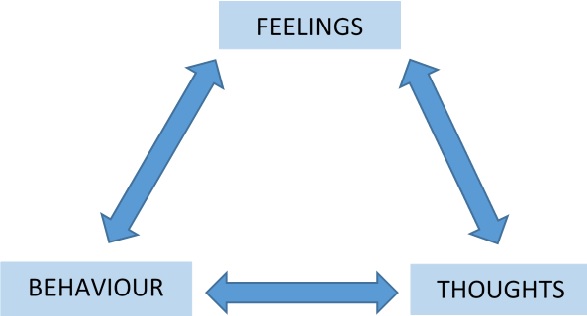
Cognitive behavioural therapy (CBT) is an evidence-based psychological therapy, most commonly used to treat anxiety disorders and depression. CBT is a talking therapy that explores the relationship between thoughts, feelings and behaviours. It is a structured, goal-oriented, skills-based treatment that uses both cognitive and behavioural techniques to change the way an individual thinks (cognitive) and what they do (behaviour). It has proven to be successful, leading to remission in approximately half of patients with anxiety or depression. Here we give an introduction to the theories and techniques used in CBT.
Fear (and the accompanying stress and tension) can easily be seen as a wholly negative, futile experience; especially in a developed world where we rarely encounter physical danger. In this blog post I look at the role that fear has played throughout our evolutionary history – looking back to when it was still beneficial and examining how it can fall short of our modern-day needs.