As rates of depression and anxiety rise, it isn’t too surprising that social attitudes towards mental illness have improved considerably. However, as the current economic climate continues to strain our mental health, it also demands us to stay positive in the face of stress and uncertainty. Have we become so accepting of the stressful demands of modern life that we blame ourselves if we struggle to cope?
When it first emerged just over a decade ago, D-cycloserine (DCS) enhanced cognitive behaviour therapy (CBT) for anxiety was hailed as one of the best examples of translational research in psychiatry. But does this apparent wonder drug really enhance the effects of exposure-based CBT? A recently published meta-analysis attempts to answer this question…
The American Journal of Medical Genetics has dedicated its March issue to the study of anxiety, including a contribution from our own lab! Here, I summarise some of the exciting developments it describes.
As a developmental psychologist I’m pretty aware of the signs and symptoms of depression and anxiety. However, our school recently ran an evening lecture on supporting well-being in our children and It really made me think about things in a different way – and in particular, to consider how anxiety and depression can masquerade as all sorts of other emotions. This week is Child Mental Health week, so it seems a good moment to reflect on how we can support the well-being of children around us.
London’s Royal Academy of Arts is currently showcasing some of the greatest work from the Abstract Expressionism movement. These works are fuelled by a desire to depict the human mind and experience – leading me to consider whether artistic expressions of powerful emotions could be used as a tool for improving future research and diagnoses of mental health disorders?
Do the words we use to talk about different psychiatric disorders, such as anxiety and schizophrenia, have an influence on how we view them? Does the fact that we all have days when we are anxious make us feel that anxiety disorders are less severe, less important than other disorders that relate less obviously to everyday life? If so, we should think again.
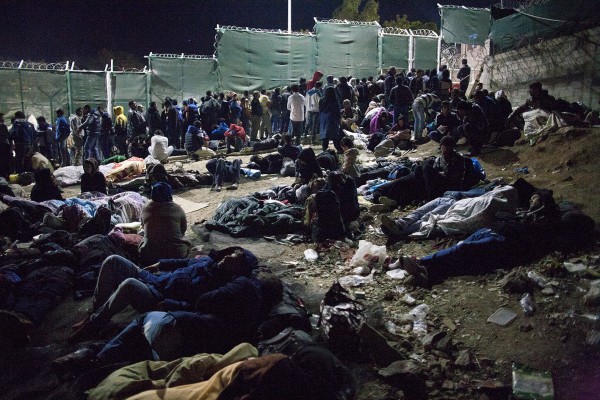
The idyllic Greek Island of Lesvos accommodated an influx of nearly half a million refugees fleeing civil war and persecution in Syria, Afghanistan and elsewhere in 2015. Most travelled on, and far fewer refugees have been arriving since the EU-Turkey deal in March 2016. But 61,000 are still in Greece and thousands are now languishing in camps for months on end, suffering from a potent cocktail of short- and long-term problems. Mental health issues are extremely common.
Recently, I completed my PhD studies in the EDIT lab, wrote my thesis, and retired to a life of luxury and leisure (or two of those three). Across the past four years I have become interested in how now-standard methods in genomics (the study of genetics across the genome) can be used to ask age-old questions about how our genetic code and life experiences influence our behaviour. Here I describe our work investigating associations between genetic variation and better response to cognitive behavioural therapy.
High-profile cases bring mental health into the media spotlight. Where efforts to reduce stigma are concerned, such instances are often seen as golden opportunities. But is there more that could be done to elevate the level of discussion at these moments of heightened public interest?