Research on the development and treatment of emotional disorders, discused and digested by the EDIT Lab Team and collaborators

Category: Life Scientific (Page 2 of 5)

Reflecting on resilience: Part 2

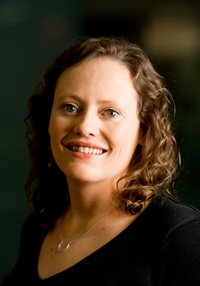
In the second of this pair of blogs, Prof Thalia Eley reflects on resilience from the perspective of a senior academic. If you missed our previous blog where Dr Kirstin Purves answered the same questions from the perspective of the early career researcher, you can read it here.

 

Thalia


What have been your toughest experiences as a PI that have required you to build resilience?

Well, there have been quite a few (wry smile..). To be honest, this is one of the most important things to learn as a researcher, there are many many many (yep, that was three manys) more times someone tells you they aren’t going to fund/publish your work than the times they say they are. The hardest times for me have been long “dry” periods where all my grants were being rejected. One of these only ended last year. The hardest part of it related to the wonderful Twins’ Early Development Study. Having taken over as Director from Robert Plomin my main responsibility was to get the salaries of our precious team of core staff funded through renewal of the MRC programme grant. The first time around it got great scores but was ultimately rejected. They gave some useful feedback and allowed a rapid resubmission but it was pretty tough. Fortunately, we got the funding the second time around…  Another aspect I found hard and wrote a blog on a while back, was the transition from early career researcher to PI and all that entailed. 


What did you find helped at these times?

As anyone in my team will tell you, I am someone who likes to talk when things are hard. I talked to many members of the team both individually and as a group in team meetings, as for a while after the initial rejection I was really struggling to feel ok about it. Having people express sympathy and understanding, and reminding you of good things about your work are really helpful at such times. I also spoke with several very senior researchers I admire, and it was useful to hear from them that they had experienced similar dry patches. Knowing that others had experienced positive outcomes of this “revise resubmit” option which I hadn’t really come across before was also encouraging. In short, I have found that in really difficult patches I need to actively seek out situations or reminders of things that will help me feel better. This could be a folder of emails from colleagues telling you something good about your work, or positive posts on Twitter after a talk you gave. These types of reminders can help keep your confidence up when things are tough. 


What makes you want to keep going? 

I really want to do the research. Also, I have learned that persistence pays (as does good quality pilot work). I have now had three experiences where I applied at least twice and in two cases three times, getting the funding the final time. My first instance of this was a senior fellowship application from the MRC, and I was rejected after interview (whilst heavily pregnant with my third son). A long-term mentor of mine encouraged me to believe that it was still a good idea and the department helped out with some modest funds to enable me to carry on getting pilot data. I then submitted the same idea to another funder but was again rejected. Finally, with even more pilot data I went back to the MRC NIRG scheme and got the funding. This paid for the Genes for Treatment study which alongside another grant funded a postdoc and three PhD students resulting in numerous papers so in the end it was all worth it. When I mentioned this in a throwaway comment after a talk one day, that was what all the questions were about which led me to realise that there needed to be more openness about how common it is to get rejected for funding. I got interested in giving talks about grant writing, within which I include a chart showing the grants I’ve applied for divided into those that were/were not funded. Like most academics, I only get around ¼ of those I apply for and mostly you just have to grit your teeth and start again…


What would you say to ECRs that might help them prepare for these challenges?

I have learned that it is best to have a back-up plan that assumes the application will be rejected. So as I submit a grant I am already thinking about what I need to do to make my case stronger and in what format/to which funder I will submit it next in the (rather likely) instance that I don’t get the funding this time around. Having the mindset that you know you will be rejected at least three times as often as not helps. Other than that, surround yourself with a supportive network of both peers and senior colleagues to help you through difficult times. I would also recommend collaborating, especially when you are just starting out on building a team. This automatically widens the opportunities you have but it also means there are others to share in the ups and downs of specific projects with you. Finally, I really recommend identifying whatever sources you have for getting feedback on papers and applications as this can make a huge difference by identifying problems early on so you can address them or make clear why they are surmountable.  


Does it get easier?

Yes. I have now had two particularly long dry periods and it definitely took a lot longer the second time around for me to start to get really twitchy. Most of that time (it lasted several years) I was able to just remind myself that if I kept going with the work, and was careful to seek out and act on constructive feedback, I would get there in the end. Also, as I’ve got older I’ve come to realise how lucky we are to do this work that we love and feel passionate about. It is a privilege and if the cost of that is that we have to work really hard to get each study funded, then that’s a price I’m willing to pay. I would say though that whilst it can sometimes be hard to find time to write grants, especially if you don’t find it easy to say no to others, I don’t think it is a good idea to work to the exclusion of everything else. A healthy focus on aspects of life outside of work keeps energy and wellbeing levels up without which the work you do will undoubtedly suffer. I’ve written about this juggling act quite a bit, including in the context of motherhood and a chronic condition, because I think it is at the heart of having a sustainable and enjoyable research career. 


Reflecting on resilience: Part 1

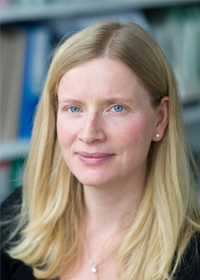
In the first of a pair of blogs, Dr Kirstin Purves reflects on resilience from the perspective of an early career researcher. Next up will be the sister blog where Prof Thalia Eley will answer the same questions from the perspective of a senior academic.   


Kirstin


What have been your toughest experiences as an ECR that have required you to build resilience? 

While your first paper rejection or first set of difficult reviews is definitely tough, I think the toughest so far was being rejected for a fellowship for which I had gotten to the final interview round, and that from planning to rejection took the best part of a year to prepare.  I suppose it was the first really significant rejection in my academic career, and it hit me pretty hard at first.


What did you find helps at these times?

First: wallowing. Don’t get me wrong, I think the more positive coping strategies are important, but personally, I find it helps me if I let myself just feel rubbish for a little while and acknowledge the fact that this sucks! Alongside the wallowing, one of the most helpful things is good, kind and thoughtful people, particularly those who could relate or understand the particular brand of academic rejection from a  range of different career stages. The kind words and gestures that remind me that we all experience these things, that it doesn’t devalue me as a scientist, and that I have a supportive network who will continue working with me regardless, was really powerful. Finally, starting the process of reframing, reappraising, and moving forward. Even something that ends in rejection can give you a lot of really useful feedback and action points along the way. I’ve worked out what I can do to make things stronger next time, and am trying (mostly successfully now) to see this as an opportunity to make my ideas stronger and even more developed next time around.


What makes you want to keep going? 

A big part is coming to the realisation that a rejection isn’t a reflection of my potential. A wise friend told me recently that you have to focus on what you can and can’t control. A rejection based on something you can control (even if it feels super hurtful) is an opportunity to get better than you would have been if you weren’t rejected. Sometimes something that initially feels out of your control (“the reviewer didn’t understand my analysis and suggested that I change something I didn’t even do?!”), actually is (“Oh. I really need to write this better so it is super clear what I did and how I did it so that readers can follow it easily”). Also, realising that rejection might be an opportunity to make things better and stronger really helps me keep going. Eventually.

Before that positive reframing malarky, I get by remembering that if everything falls apart on the back of this one rejection (don’t judge me – exaggerating the awfulness helps sometimes) there are still other options. Even a harsh rejection is not a total dead-end, at worst it’s a detour. As someone who usually finds detours interesting in the real world when there is no time pressure on reaching the destination, I find this helps me too. 


What would you say to ECRs that might help them prepare for these challenges?

Brace yourselves! It’s going to happen. Sometimes it’s probably going to be more devastating than others. So maybe keep that emergency comfort at hand, whatever that might be for you. I’m thinking of installing a “break glass in case of major rejection” box next to my desk. Inside I will stash an escapist  (totally fiction!) book, drink of choice, and bar of chocolate, ready at all times!

Remember it happens to everyone. Do not rely on Twitter or university newsletters for your perception of reality. It was amazing how many people who are brilliant and successful sent me messages about their first and various major rejections to offer me comfort. I still find it comforting to know that this does happen all around. 

Build that network! Reach out to new people, make time for coffee and chats with colleagues and co-workers, or even people who work on the same floor but on something totally different. Send someone a message on Twitter, or speak to them at a conference (in person or chat box, whatever the world allows for), or connect with people however you feel comfortable doing so. Share your successes and rejections with a supportive network who will get it! Just remember that being a scientist never means you have to go it alone. 

And finally, celebrate every win! I think it’s easier to handle rejection if you can fall back on all the successes you’ve had and will have. And I think this is way easier if you start noticing those successes along the way. Don’t get me wrong, this takes active attention and practice, and sometimes reminders, but you can do it! And maybe you can be that reminder for your friends, students and co-workers when they need it. Let me help you practice:

Got an analysis running? That can take days! And even if it just took an hour or two, having wrapped your head around what was needed and how to achieve it and actually make it happen deserves a self-congratulatory pause at the very least! 

Finished the analyses for a paper?! Do you know how complex this part of a paper is? You’ve probably learned a lot along the way, resolved challenges and issues you didn’t even know existed before you started! Maybe built up your network as you’ve sought advice, help and feedback. I bet you even used a whole new package/approach/software you clever duck. Tell someone. Make yourself a special dinner!


You get the idea…


Admittedly, I fail to celebrate many successes, and often they hold less space in my head than the rejections, but I see it as a work in progress and fully intend to get better at it.

So, on that note, I’m going to go celebrate finishing this blog with a quick chat with a friend and a cup of tea.


The balancing act

In this blog Prof Thalia Eley shares some reflections on the difficulties of balancing life and an academic career in the context of a chronic condition. We think much of what she has learned may apply to those finding themselves slow to recover from Covid.


Thalia

Continue reading

Post-doc pathways: your questions answered

In this blog, Dr Kirstin Purves, a post-doc in the EDIT Lab put various questions about the career paths ahead to Prof Thalia Eley. We hope this might be useful to others experiencing this challenging career stage. The focus here is primarily on options within academia, but of course there are many other post-doctoral career pathways, including into work in the charity sector which we plan to cover in another blog.


  1. What are the different options after a post-doc? Is it faculty or bust?

Whilst the most visible next step for a post-doc is a faculty post, it is quite rare to get one without building up a bit of experience first. Some people end up doing two or three post-docs working on different studies, developing new skill sets, gaining experience teaching and producing publications, all of which are useful fodder for the CV. I often tell my team that at this stage, you nearly always need to compromise in some way, as you are unlikely to find a post-doc on the topic you want to study, using the methods you want to learn, in the geographical location you want to be in. It’s not impossible, just quite a big ask. Most end up compromising on some aspect of the research relative to their priorities or move to a new location they might not otherwise have selected. One option to consider as well is whether you want to move towards leading your own team or whether you prefer having a supporting role in an established team. Many extremely highly value post-docs end up as trial/study managers, offering a different balance of responsibility, security, and autonomy to that of the team lead. 

The only way to really ensure you can be where you want, exploring the questions you want, learning the methods that you are most interested in is to get a fellowship. Inevitably, this makes fellowship very popular and thus competitive, but someone has to get them, so don’t assume you won’t! One change though, in the past decade or so, is that most fellowships are aimed at those a few years out of their PhD, so most post-docs need to get a role working with an established investigator first. A third, intermediary option is to help with the writing of a grant that has a post written into it with you in mind. The MRC has a grant writing role called researcher co-investigator, precisely to address this need. But even if you can’t be named as an investigator on the grant, if you work with an established PI who is interested in supporting you in this way, it can be a really good option. 


2. What’s the difference between a post-doc, a fellowship and a lectureship?

Post-doc positions are usually funded by a grant to an established investigator. These are commonly 2 or 3 years long, occasionally longer. During such a position, the post-doc usually has a specific role in a study that they must fulfil in order for the principal investigator to fulfil their promise to the funder. That said, they should also be given opportunities for training and personal development, and wherever possible, some time to pursue their own research interests. A fellowship refers to funding sought by the individual that covers their salary and a range of research associated costs. The earliest fellowships are for those who have recently completed their PhD. These are rare, the Henry Wellcome fellowship being one option, though these are changing summer 2021. The ESRC also offers early post-doctoral fellowships through their Doctoral Training Partnerships. The other end of the range are senior fellowships aimed at those who are approaching professorial levels of research experience. As such, the word fellowship refers to the funding being personal, not to the career stage. 

As described above, fellowships allow you to design your own research programme, and they also usually allow you to focus almost exclusively on research, rather than combining this with teaching. In contrast, a lectureship is a post which usually brings with it specific expectations about contributions to the university with regard to both research and teaching. Furthermore, to progress beyond a lectureship, many universities would also expect the individual to make contributions to the running of the university through sitting on committees or taking on other organisational roles.    


3. If you do get a fellowship, what happens after?

It is possible, though rare, to be funded by a series of successive fellowships. However, at each level of seniority there are fewer fellowships available, so many people end up moving from a fellowship into a university post, such as a lectureship. It is often possible to recycle ideas that were in a fellowship that wasn’t funded into a grant, such as one of the new investigator research grants (offered by both MRC and ESRC). 


4. What are the pros and cons of moving to a new institution, city, or country at this stage, and can you progress without doing at least one of these?

Funders do recognise that it can be difficult to move, especially repeatedly, during the post-doctoral years. Often people at that life stage do not only have themselves to consider, but also a partner, possibly children or elderly parents. That said, if you can move to a new city or even a new country, it is a wonderful opportunity and one that would likely be harder later so worth giving a try! For the fellowship route, if you are proposing remaining at an institution where you held a prior fellowship, it is important to demonstrate that you are becoming ever-more independent and gaining training, opportunities or collaborations beyond those outlined in your earlier application. 


5. What are the pros and cons of a long vs short term contract at the post doc level?

 This is a very personal question. For those with financial commitments, or who find uncertainty difficult, a long-term contract such as that provided by a faculty position is likely to be more attractive. To others without such commitments, it may be worth being on a series of short-term contracts if that allows them to do the work they really want to do.

At the end of the day, you spend much of your waking hours working. If you don’t enjoy what you are doing or don’t feel comfortable with the balance of responsibilities and opportunities it offers, then talk to people in different roles until you figure out what would suit you better. 

Writing a good job application for a research assistant post

In our most recent round of hiring for a Research Assistant, we noticed that unfortunately, many of the candidates were unable to produce a high quality and concise job application. We estimate that around 10 applications of the [100+] we received effectively conveyed their skills and experience in a clear and concise way. We are not alone in noting this, other academics have expressed similar concerns on social media (see this amazing thread by @DrAmyGillespie). We decided it was time we do our bit to tackle this issue. For this reason, Shannon Bristow and Professor Thalia Eley bring you their top tips for nailing a Research Assistant post job application, to help future applicants obtain the job they deserve.

Thalia

Shannon

Continue reading

Studying Remotely

2020 has thrown the world a lot of curve balls. One of them is the need to adapt the way we engage and learn from each other to a remote format. The EDITLab’s newest student, Elisavet Palaiologou, shares her experience of starting a Master’s course in the middle of a pandemic. Luckily, it is not all doom and gloom. Read on for some really interesting observations and helpful ideas on how to survive and thrive.

Elisavet


Continue reading

« Older posts Newer posts »

© 2026 The EDIT Blog

Theme by Anders Norén — Up ↑