Research on the development and treatment of emotional disorders, discused and digested by the EDIT Lab Team and collaborators

Category: A-Z (Page 3 of 6)

The EDIT Lab A-Z aims to pick out and explain some key concepts relevant to our research and interests.

F for FLARe

Once only possible in lab based experiments, we are now able to test people’s learning of fear via their smartphones, facilitating bigger experiments and better data.

Tim Kerr, EDIT Lab PhD student


F stands for FLARe. And FLARe stands for Fear Learning and Anxiety Response. It is the name of our bespoke software, which we use to remotely deliver experiments to many participants, using only their smartphones.

In previous blogs, we have discussed fear, the emotion which keeps us safe from harm. But it is also an emotion which can become problematic, preventing us from engaging in certain aspects of life, through specific phobias (look out for our blog on this subject in the spring). It is also an emotion central to the development of anxiety disorders, discussed in more depth here.  
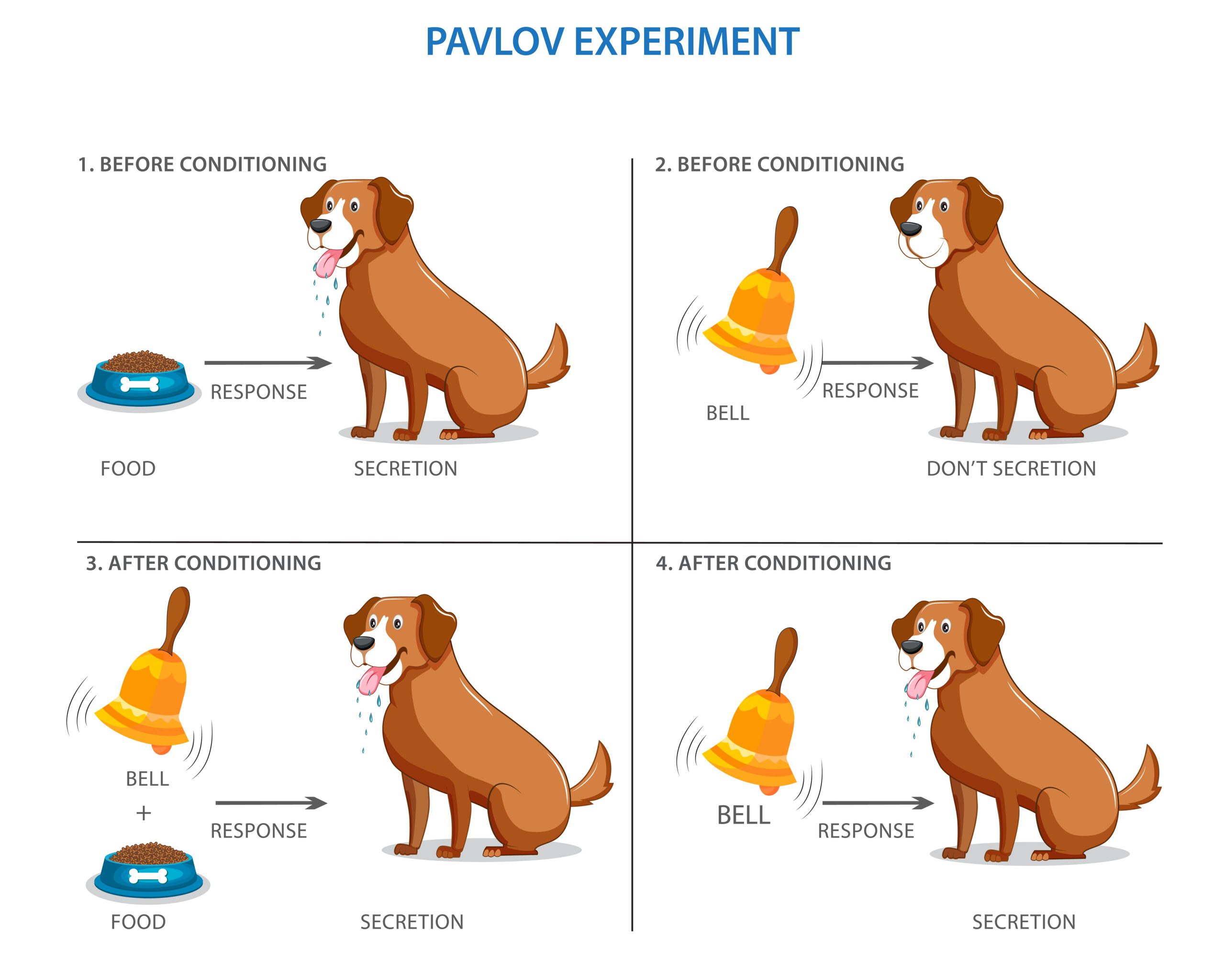
People’s ability to acquire fear can be tested experimentally, through a process called conditioning. Pavlov conditioned animals to salivate to the sound of a bell ringing. But hunger is only one emotion that can be conditioned in such a way. Another is fear, through a fear conditioning paradigm.

Similar to Pavlov’s experiments, modern fear conditioning paradigms expose participants to an object, like a coloured shape, alongside an unpleasant stimulus, such as an electric shock or loud noise. Like a child learning that the cooker is hot by burning their hand, here through a similar learning process, participants associate the coloured shape with an unpleasant stimulus. When they are later shown the coloured shape alone, they demonstrate a fear response. This can be measured through physiological changes such as sweating or increases in heart rate, or though asking the participant to rate their fear.  

In contemporary fear conditioning paradigms, this association is later extinguished, through a reversal of the process. The coloured shape is shown without the delivery of the unpleasant stimulus, and eventually the association is broken. Usually, this paradigm takes place within a laboratory. This allows for greater control of participant behaviour and reduces the likelihood of random events interfering with the experiment.  

A drawback of this classical approach is the time and expense required to facilitate data collection from participants in person. Often this causes small sample sizes, and samples which don’t represent society at large – it’s not uncommon to see psychology experiments in the literature having used only a small sample of 20 or so undergraduate students. 

However, with the advent of the internet, and the ubiquity of connected devices, psychological experiments have started to move online. Experimental paradigms can now be remotely delivered to thousands of participants, in a fraction of the time and cost required for in-lab experiments. We designed and built FLARe with this principle in mind. 
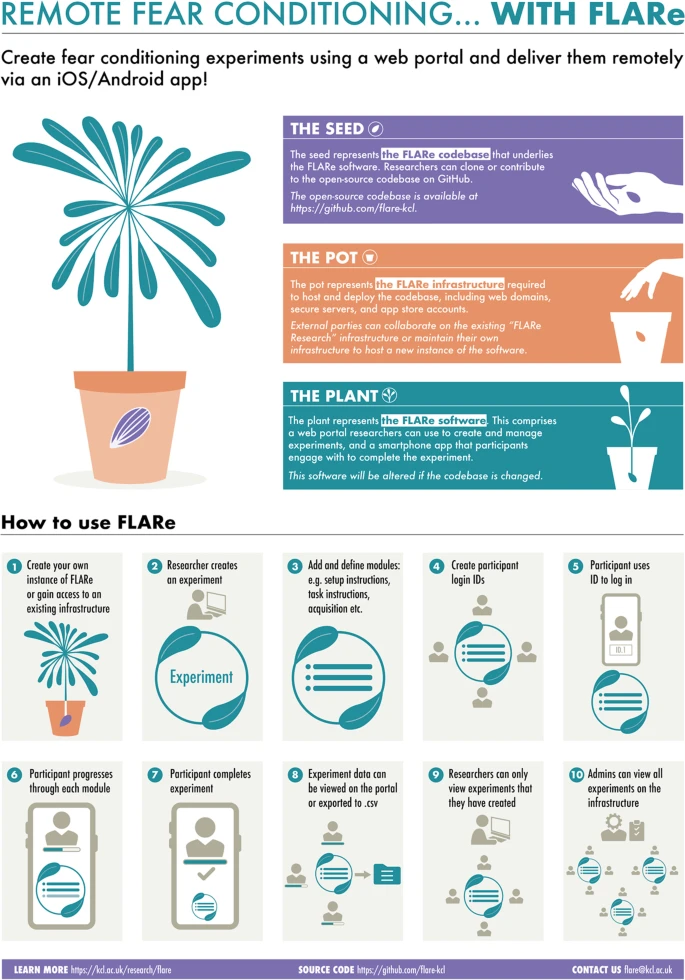
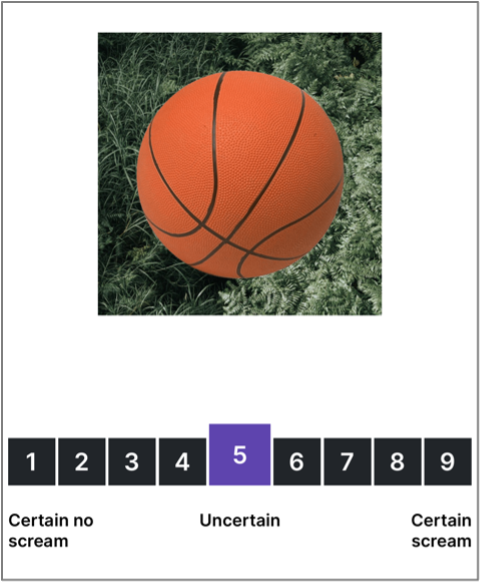
Participants we invite can download the FLARe app to their smartphones. They then participate in the same paradigm as they would in the lab, modified to be compatible with remote usage. For the unpleasant stimuli, we use a loud noise played through the participants headphones. To measure the fear response, we ask them to rate how much they expected the loud noise, in addition to other questionnaires.  
A key question, is whether the remote paradigm, delivered by FLARe, replicates results of classical, in person fear conditioning. We therefore set out to validate the app, testing the same people in the lab one week, and via the app in the second week. Pleasingly, we reported that the two methods of delivery produced consistent results, indicating the remote paradigm produces reliable data. (Purves et al., 2019).

Following validation, we were then able to use the app to collect fear conditioning data from participants in our ongoing genetics studies, such as the Twins Early Development Study (TEDS). Indeed, the rationale behind wanting a remotely delivered paradigm, was to facilitate fear conditioning data collection within the large sample sizes needed in genetics research. We have used FLARe data to demonstrate that genetic factors contribute to fear development (Purves et al. 2021), and that anxious people show different fear conditioning responses to non-anxious (McGregor et al. 2020). 

To further highlight the main advantage of FLARe, whilst it took 15 months to acquire the approximately 250 participants for the in-lab validation study, it took only three to remotely gather data from the 2000 participants in a later study. 

We hope that other labs will choose to use FLARe to acquire similar data. For this reason, we are providing access to our FLARe infrastructure to other researchers. We have also made the software open-source, with the code available on our GitHub (https://github.com/flare-kcl). This will open the possibility for future meta-analytic studies, where more data from many studies can be combined to reinforce findings.  

We will continue to develop FLARe, along with our industry partner, Torchbox (https://torchbox.com). And we are looking into new ways to process and analyse the data collected, with the aim of understanding the genetic mechanisms underlying the development of fear, and anxiety disorders.  

Read our paper introducing the latest version of FLARe here.


References:

Purves, K. L., Constantinou, E., McGregor, T., Lester, K. J., Barry, T. J., Treanor, M., Sun, M., Margraf, J., Craske, M. G., Breen, G., & Eley, T. C. (2019). Validating the use of a smartphone app for remote administration of a fear conditioning paradigm. Behaviour Research and Therapy, 123, 103475. https://doi.org/10.1016/j.brat.2019.103475 

 Purves, K. L., Krebs, G., McGregor, T., Constantinou, E., Lester, K. J., Barry, T. J., Craske, M. G., Young, K. S., Breen, G., & Eley, T. C. (2021). Evidence for distinct genetic and environmental influences on fear acquisition and extinction. Psychological Medicine, 1–9. https://doi.org/10.1017/S0033291721002580 

 McGregor, T., Purves, K. L., Constantinou, E., Baas, J. M. P., Barry, T., Carr, E., Craske, M. G., Lester, K. J., Palaiologou, E., Breen, G., Young, K. S., & Eley, T. C. (2021). Large‐scale remote fear conditioning: Demonstration of associations with anxiety using the FLARe smartphone app. Depression Anxiety, 38, 719–730. https://doi.org/10.1002/da.23146 


E for Early Life Trauma

Objective Measures or Subjective Measures?  In this week’s blog, we take a look at the difference between objective and subjective measures in capturing the impact of early life trauma on mental health.

Alicia Peel, EDIT Lab PhD student

Abi ter Kuile, PhD student


Psychological traumas are typically defined as experiences that cause actual or potential harm to an individual’s survival, health, or dignity. These include experiences such as physical maltreatment, emotional abuse, or bullying. Sadly, these experiences are most likely to occur early in life, with young people being exposed to higher rates of trauma than other age groups. Across healthcare and research, the terms used to describe these early life experiences can vary, but they are also commonly referred to as adverse childhood experiences (ACEs) or childhood maltreatment. 

When traumas are experienced at an early age, they can have a huge impact on physical and mental wellbeing throughout life. Therefore, researchers need to understand the best ways to provide support for those who have experienced early life trauma. The first step is to identify those who may be at risk because of their early experiences. However, due to the sensitive nature of this topic, it is challenging to identify those who have experienced early life trauma.

Two types of measure can be used to assess early life experiences. Broadly, these can be defined as objective and subjective. Objective measures include records made by someone other than the individual themself, including researcher or parent reports, or official records such as court documents. These records tend to be from the time of the experience occurring, which is described as a ‘prospective’ measure. 

In contrast, subjective measures are self-reported and assess personal narratives. When taken in childhood, self-reports can also capture traumas from the time of the experience occurring. However, these experiences are often not recorded until much later in life, resulting in ‘retrospective’ self-reports of past experiences. 

The use of subjective measures of trauma has typically relied on the assumption that self-reports capture the same experiences that objective measures would detect. However, a review of reports from over 25,000 individuals has cast some doubt over this assumption, finding that the experiences identified from retrospective self-reports of early life trauma showed very little overlap with prospective records from early in life. More than half of individuals with prospective records of childhood maltreatment did not retrospectively self-report the experience later in life. Additionally, more than half of individuals who retrospectively reported childhood maltreatment did not have matching prospective records.

This finding is displayed in the figure below, taken from the paper by Baldwin, Reuben, Newbury & Danese (2019). The venn diagrams overlap between experiences identified by prospective records (dark circles) or retrospective reports (light circles). The smallest agreement between the two types of measures is seen for childhood physical abuse and emotional abuse. The largest agreement is for records of being separated from a parent, for example, due to divorce or death.

Figure adapted from Baldwin, Reuben, Newbury & Danese (2019) displaying the overlap between experiences identified by prospective (dark circles) or retrospective (light circles) measures of childhood maltreatment.

There may be several reasons why the overlap between the two types of measure is low. Motivation, embarrassment or access to information may influence the disclosing of experiences about someone else versus yourself, resulting in objective records and self-reports capturing different experiences. Additionally, official records might capture only the most severe cases of maltreatment, whereas self-reports might detect a bigger range of cases. Memory biases may also influence retrospective reports more than objective records. Finally, the definitions of maltreatment applied when assessing trauma in childhood compared to retrospectively in adulthood may be different. For example neglect may be identified prospectively as a lack of parental affection, but retrospectively as lack of input or stimulation.

Regardless of the reasons, this research indicates that objective and subjective measures of early life trauma may be capturing different experiences, and therefore it is advisable not to use them interchangeably. Crucially, these findings do not imply that one measure is ‘valid’ while the other is ‘invalid’, rather that we may need to use them for different purposes. Interestingly, some evidence suggests that subjective measures are more strongly associated with a risk of psychopathology in adulthood than objective measures. This emphasises just how important it is to understand the subject experience when assessing early life experiences.


References:

Lewis, S. J., Arseneault, L., Caspi, A., Fisher, H. L., Matthews, T., Moffitt, T. E., Odgers, C. L., Stahl, D., Teng, J. Y., & Danese, A. (2019). The epidemiology of trauma and post-traumatic stress disorder in a representative cohort of young people in England and Wales. The Lancet Psychiatry, 6(3), 247–256.

Baldwin, J. R., Reuben, A., Newbury, J. B., & Danese, A. (2019). Agreement between prospective and retrospective measures of childhood maltreatment: a systematic review and meta-analysis. JAMA Psychiatry , 76(6), 584–593.

Baldwin, J. R., & Degli Esposti, M. (2021). Triangulating evidence on the role of perceived versus objective experiences of childhood adversity in psychopathology. JCPP Advances, 1(1), e12010.

Danese, A., & Widom, C. S. (2020). Objective and subjective experiences of child maltreatment and their relationships with psychopathology. Nature Human Behaviour, 4(8), 811-818.


C for Career Case Studies, and what to do with them

Who doesn’t love a story? People’s career stories can make brilliant case studies, for inspiration and advice. This blog will help you think about where to find case studies and what to do with them once you have them.

Kate Murray, Senior Careers Consultant for Researchers


The Life Scientific thread on the EDIT blog is a wonderful way to access people’s career stories.  From Karen’s story, on moving on from a long career in the NHS, and Helen’s here, on becoming a blogger and writer on mental health matters, via some excellent advice on academic career planning from Thalia here, there are some inspiring stories and pieces of advice.  


And the internet is not short of more places to find out how people with PhDs have moved on.  Find more case studies:

  • In the researcher-specific section of King’s Careers KEATS pages (just self-enrol with your KCL IDs)
  • The IoPPN postdoc Careers Day video is a recording of a Spring 2022 event for IoPPN researchers with an incredible array of speakers who’ve moved industries
  • Research Careers is continually-updating platform with case studies of researchers
  • Don’t forget the box of treasures that is LinkedIn: used as a tool for researching job titles and employer names, it’s a never-ending source of case studies
  • And, finally, Careers in Your Ears is the podcast from King’s Careers aimed at researchers – with interviews with people from a variety of research backgrounds talking about their career journeys and issues that affect researchers.


But faced with this choice, what to do?  How does reading about others help you and your career thinking? After all, what one person does in their current role is not necessarily what you are interested in, have the knowledge to do, or would even exist in five years’ time.

In examining the how, what and why¹ of people’s case study career journeys, utilising them could support your own decision-making, fact-finding or moving roles.  Use these questions to reflect and make sense of these case studies.

How did they find out about their new roles?

How did they make that transition?

How did they shift identities as they moved on?

What did they do to be ready for a career move?

What did they have to do to apply successfully?

What do they do, day to day?

Why did they move on?

Why was that particular role, or organisation, interesting?

Why were they satisfied, or not, with their new role?


Keep being inspired by Life Scientific; come and chat if you’d like some support.

Kate Murray, Senior Careers Consultant, Careers Consultant for Researchers

References:

¹See Yin, cited in https://www.ncbi.nlm.nih.gov/pmc/articles/PMC3141799/ accessed 10/6/22

« Older posts Newer posts »

© 2026 The EDIT Blog

Theme by Anders Norén — Up ↑