Author: EDIT Lab guest contributor (Page 3 of 9)

It was time for me to talk.
Read Sarah*’s story of her journey with anxiety, and how realising that the time to talk helped her to regain her voice.

In conversation with Stella: Perspectives from a black assistant psychologist
Today’s post forms the second part of Hollie’s interview with Stella Ogunlade, inspired by Black History Month which was celebrated in October. Stella is a black female Assistant Psychologist working with individuals with eating disorders in Yorkshire. Here, she describes her experience as a black woman being employed in the field of clinical psychology. We hope Stella’s words draw attention to the issues and challenges faced by black women working within the field.

Stella Ogunlade, Assistant Psychologist

Introducing Stella: a black female student’s journey into clinical psychology
Last month, many academics and researchers celebrated Black History Month. It is well known that Black History Month is particularly relevant in psychology due to a number of long-standing biases in psychological research and clinical practise, which are important to acknowledge.
Across the next two posts, EDIT Lab member Hollie Hymas interviews Stella Ogunlade, who works with individuals experiencing eating disorders at a clinic in Yorkshire, England, and has kindly agreed to discuss her contributions to the field. In the first post, Stella describes her journey into psychology; from migrating from Nigeria to the UK at the age of 8 to receiving a Psychology degree from the University of Bristol at the age of 20 and starting her career. In the second post, Stella gives her perspective on being a black woman in the field of clinical psychology and how this has affected her experiences.
Stella Ogunlade, Assistant Psychologist

Family psychologist and parent, Bonamy Oliver, discusses how messages about parenting could be impacting children and young people.

Bonamy Oliver
In this blog, placement students Steven and Prateek write about students’ experiences of anxiety during the first lockdown in Malaysia.
As we complete one year since the announcement of the first nationwide lockdown, we can see how the pandemic has resulted in the radical change of our daily lives. From the perspective of a student, this year has been especially different, with teaching seemingly being in person one minute and completely online in the next, the lack of clarity surrounding examinations and the generally limited social interaction. Understandably, how students cope with these changes varies massively and research focussing on the mental health of students through the pandemic has been important.
A recent study of students’ anxiety symptoms has shown that there have been quite diverse outcomes during the pandemic [1]. In a sample of 983 Malaysian university students, 30% experienced some degree of anxiety during the first lockdown in Malaysia between April and May 2020. It seemed that the majority of these students reported mild to moderate symptoms of anxiety (20%). However, 65 (7%) experienced anxiety that was marked to severe, and 28 (3%) experienced the most extreme levels of anxiety. Nevertheless, the overall picture in this sample of students seems to be positive, because around 70% reported experiencing less than mild or no symptoms of anxiety during this time point.
The authors have also found that the students who were female, younger, studying a management related subject and living alone were more commonly experiencing high levels of anxiety. There are many possible reasons why these particular groups of students could be more vulnerable to poor mental health during the pandemic. For example, the authors suggested that younger adults typically spend more time on social media than their older peers. They reasoned that this might have elevated these students’ anxiety symptoms because of an increased exposure to negative news articles about the pandemic.
In contrast, they argued that the student’s who were living alone might have been feeling more lonely than those staying with their friends or family. During a sudden threatening event like the pandemic, the authors believed that this reduced social contact and emotional support may have increased this group’s level of anxiety.
However, it is important to remember that this study cannot tell us about the cause of these anxiety symptoms. It is possible that loneliness and being exposed to frequent negative media coverage about the pandemic could be associated with higher levels of anxiety. But an association doesn’t demonstrate a causal relationship. There could be several other factors that better explain why these students were experiencing anxiety symptoms. In fact, some of these factors may not even be related to any changes brought about by the pandemic. For example, the older students are at a later developmental life stage than the younger students, and their longer life experience may have allowed them to learn better strategies to regulate their negative emotions in response to stress.
This study also doesn’t tell us whether these students’ anxiety symptoms are different to what they were previously experiencing before the pandemic. The researchers did not collect any data before the pandemic started, which means that it’s not clear whether these students’ symptoms have gotten better, worse or even if they have changed at all.
What this study does provide is a snapshot of how these students have been experiencing anxiety during the first lockdown in Malaysia. In this respect, there seems to be quite diverse mental health outcomes, and this may suggest that there are still underlying factors shaping these experiences that we have not yet discovered. Future research will therefore play an important role in uncovering these factors and designing interventions to provide better support for the most vulnerable groups of students.
Reference:
[1] Sundarasen S, Chinna K, Kamaludin K, Nurunnabi M, Baloch GM, Khoshaim HB, Hossain SF, Sukayt A. Psychological impact of COVID-19 and lockdown among university students in Malaysia: Implications and policy recommendations. International journal of environmental research and public health. 2020 Jan;17(17):6206.
DOI to paper: http://dx.doi.org/10.3390/ijerph17176206

In this blog, Placement student Steven Bright writes about the evidence behind different coping behaviours during the COVID-19 pandemic.
Over the past year, we’ve all been trying to adapt to our new way of life during the pandemic. Whether it’s exercising at home or video chatting with loved ones, several aspects of our lifestyles have changed to help keep our community safe. Many of us are also using this opportunity to explore new hobbies, especially for those people whose usual ones have been completely disrupted during the lockdown.
As research surrounding mental health during the pandemic continues, we already know that a lot of people are experiencing poor mental health. In fact, a recent study (1) has found that in over 4,000 Spanish adults, 65% reported having symptoms of depression or anxiety two weeks after the first lockdown. Fortunately, most of these experienced symptoms were indicated as being mild. Out of the adults experiencing symptoms of anxiety or depression, 39% and 29% respectively belonged to this mild symptom category. However, a small minority were shown to be experiencing severe symptoms for at least one of these disorders.
But there are many ways in which we can be more actively focusing on our mental health during this pandemic. In this same study, following a healthy diet and avoiding regular news updates about the pandemic were both associated with reduced anxiety symptoms. These behaviours were similarly associated with lower levels of depression, along with pursuing hobbies and following routines. This result is especially encouraging because many people with mild symptoms may notice a positive response by simply incorporating these behaviours into their lifestyle.
Some of the authors’ other findings may come as a surprise. For example, doing relaxing activities and exercising were not noticeably related to the participants’ anxiety and depression symptoms. There may be several different reasons for these findings. For example, many people enjoy exercising because of its social element. Exercising alone may therefore not feel as pleasurable in contrast to heading to the gym or a sports centre, which have temporarily closed during the lockdown. More simply, it could also be a finding that is specific to this group of participants. Another study investigating athletes and people who regularly exercise might find that this behaviour more strongly associates to their mental health outcomes.
Ultimately, we must keep in mind that we cannot draw any casual relationships from this study. You might expect that behaviours like engaging in hobbies and following a healthy diet will cause a lower level of depression and anxiety symptoms. However, any scientist will quickly tell you that correlation is not causation. Another interpretation would be that people who are less anxious and depressed just tend to engage in these behaviours. Therefore, occasionally skipping out on your hobbies or following a healthy diet may not necessarily be followed by a bout of poorer mental health.
A “longitudinal” study may better clarify the relationships between these coping behaviours and mental health. By repeatedly assessing a selection of behaviours and mental health outcomes over a longer period of time, clearer patterns of relationships between these factors may become more noticeable. Nevertheless, it seems that following a healthy diet, pursuing hobbies, following routines, and not overly checking the news updates about COVID-19 may all be worth trying to incorporate into your lifestyle during the pandemic.
References
[1] Fullana MA, Hidalgo-Mazzei D, Vieta E, Radua J. Coping behaviors associated with decreased anxiety and depressive symptoms during the COVID-19 pandemic and lockdown. Journal of Affective Disorders. 2020 Oct 1;275:80-1
(DOI to paper: https://doi.org/10.1016/j.jad.2020.06.027)
We must maintain an intersectional perspective in discussions around race and racism, to better understand and reflect on the diverse realities experienced by individuals across racialised groups. In this post, Marie Skłodowska-Curie Fellow, Dr Ziada Ayorech, reflects on her experiences as a Black academic, as well as a female, and mother of two toddlers.
Dr Ziada Ayorech
The term ‘intersectionality’ was coined by Professor Kimberlé Williams Crenshaw. It refers to the many overlapping, sometimes contradicting, social categories an individual occupies – and how these contribute to their experience of discrimination and privilege. As a Black, female, mother of two toddlers, my lived experiences pursuing a career in academia can illuminate some of the challenges of bringing your full self to the workplace.
Like many moments which result in a career changing opportunity, I distinctly remember the interview that culminated in my obtaining a Research Assistant position, which subsequently turned into a PhD in Behavioural Genetics. I arrived in the SGDP lobby at King’s College London for the final interview of the day, after an Oxbridge candidate had as good as cemented the panel’s decision. The details of how I nailed the job, which was intended for my competitor, are often relayed to me by colleagues (now turned dear friends), as an example of my capacity. But like many academics, the experience of obtaining a coveted position left me with imposter syndrome.
Navigating imposter syndrome is challenging in its own right. But as a Black woman, I grappled with both the internal and the societal messages about my ability. Belonging to these two systematically oppressed categories can amplify narratives that you are lesser. Achievements which challenge that long-standing narrative are a perfect breeding ground for imposter syndrome. A shared reality of Black Indigenous and people of colour (BIPOC) is the inherent lack of representation across all spheres of our lives. From grade school, through university, to a glance at the senior faculty members at our institutions, the resounding message is loud and clear: these spaces weren’t built for you.
“Belonging to these two systematically oppressed categories can amplify narratives that you are lesser.”
The internal story I told myself (backed by personal experience of over 30 years of structural racism) was that I’d duped them: I am under qualified and any day now, the jig will be up, I will be fired. This meant that when my partner and I decided to have our first child, less than one year into my PhD, the idea of telling my supervisor that I was pregnant was almost too much to bear. Unlike so many female academics I have spoken to, I was fortunate to have an extremely compassionate supervisor, who’d seen many PhD students embark into parenthood during their degree. Despite this, I worked flat out until the birth, submitted a paper days before my maternity leave began, responded to reviewer comments weeks after my son was born, and left my 4-month-old for the first time during my maternity leave to conduct interviews. The reality for female academics who choose to pursue their careers as well as start a family is a head spinning balancing act. Have your children, but don’t let that interfere with your career. Publish at all costs, but still be at every parent-teacher meeting. Say yes always, to indicate that you are still career driven.
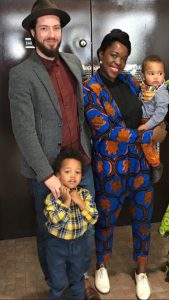
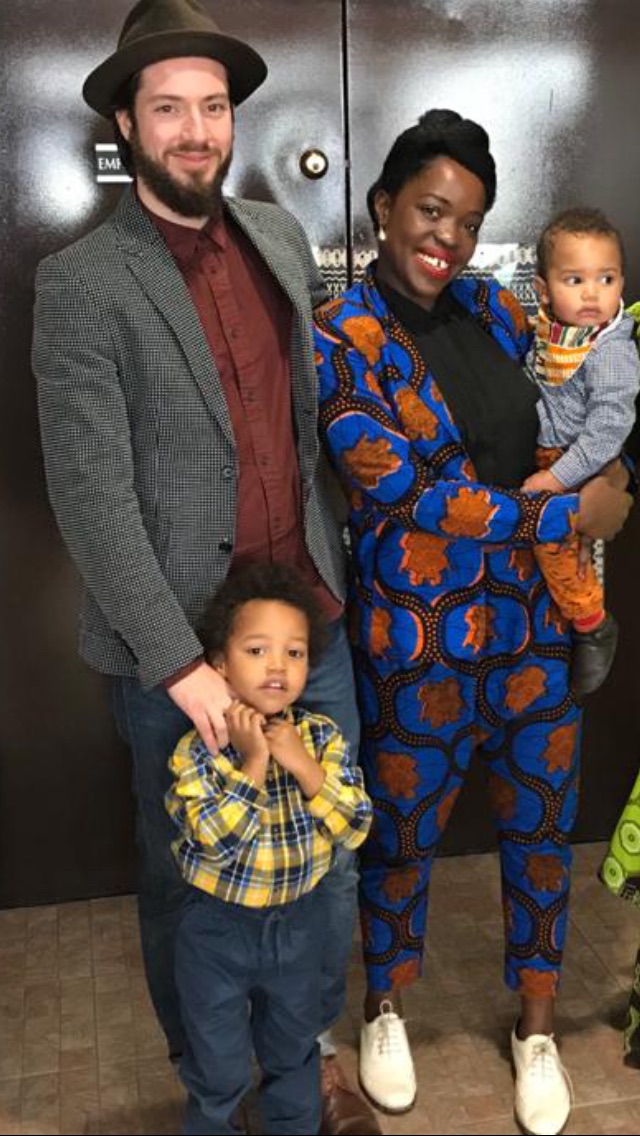
Ziada and her family
The challenges of navigating the demands of motherhood and academia are amplified as a Black woman. Again, intersectionality rears its ugly head. Black women in the UK are four times more likely to die in childbirth than white women (1) – a staggering statistic attributable to systemic racism in the health care system. Consistent with these statistics, the birth of my firstborn was riddled with hostile encounters at the hospital; a dangerously long labour; and eventually a traumatic emergency caesarean. I was lucky in comparison to many BIPOC mothers, who I eventually had the courage to speak with. We’d both made it home. Nonetheless, when returning to work and relaying this experience to my colleagues, I refrained from discussing the reality of structural racism at the hospital.
“I was lucky in comparison to many BIPOC mothers, who I eventually had the courage to speak with.”
Speaking up about racism can feel isolating. Repeated experiences of ‘gaslighting’ can often lead us to wonder whether we will even be believed. Additionally, Black women may internalise stereotypes such as the ‘strong black woman’; a perception that we are naturally resilient and self-sacrificing. These narratives can negatively impact mental health and reduce the likelihood to seek help. Images of motherhood are often white centred. Valid concerns about raising Black children in a racist society don’t often feature in mainstream discussions around the challenges of parenthood.
I was eight and a half months pregnant with my second born when I defended my PhD thesis, driven in part by the knowledge that I was one of the only Black female Behavioural Geneticists that I had seen at conferences, in statistics courses, at lectures, and across the many international institutions I had studied in. Letting my foot off the gas was not an option. I’ve been in conference calls where another male academic has called out his colleague for having an entirely male working group — quietly wondering to myself what would happen if I mentioned that not a single Black geneticist was pictured across the multi-centre initiative they were describing, let alone a female one.
“I was one of the only Black female Behavioural Geneticists that I had seen at conferences, in statistics courses, at lectures, and across the many international institutions I had studied in”
Open discussions about the structural racism underpinning our academic institutions, field and world are a key component of the shift of 2020. Along with the pandemic, which brought life as we know it to a standstill, came a long overdue awakening to the second pandemic affecting global citizens. As the dust settles and we emerge in 2021, how can we take an intersectional approach to our anti-racist initiatives? How can we engage in meaningful change to address the structural inequalities that, by doing nothing, we perpetuate? How can we have real lasting change?
Know your blind spots
I can speak on the Black female mother experience, because this is my reality. Other experiences, for example of ableism and transphobia, need to be brought honestly to the table if we are truly engaging in intersectionality.
Inclusivity, not just diversity
Often academic institutions describe perceived challenges in recruiting or keeping BIPOC employees. True inclusivity requires creating spaces where diversity is celebrated, welcomed and encouraged, where all voices are given a platform to wield influence. Efforts to recruit BIPOC that do not include these structural changes can be perceived as ‘tokenism’. Indeed, ‘if diversity is a sprint, inclusivity is a marathon’ (2).
Go beneath the surface
Conference surveys on whether you experienced a specific discriminative event fall short of addressing the issues at the bedrock of our institutions. Yes, I had sexist and racist comments uttered to me by senior faculty at my first genetics conference, and yes explicit codes of conduct can discourage overt discrimination — but until we use an intersectional lens to address the structural inequalities inherent in our institutions, the bandage will always fall off.
Do the work
Relying on BIPOC to lead the initiatives is disingenuous. Speaking up is risky for those who don’t hold the power. It can have a negative impact on career trajectories and wellbeing. These risks shouldn’t be left to BIPOC to take.
Change the language
Be intentional about the language you use and consider how it may perpetuate narratives (see our previous blog on this here)
The road to building new institutions that reflect our global diversity will be a long one. Engaging in honest and frank discussions about the structures that perpetuate inequality require intersectionality. It is only by considering the multitude of identities that can intersect and amplify discrimination that we can begin to create a space where each of us feel empowered to lead with our full selves.
(2) Quoted from Dana Browlee, Forbes senior contributor and Author of ‘The dangers of mistaking diversity for inclusion in the workplace’)

In this blog Jonny interviews Ashley Austin, Research and Evaluation Manager at Mind, to discuss research roles outside of academia. Ashley has had a range of research roles across the public, private, and voluntary sectors. Ashley currently spends the majority of her week at Mind in the Strategy and Insight team whilst doing her PhD part-time.

Jonny

In Part 2 of Jonny’s interview with Jacob Diggle, Head of Strategy and Insight at Mind, they discuss different types fo collaboration request and advice for academics wanting to collaborate with voluntary organisations. If you missed it, read Part 1 here.

Jacob
Jonny