Sometimes you find yourself stumbling across little titbits of surprising information. Those moments that stop and make you go “Huh”. Some of these moments are more surprising than others. So today, for your blog enjoyment, I present you with a carefully curated series of things I learned this week. Things that I came across that made me stop and go “Huh”. I might even spend a bit of a time telling you more about what made them interesting, and what I’ve learned.
We are living in politically-charged times, with a general election on the horizon promising a choice of two very different futures. As a Belgian national who is not able to vote in this country, the UK elections were never my place and this never particularly concerned me. After all, how bad could the results ever be, really? It is therefore only recently that I have considered the disconnect that lies in this thinking. Though I may not be able to affect the direction of politics in the UK, a Post-Brexit UK will most likely have an effect on me. As an undergraduate student who still has tender hopes and dreams of starting a career in scientific research, perhaps it was time that I answer the burning question that I have been hiding at the back of my mind; what will the future of scientific research look like after Brexit?
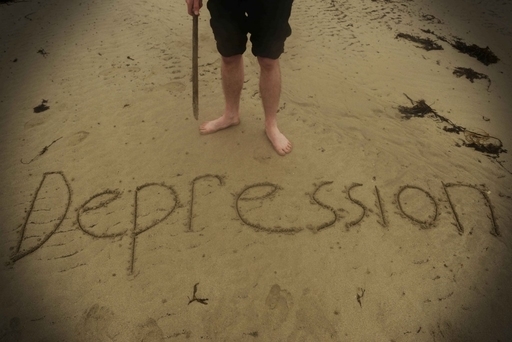
Clearly, the onset of depressive symptoms, at any stage of an individual’s life, is a cause for deep concern among loved ones. But the emergence of such problems in young children and adolescents is especially worrisome for parents – and never more so than when it coincides with problems at home.
But what really underpins the link between children’s emotional problems and their home environments – and how does the onset of adolescence change things? These questions are at the heart of our latest piece of research, published this week in the Journal of Child Psychology and Psychiatry.