Introducing King’s Student Money Mentors (2021/2)

Do you have any questions about money management during your time at university? Would you like to speak to another student about your budgeting concerns? If so, the Money Mentors are here for you! We are current trained students at King’s with a particular interest in being money savvy, and we hope to support our fellow students with all sorts of money-related matters. If you’re unsure of how to create a realistic budget, would like to explore various ways of saving money, and keep yourself safe from scams throughout the year, our Money Mentors would always be happy to support you. We will introduce our Money Mentor team below, which consists of students from different backgrounds and courses.

Beth 

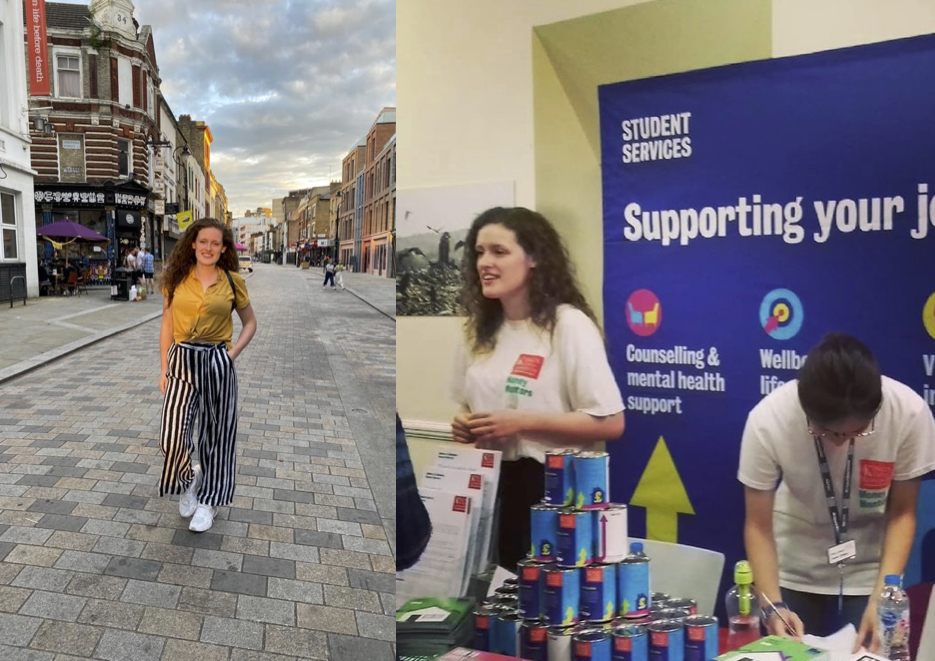
I’m Beth, a final year medical student and I’ve been part of the Money Mentor team throughout my time here at King’s. I love meeting other students and promoting discussions about money on campus; whilst playing silly games and giving out prizes of course. I joined the Mentor team as a part-time job and it has helped me to earn spending money whilst at university. My favourite Money Mentor job was creating and delivering the Pathway to Financial Wellbeing workshop, taking a holistic and practical approach to student money management. In the last two years I have learned a lot about social media as a force for spreading the vibes of financial wellbeing and literacy.  I’m hoping to see the Money Mentors transition back to the face-to-face world and get on campus soon so we can reach the students that didn’t know they needed us. 

Chloe 

Hi! My name is Chloe, and I’m a final year medical student. I have been a Money Mentor for the last four years after hearing about the role during a Welcome week talk held by the Money & Housing Advice Service. 

During my time as a mentor, I have enjoyed working alongside other students from different courses and meeting members of the King’s community from various backgrounds during campaigns, such as Talk Money week and National Student Money Week!  

I also enjoy doing Q&A sessions and participating in K+ events. As part of my role, I have also helped write and update articles and guides for Student Services Online.  

In the upcoming year, I look forward to producing new content to help improve students’ financial wellbeing and meeting more students during our exciting and fun events! 

Olivia 

My name is Olivia, and I am a final year BA English student. I became a Money Mentor because I wanted to support other students with money management — and I’m enjoying working with the fantastic team! Some of my main responsibilities are managing our Money Mentors blog and working with students interested in writing blog posts. I was also involved in National Student Money Week (NSMW) 2021, where I spoke at two Instagram live events. I look forward to NSMW 2022 and hope to see some of our students in our upcoming events!

Sarah 

My name is Sarah and I’m a final year medical student. I’ve been a Money Mentor since my second year after hearing about it in a Welcome Week talk, and I have learnt so much about managing my money since I’ve started! My main responsibility is jointly running the social media (Instagram and Facebook) with a couple of other Mentors, but you can also see my handiwork in the interactive online housing guide, and the scams workshop which I helped to write. I’ll be winding down my involvement with Money Mentors over the coming term, but I’m looking forward to training some new faces for social media so we can keep reaching students with money tips online! 

Rhea 

Hi my name is Rhea and I am a 4th year medical student. I became a Money Mentor during my 1st year at university to share my knowledge and work alongside likeminded individuals to help students. My responsibilities as a Money Mentor vary from being involved in campaigns to writing, reviewing, and updating our content. I am looking forward to our upcoming event (National Student Money Week 2022) and seeing some new and familiar faces, hopefully in person! 

Where can students speak to or connect with the Money Mentors?  

Students can reach out to Money Mentors on Instagram and ask any money-related questions they may have! You can also take a look at our Money Mentors blog for some tips on managing your money and staying (financially) safe during your time at university. However, if you need specialist advice tailored to any complex financial situation or have serious concerns that require urgent help, please contact the Money & Housing Advice Service where you can speak to a Specialist Money & Housing Adviser.  

Do Money Mentors organise any events that students could attend?  

Yes! We have an upcoming campaign during National Student Money Week in February, which is an annual event where we arrange various informational talks or events to help students build their confidence and knowledge to take control of their budget and enjoy university life without constantly being anxious about running out of money. We actively promote our upcoming events on our social media, so do keep an eye on them if you’re interested in attending one (or some!) of our events.   

Can students apply to become a Money Mentor? 

Yes! We are planning on recruiting more Money Mentors. If you are interested in getting involved, please keep an eye on our Instagram, as we will be advertising our recruitment opportunities there.  

Whether you’re interested in speaking to another Money Mentor or are hoping to become a Money Mentor yourself, we hope this blog post gives you a better idea of who we are and what we do alongside our specialist advisers. Student Servies also has a page on Money Mentors, should you be interested in learning more about us! Finally, if you have any concerns about financial wellbeing or wish to know more about what we do, again, please do not hesitate to contact us on Instagram!  

King’s Student Money Mentors
Part of Money & Housing Advice

The King’s Student Money Mentors blog shares our students’ personal experiences and thoughts on money-related topics. Any reference, opinions or recommendations on a particular company/brand are only the views of the student(s) who wrote the blog post. King’s College London, the Money & Housing Advice service and the Money Mentor project do not share the views in the blogs nor endorse any of the companies mentioned. Readers should conduct their own research before using any companies mentioned in our blog posts. 
Stay Alert to Scams!

Have you received any suspicious messages or calls asking for your personal details or bank accounts? Whenever you’re asked to share your details or pay another person, you should be aware of scams. Unfortunately, there are numerous different kinds of scams that target students every year and becoming a victim of scams can have a huge impact on your financial situation. As King’s Student Money Mentors, we have outlined some of the scams that students may encounter during their studies. If you think you’ve become a victim of a scam, please look at the bottom of this blog post, where we explain some of the immediate actions you can take. (You can also take a look at KCL’s Frauds & Scams page and further guidance on Student Services Online).  

Photo by Jeremy Bezanger on Unsplash

Social media scams 

Some scammers may try and hack into your social media to gain private information associated with the account. Although I was fortunate enough to have not experienced this before, it can become particularly problematic as you could become a victim of impersonation. If scammers use your personal account to share scam messages with your contacts, they could affect even more people and potentially cause a financial loss to many. I found having a strong password and a two-step verification to help prevent scammers from accessing my account.

You should also be aware of product advertisements on social media. I see so many different adverts on social media every day (and I’m sure many of you have!). However, I tend to be cautious of potential scams, as some scammers may trick you into making a payment in advance without sending the actual product. It’s easy to think that you wouldn’t be a victim of a scam, as social media advertisements are everywhere nowadays. You should be cautious of purchasing products directly from another person that you don’t know and consider the possibilities of it being a scam.  

Photo by Miki Fath on Unsplash

Housing and rent-related scams 

Housing and renting for students can be overwhelming at the best of times. Navigating properties, contracts, bills, and independent living is challenging, especially with the recent rise in scams in this sector. 

Scammers can trick prospective tenants into paying money in advance, often for properties that do not exist or belong to an unaware property owner. Another common scam involves renting a property to multiple victims at the same time. Unfortunately, students are quite vulnerable to such scams due to their inexperience, the attractive nature of the advertised accommodation and the competition in the student rental market.  

Common warning signs that should alert you towards a potential fraud include an extremely low rent, request for a deposit prior to viewing the property and use of money transferring services to make transactions. Therefore, it is essential that you thoroughly investigate the property before performing any transactions. For example, you can research the average rental prices in the area using property search tools such as Zoopla to judge whether the rent is reasonable. Do not make any payments before viewing the property in person. If you are unsure about the legal owner of the property, a quick search on the land registry, costing as little as £3 can provide you with this information. We found that the Specialist Housing Advisers at King’s and the University of University of London Housing Services (ULHS) can help students with housing-related concerns.

Photo by Sasun Bughdaryan on Unsplash

Fake tickets and discounts scams  

We are always in search of a good bargain so it’s only natural to jump at the opportunity when one presents. Online searches can provide an array of results with comparable items at a fraction of the average price. In some cases, victims can make purchases but may not receive their product. More commonly, the product received is not as advertised on the website. Another common scam involves legitimate looking websites that offer discount codes for popular website. In this instance, the websites require you to enter your details which may be forwarded to third parties that can contact you for further scamming. Therefore, it is important to judge the deals being offered and usually if the deals are “too good to be true” then it is very likely that it is a scam! It is also important to be careful about where you enter your details and for what purpose as this information could potentially be disseminated without your knowledge.  

Apart from online discount scams, gigs and concerts can also be a target for scammers. This is because people are always looking to buy tickets, especially to the popular and oversubscribed events. Thus, scammers can take advantage of the resultant impulsiveness and desperation of wanting to attend an event, leading to many being scammed with fake or invalid tickets. In many cases, the victim transfers the ticket money, often costing much more than the usual price, but does not receive a ticket in return. So, if you know that the event is oversubscribed and sold out, it is very likely that the ticket you are being offered is a scam. Another red flag is a request for direct bank transfer to pay for the tickets. Therefore, be aware and alert about the potential of being scammed and always think before making any payments. (We found Action Fraud’s article on ticket scams useful in understanding how some people may get scammed by purchasing a ticket from someone else.)  

Photo by Christopher Gower on Unsplash

Phone/email scams  

We have all at some point received a dubious email or a text instructing us to click on a link. It can be easy to fall into this trap and click on the link because often, the scammers use legitimate company names or formal messages to trick you into doing so. For example, the email or message may inform you of a parcel that has arrived at the Royal Mail and requires you to click on the link to pay for pending postage. Clicking on the link may result in a virus being downloaded onto your device or the scammers may be able to access your passwords and personal information.  

Another common scam involves an email or a text, supposedly from the HM Revenue and Customs (HMRC) informing you of money that you are eligible to claim by clicking on the link or calling a certain number. If in doubt, it is best to contact the HMRC to establish whether you are eligible for a refund. In most cases, if you are eligible, the HMRC automatically sends you the entitled amount. Therefore, if you receive such texts, it should alert you towards a potential scam.  

Another very popular scam is through the phone where fraudsters convincingly pretend to be from your bank and ask for your card or bank details over the phone. Once they obtain these details, it is easy for them to make multiple transactions and steal your hard-earned money. Therefore, always think before giving away your bank details over the phone. If in doubt seek guidance from your local branch, family members or trusted acquaintances before proceeding.  

In review of the recent pandemic, scammers may send emails or messages, supposedly from the NHS, offering vaccine passports. They may require you to enter your bank account or card details or upload your proof of identity documents. Beware of such scams as the NHS offers the vaccine free of charge and will never ask for your personal details relating to payments in this context. If there is any uncertainty regarding such a message, contact your local GP to confirm the legitimacy of these messages.  

Photo by Markus Winkler on Unsplash

Actions to take when you’ve become a victim of a scam 

In the unfortunate event that you have been scammed, remember that several victims may have been tricked into a similar situation, so you are not alone! But it is important to report this immediately to prevent this from happening to others. Some of the steps that you can take include: 

  1. Report the scam to Action Fraud (0300 123 2040)  
  1. Report the scam to the company that the scammers are pretending to belong to e.g., Royal Mail, NHS, HMRC, etc.  
  1. Speak to your bank. In some cases, you may be able to cancel the payment or qualify for a refund.  
  1. Speak to the Money & Housing Advice Service at the university for advice on how to best proceed, following the scam. They will advise you on the steps to take and provide support with managing the impact of the scam, including financial hardship:  
  • If the scam is related to fee payment at King’s, email credit.control@kcl.ac.uk.  
  • If you are contacted by the Student Loans Company and are unsure about its legitimacy, email phishing@slc.co.uk to check. 
  1. Reach out to your family and friends to inform others of scams to be aware of. You might be surprised by how many others are facing a similar situation!  

Being targeted for scams is a stressful and frustrating experience. We hope you stay alert to the different kinds of scams mentioned above so that you can keep your money and bank account safe! If you have any questions or need further support with scams, you can also contact Student Services. Remember, this is not a complete list of all the different scams that you may encounter, so it is important that you always think twice about sharing your personal or bank details with another person.  

Rhea Lopes and Olivia Kim
King’s Student Money Mentors
Part of Money & Housing Advice

We found the following page on Student Services online, which provides further information on scams:   

Videos about financial wellbeing & scams 

The King’s Student Money Mentors blog shares our students’ personal experiences and thoughts on money-related topics. Any reference, opinions or recommendations on a particular company/brand are only the views of the student(s) who wrote the blog post. King’s College London, the Money & Housing Advice service and the Money Mentor project do not share the views in the blogs nor endorse any of the companies mentioned. Readers should conduct their own research before using any companies mentioned in our blog posts. 

‘Making Money From Home During COVID-19’ – National Student Money Week Testimonial

The first lockdown came and went. University ended for the year. And it was time for summer. This meant: going for walks, meeting friends in the park, watching my favourite films and TV programmes. Although my time outdoors increased, so did my screen time. I was consuming so much information, especially from random advertisements. What kept catching my eye were the adverts from apps and websites which promoted your work, your designs and encouraged you to sell items you no longer needed.

I thought I might give that a try.

I downloaded Vinted, Shpock, eBay. I uploaded images of clothes, some new and some in good condition which to my surprise did start selling! I had some textbooks and interview books that I thought could help other students and sold them at a discounted rate. It wasn’t a bad way to start earning some money.

I stumbled across a part-time tutor role whilst I was scrolling through social media. It allows you to be flexible and to take on as much or as little work as you’d like! I felt like this was a really great way to continue my own learning and keeping up to date with my knowledge, but also meant I earned some cash on the side. Other great job sites I’ve used in the past are Indeed and CV Library. More recently I signed up to King’s Talentbank where you can apply for job assignments (online for now!) for either permanent, temporary or part-time roles based on your experience and qualifications.

With some more income, online shopping also became another one of my pastimes. But spending more money meant I had to supplement my income in another way too. I had heard about cashback sites such as QuidCo and TopCashback which actually end up paying you back some money over time and therefore for a share of your purchase when shopping online. Over a few months, I would earn cashback and this would be a great way to save some money for the short-term future.

Manvi Shah
Positive Peer
Studying Dentistry BDS (UG)

* Please note that students on a Tier-4/Student visa will have restrictions on the type of work they can undertake during their studies in the UK. If you are unsure of your working restrictions, call the Student Advice Line.

For more information on making money, check out this video workshop. You can also click on this link for more details on Blackbullion!

The King’s Student Money Mentors blog shares our students’ personal experiences and thoughts on money-related topics. Any reference, opinions or recommendations on a particular company/brand are only the views of the student(s) who wrote the blog post. King’s College London, the Money & Housing Advice service and the Money Mentor project do not share the views in the blogs nor endorse any of the companies mentioned. Readers should conduct their own research before using any companies mentioned in our blog posts.